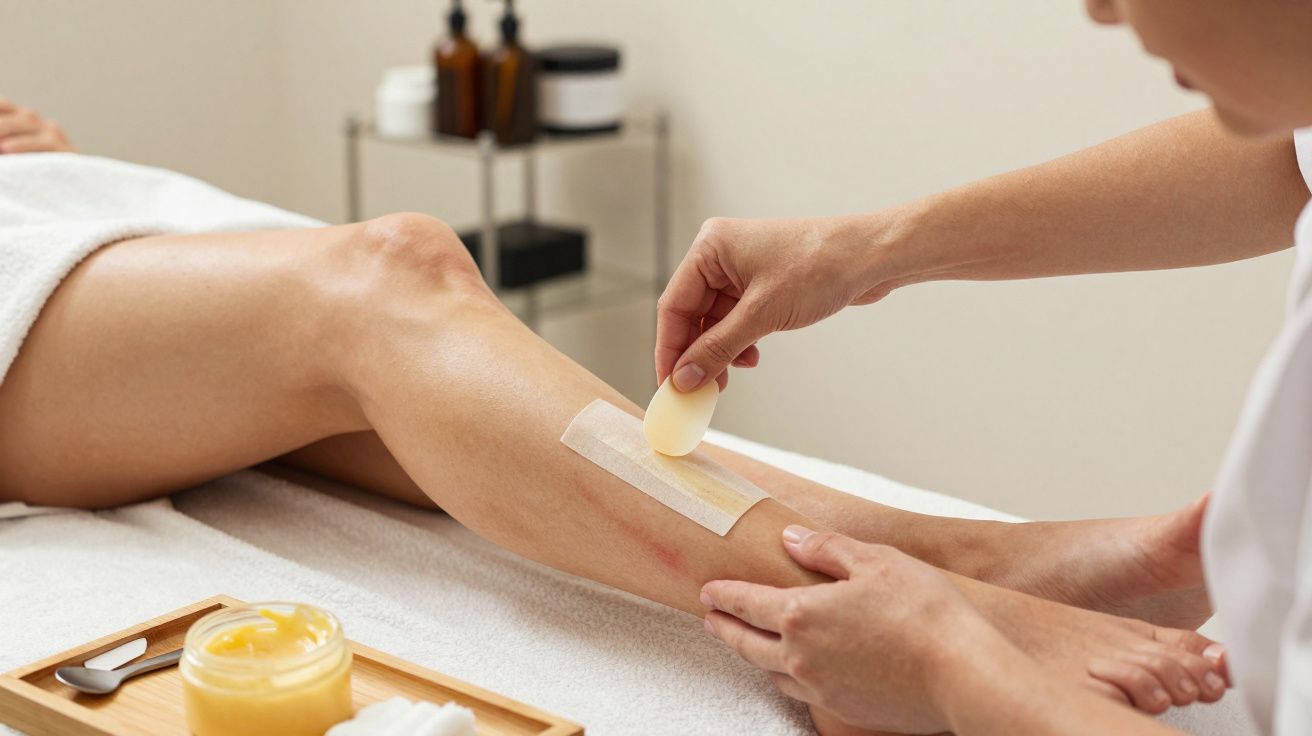
You book a wax, then the night before you decide to “look a bit more polished” and squeeze in a spray tan. It feels like smart waxing timing: glow first, tidy up second, walk out flawless. In practice, it’s one of the fastest ways to end up with patchy colour, irritated skin, and a tan that fades in odd shapes.
I learned this the hard way watching a therapist in a busy London salon lift a strip from someone’s shin and reveal a pale rectangle underneath-like a sticky note had lived there. No drama, just that quiet, immediate regret. The client hadn’t done anything “wrong”; she’d just got the order of operations backwards.
What wax actually removes (and why your tan comes with it)
Waxing isn’t just hair removal. It grips hair and pulls it from the root, but it also takes a fine layer of dead skin and surface oils along for the ride. That’s why skin often feels so smooth afterwards-and why waxing right after tanning can look like you’ve erased your colour in strips.
A spray tan sits in the very top layer of skin. It develops as the tanning solution reacts with amino acids on the outermost cells, tinting that layer until it naturally sheds. Wax removes that layer early, in clean-edged strokes. The result isn’t a gentle fade; it’s a pattern.
If you’ve ever seen a tan go cloudy around the knees, ankles, or wrists, you’ve seen this mechanism in miniature. Those areas naturally shed faster and catch more friction. Waxing is friction with intent.
The “perfect prep” mistake: tanning to hide regrowth
There’s a very human reason people tan before they wax: they want coverage. A bit of colour softens the look of stubble, bumps, and unevenness, and it can make you feel more confident walking into an appointment.
But that confidence can backfire because tan also highlights texture once it’s disturbed. Wax can leave temporary redness, tiny raised follicles, and sensitivity. If you’ve tanned first, those areas don’t just look pink-they look pink next to missing colour. It’s high contrast, and it reads as blotchy even when your skin is behaving normally.
Then people try to “fix” it: extra moisturiser, body oil, a quick top-up tan. That’s how you end up with darker patches clinging to dry spots while the waxed areas stay stubbornly pale.
The simple order that keeps both results clean
The calmest rule is boring, which is why it works: do hair removal first, then tan. Think of it as resetting the surface, then colouring it.
Here’s a timing rhythm most therapists are happy with:
- Wax first, ideally when your skin is calm and clean.
- Wait 24–48 hours before a spray tan, so redness settles and the skin barrier feels normal again.
- Avoid heavy exfoliation for 2–3 days after tanning, because you’re essentially speeding up the fade on purpose.
If you’re planning a trip or an event, count backwards. Most people underestimate how much nicer a tan develops on skin that’s already been waxed, rinsed of residue, and allowed to recover.
If you’ve already tanned: how to avoid the worst of it
Sometimes the tan is already on, and the wax appointment is already booked. You’re not doomed, but you do need to lower expectations and adjust the plan.
First, tell the therapist you’ve tanned. Not as a confession-just as useful information. They can choose smaller sections, reduce repeat passes, and avoid doubling back over the same area, which is where the most obvious tan-lifting happens.
Second, skip the “extra prep” that makes it worse. No oils. No rich lotion right before. Product plus wax equals more pulling, more residue, and more irritation.
A practical rescue approach:
- Ask if you can switch to a different method for this session (some areas tolerate sugaring better, but it’s not a magic shield).
- If you must wax, keep it minimal: tidy rather than “perfect”.
- Afterwards, treat it like sensitive skin: cool shower, fragrance-free moisturiser later, and no retan for at least 24 hours.
Let’s be honest: nobody wants to pay for a wax and then be told to “go gentle”. But gentle is what keeps you from paying twice-once in money, and once in patchy knees.
The hidden culprit: wax residue and barrier stress
Even if the wax doesn’t visibly lift your tan, it can sabotage how your next tan develops. Some waxes and post-wax products leave a thin residue that clings to skin. Spray tan solution hates residue; it develops unevenly where there’s a film, and it grabs too strongly where skin is dry or freshly stressed.
That’s why salons that do both services often sound fussy about aftercare. They’re not being precious. They’re trying to keep your skin’s surface predictable-because predictable skin produces predictable colour.
“Smooth first, colour second,” one therapist told me. “If you reverse it, you’re asking wax to do a job it was never meant to do.”
A quick cheat-sheet for real life plans
If you want it in one glance, keep this order in mind:
- Event on Saturday
- Wednesday/Thursday: wax (earlier if you’re prone to redness)
- Friday: spray tan
- Saturday: rinse, moisturise lightly, avoid oils before you dress
And if your skin is reactive, give yourself more margin. The goal isn’t just hairless and bronze-it’s calm enough that both look effortless.
| Step | Best order | Why it matters |
|---|---|---|
| Hair removal | Wax first | Removes hair + dead skin that would take tan with it |
| Colour | Spray tan after | Develops evenly on a settled, residue-free surface |
| Maintenance | Gentle moisturising | Extends fade without creating patches |
FAQ:
- Can I ever wax after a spray tan if I have to? You can, but expect some colour lift. If it’s unavoidable, keep it to small tidy-up areas and tell your therapist you’re tanned.
- How long should I wait between waxing and a spray tan? Ideally 24–48 hours, especially if you get redness, bumps, or sensitivity.
- Does shaving have the same problem as waxing with a tan? It’s usually less dramatic because it doesn’t pull the surface layer in strips, but vigorous shaving can still exfoliate and create faster fade patches.
- Will a spray tan hide post-wax redness? Sometimes a little, but tanning too soon can grab unevenly around stressed follicles. Waiting tends to look cleaner.
- What’s the biggest mistake with waxing timing before a holiday? Trying to do everything the day before. Space it out so your skin isn’t recovering and developing colour at the same time.




Comments (0)
No comments yet. Be the first to comment!
Leave a Comment