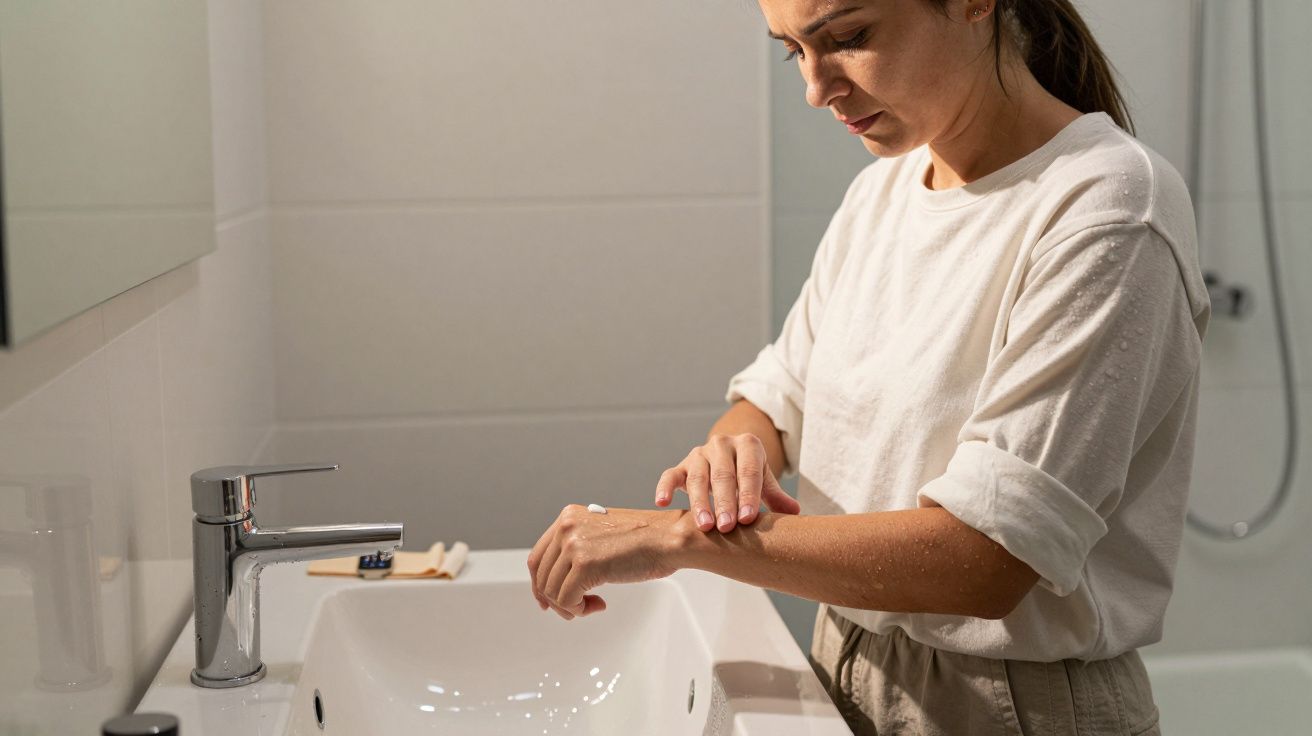
Saturday afternoon, 4:18 p.m., bathroom sink. You’ve just had a spray tan for a warmer, even glow, and you’re admiring it in the mirror when you notice the first giveaway: the colour on your hands is already looking lighter than your forearms. That’s the quiet curse of high-friction zones-hands, ankles, and wrists do more living than the rest of you, so they shed colour faster.
It can feel unfair because you didn’t “tan your hands” any differently. But a spray tan isn’t a dye that becomes your skin; it’s a reaction with the very top layers, and those layers get scrubbed, soaked, and rubbed off where life is busiest.
The bit most people miss: spray tan lives on the surface
Spray tan solutions rely on DHA reacting with amino acids in the outermost skin layers (the stratum corneum). That’s why the colour develops over hours, and why it fades as those cells naturally slough away.
Now zoom in on your hands, ankles, and wrists. These areas don’t just shed skin at a normal pace; they get help from soap, water, sleeves, socks, straps, and constant movement. You’re not “losing tan”. You’re losing the layer the tan is sitting on.
Why hands fade first (and sometimes go patchy)
Hands are washed more than any other body part, and not gently. Think: soap, hot water, hand sanitiser, kitchen washing-up liquid, and random wipes on towels without moisturiser afterwards.
There’s also the texture issue. Knuckles and the sides of fingers have more creases and drier patches, so tan can grab darker there at first, then wear off unevenly as you keep washing. Palms barely hold colour because the skin is thicker and sheds differently, so the contrast makes fading look even faster.
A small detail that matters: you also use your hands to apply skincare and hair products, which can contain oils or exfoliating ingredients that speed fade.
Why wrists don’t stand a chance
Wrists are a perfect storm: thin skin, constant bending, and constant contact. Watch straps, bracelets, bag handles, tight cuffs, and the way you rest your wrist on a desk all create micro-rubbing all day long.
Add frequent handwashing and the wrist area becomes a “transition zone” that gets wet, then rubbed dry, then bent, then rubbed again. Even a great spray tan will struggle to stay uniform there.
Ankles: the sock line, the shoe rub, the daily shower
Ankles fade fast for boring reasons, which is always the real reason. They’re hit by:
- daily cleansing in the shower (often with body wash running down and sitting there)
- towel friction as you dry your legs
- socks gripping and sliding
- shoes rubbing the heel/ankle bone
- shaving, which is mild exfoliation even when you’re careful
On top of that, ankles and feet can be drier. Dry skin can take on colour quickly, then flake-so you get that “I swear it was fine yesterday” effect.
The friction map: where your week eats your tan
A simple way to predict your fade is to list what touches you repeatedly. Not once. Repeatedly.
- If you wear a smartwatch every day: wrists will fade first.
- If you’re in trainers and socks for long walks: ankles will fade fast.
- If you sanitise a lot at work: hands will look like they’re on a shorter timeline than your arms.
It’s not about the tan being “bad”. It’s about your routine being more powerful than the solution.
How to make high-friction zones last longer (without babying your life)
Start with a mindset shift: you’re not trying to freeze a spray tan in place; you’re trying to reduce unnecessary rubbing and keep the skin barrier comfortable so it sheds more evenly.
Here are the moves that actually change outcomes:
- Moisturise strategically, not randomly. Hit hands, wrists, ankles morning and night with a simple, fragrance-free moisturiser. Dryness equals faster, patchier fade.
- Wash smarter. Lukewarm water, gentle soap, and pat-drying instead of aggressive towel rubbing helps more than people think.
- Avoid exfoliating products on those areas. AHA/BHA body lotions, scrubs, and some “brightening” hand creams can erase colour quickly.
- Watch the accessories. If you can, loosen watch straps for a day or two after your tan develops, or switch wrists. Friction marks are usually lifestyle marks.
- Top up only where you need it. Use a gradual tanning lotion or a light mist just on hands/wrists/ankles rather than redoing your whole body.
The goal isn’t perfection. It’s avoiding that sharp contrast where your arms look holiday-ready and your hands look like they stayed home.
Common mistakes that make fade look worse than it is
People often blame the tan when the problem is the “edges” of the tan.
- Over-tanning hands and feet during application. If they start too dark, the fade looks dramatic even when it’s normal.
- Skipping moisturiser because you’re scared it’ll “strip” colour. Most gentle moisturisers help by reducing flaking.
- Using oily cleansers or long hot baths early on. Oils can break down the surface layer faster, and heat plus soaking speeds shedding.
If you want a clean, believable fade, the trick is even wear, not maximum darkness.
A quick reset plan if it’s already fading
If your hands, ankles, or wrists are going pale while the rest looks good, don’t panic-scrub. That usually creates a patchy halo.
Do this instead:
- Even the texture first: moisturise for 24 hours, especially around knuckles and ankle bones.
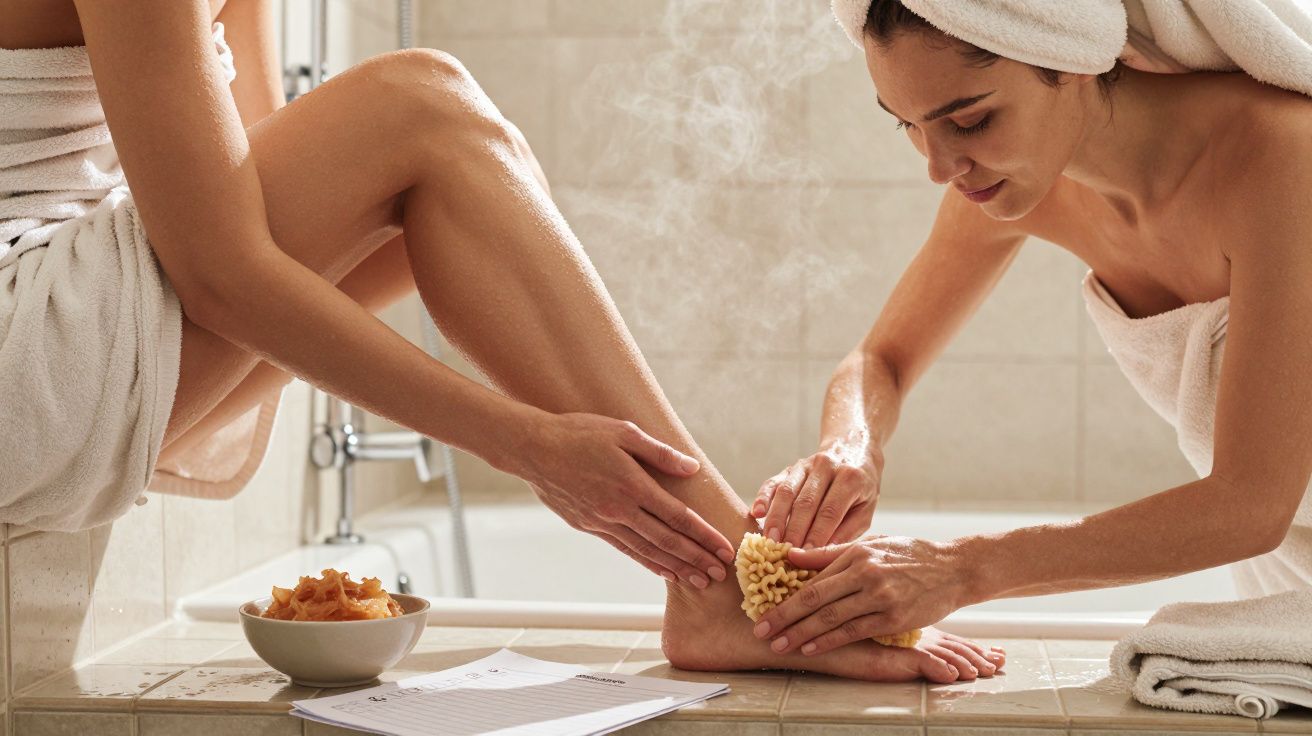
- Lightly buff only rough bits: a soft washcloth, minimal pressure, just to smooth flakes.
- Targeted top-up: apply gradual tan sparingly, then blend into adjacent skin (back of hands into forearms; ankles into lower calf).
- Commit to maintenance: twice-daily moisturiser on those zones for the rest of the tan’s life.
Small, calm corrections beat a full re-tan that amplifies lines and creases.
FAQ:
- Why do my hands fade even when I wear gloves for cleaning? Gloves help with detergents, but handwashing, towel-drying, sanitiser, and daily rubbing still strip colour faster on hands than elsewhere.
- Can I put barrier cream on wrists/ankles to stop friction? A very light moisturiser layer helps, but heavy occlusive balms can cause uneven wear or make accessories slide and rub more.
- Is it normal for ankles to look lighter than calves? Yes. Socks, shoes, shower runoff, and towel friction concentrate at ankles, so they often fade ahead of the legs.
- Should I exfoliate high-friction zones before my appointment? Yes-gently, the day before-so the skin is smooth. Exfoliating after the tan develops is what makes those areas fade quickly.
- What’s the easiest way to keep wrists even if I wear a watch daily? Alternate wrists, loosen the strap slightly, and use a small amount of gradual tan around the watch line every few days to blend.


Comments (0)
No comments yet. Be the first to comment!
Leave a Comment