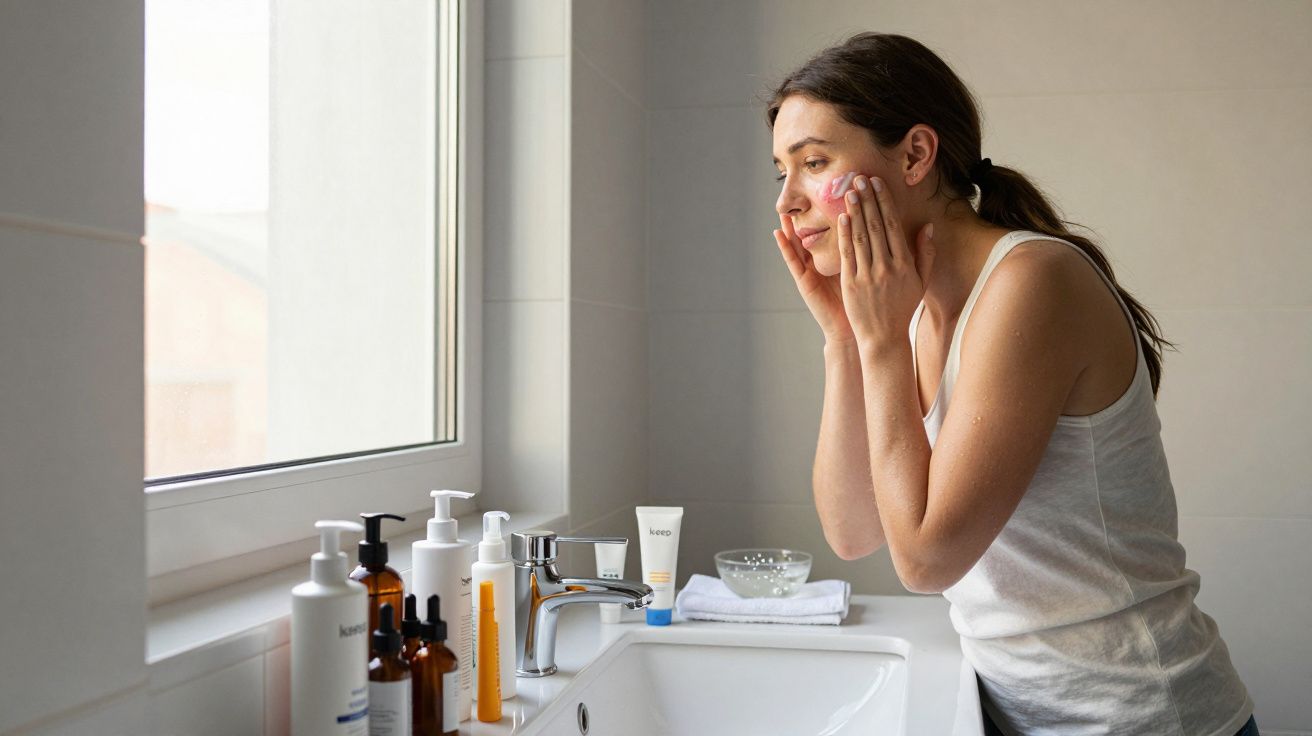
Skin can get strangely reactive when life is loud. Skinimalism, a deliberately minimal skincare approach used at the bathroom sink morning and night, works because it gives barrier repair room to happen instead of constantly “testing” the skin with new actives. If your face is stinging, tight, or suddenly breaking out in places it never used to, that simplicity isn’t a trend-it’s a reset button.
You know the moment: you look in the mirror and your routine looks impressive, yet your skin looks worse. The cleanser tingles, the serum pills, the moisturiser sits on top, and you wonder which step is the problem when the truth is often the stack.
The quiet problem with complex routines
The first issue isn’t that actives “don’t work”. It’s that stressed skin has less tolerance for layering, friction, and frequent formula changes. Every extra step is another chance to irritate, dehydrate, or disrupt the surface.
Complex routines fail in a very ordinary way. You introduce one new product, then another to “support” it, then something to fix the dryness that the second thing caused. Within a fortnight, you’re not treating your skin; you’re managing side effects.
There’s also the timing trap. Exfoliating acids, retinoids, vitamin C, benzoyl peroxide, clay masks-each might be reasonable alone, but together they can turn daily skincare into low-grade overtraining. The skin doesn’t get a rest day.
A routine can be well-intentioned and still be too much for a compromised barrier.
Why skinimalism makes barrier repair easier
Barrier repair is basically the skin getting back to doing its job: holding onto water, keeping irritants out, and staying calm when the weather, stress, and central heating kick off. Skinimalism helps because it reduces variables. When fewer things touch the skin, fewer things can trigger it.
Think of it like letting a sprain heal. You don’t keep poking it to see if it still hurts, and you don’t add a new exercise every morning “just in case”. You support, protect, and wait for normal function to return.
A minimal routine also makes cause-and-effect visible again. If you’re using three products and your skin flares, you can work out what happened. If you’re using twelve, you end up guessing-and stressed skin tends to punish guessing.
What “minimal” actually looks like (and what it doesn’t)
Skinimalism isn’t doing nothing, and it isn’t skipping sunscreen. It’s choosing a small set of steps that are boring in the best way: consistent, low-irritant, and easy to repeat when you’re tired.
A practical baseline:
- A gentle cleanser (or just rinse in the morning if you’re very dry/sensitive)
- A simple moisturiser that suits your skin type
- A broad-spectrum SPF 30+ every day
- One targeted treatment only if your skin can tolerate it, and not all at once
The non-negotiable is consistency. Skin likes predictable inputs, especially when it’s reactive.
The “Tuesday in February” test for your routine
A routine isn’t judged on the day you have time, good sleep, and perfect lighting. It’s judged on the random weekday when you’re stressed, running late, and your skin already feels touchy.
On those days, complex routines collapse. You rush, rub too hard, layer too quickly, or forget what you used last night and double-dose an active. Skinimalism holds up because it’s harder to mess up.
Common mistakes that keep stressed skin stuck:
- “Spot treating” half your face with multiple actives at once
- Scrubbing or over-cleansing to remove flakes (which creates more flakes)
- Switching products every few days because you want fast results
- Using essential oils/fragrance when your skin is already inflamed
- Treating dryness with more exfoliation instead of more support
Let’s be honest: no one does a 10-step routine perfectly every day. Stressed skin notices the days you don’t.
How to build a skinimalist routine that actually calms skin
Start by removing complexity, not by shopping. You want to stop the irritant loop first, then reintroduce anything “extra” only when skin looks and feels stable for a while.
A simple two-week reset many people tolerate well:
- Keep cleansing gentle. One cleanse at night; morning only if needed.
- Moisturise immediately after washing. Damp skin, light application, no over-rubbing.
- Wear sunscreen daily. Especially if you’re using (or recently used) actives.
- Pause extra actives. Acids, retinoids, strong acne treatments-put them on hold.
- Add one thing back at a time. Give it a full week before adding another.
If you’re acne-prone, “minimal” can still include an acne active. The trick is not stacking three of them, and not using them as punishment when a breakout appears.
Signs your barrier is improving
You’re aiming for boring, comfortable skin. Progress often looks like:
- Less stinging when applying moisturiser
- Fewer patches of tightness by midday
- Makeup sitting more evenly (even if you don’t wear it, this is a good clue)
- Redness that fades faster after washing
- Breakouts that look less inflamed and resolve more cleanly
Why this approach feels bigger than skincare
Skinimalism tends to work for stressed skin because it matches real life. When your nervous system is overloaded, your skin often is too-through inflammation, habits, and a tendency to over-correct.
A minimal routine is also a small daily signal: you’re choosing stability over chasing fixes. You stop negotiating with your face morning and night, and you give it the conditions it needs to recover.
| Point clé | Détail | Intérêt pour le lecteur |
|---|---|---|
| Moins d’irritants | Moins d’actifs superposés, moins de friction | Réduit rougeurs, picotements, sécheresse |
| Barrière soutenue | Nettoyage doux + hydratation + SPF | Favorise la barrière repair au quotidien |
| Variables réduites | Routine simple, répétable | Identifie plus vite ce qui déclenche les crises |
FAQ:
- Is skinimalism the same as “doing nothing”? No. It’s a small, consistent routine focused on gentle cleansing, moisturising, and daily sunscreen, with fewer extras so skin can settle.
- How long does barrier repair take? It varies, but many people notice less stinging and tightness within 1–2 weeks of simplifying; more stubborn irritation can take longer.
- Should I stop all actives immediately? If your skin is stinging, peeling, or unusually red, pausing strong actives is often sensible. If you need an acne treatment, keep one and simplify everything else.
- What if my skin gets worse when I simplify? Mild changes can happen, but significant worsening suggests an underlying issue (dermatitis, allergy, infection) or a product intolerance-consider professional advice.
- Can I reintroduce a complex routine later? You can reintroduce products one at a time, slowly. The goal isn’t “more steps”; it’s the few steps your skin reliably tolerates.



Comments (0)
No comments yet. Be the first to comment!
Leave a Comment