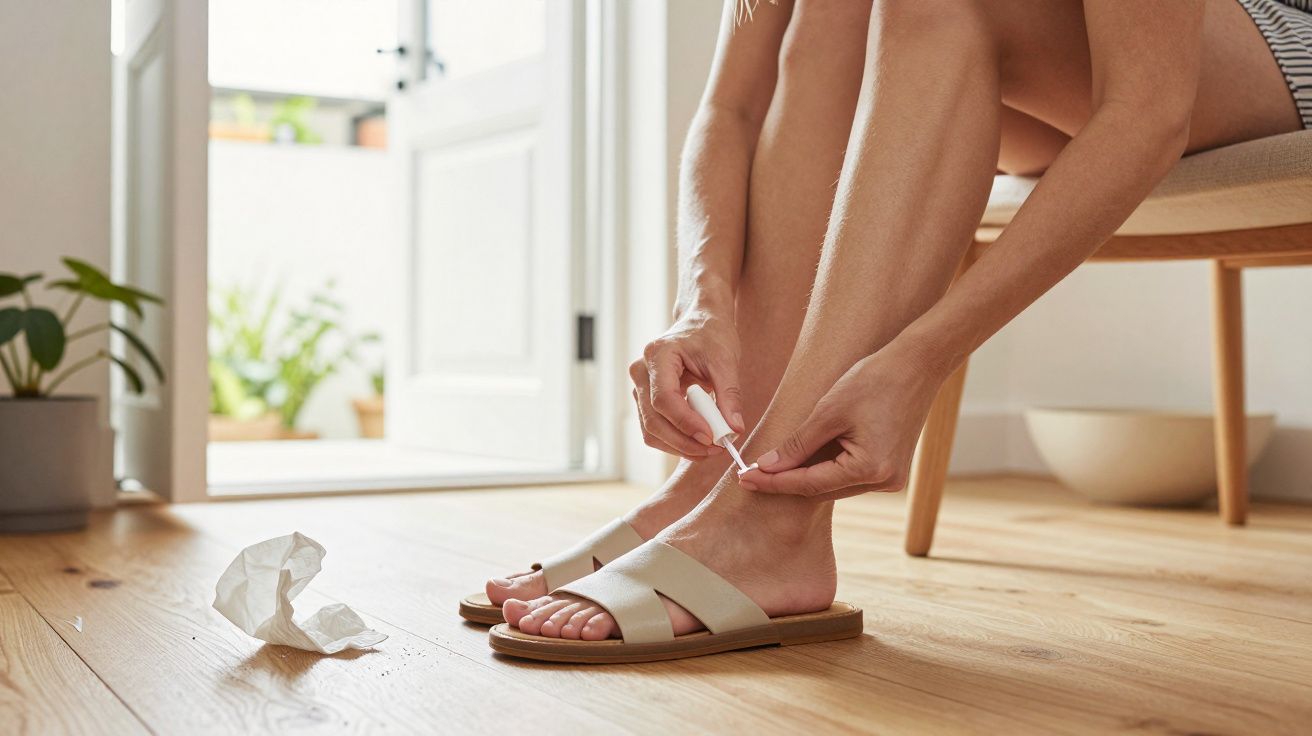
You slip on your favourite sandals, glance down, and realise pedicure longevity is playing a shorter game than you paid for. It isn’t your imagination: footwear exposure in open shoes changes what your polish has to survive-more friction, more sunlight, more tiny knocks that never happen inside trainers. If you like your toes to look “just done” for more than a few days, it helps to know what’s actually wearing them down.
I’ve watched it happen on the same walk: toes looking glossy at the front door, then slightly dulled by the time you’ve crossed the high street. A kerb graze here, a bit of grit there, one unthinking foot-swipe against the other as you wait for the lights. Open shoes feel like freedom, but they also make your pedicure do its shift in public.
The quiet enemies of a fresh pedicure
Most people blame the product. In reality, open shoes change the environment: the nail plate is more exposed, the polish surface gets more contact, and the skin around it dries faster, which makes everything look tired sooner.
Think of a closed shoe as a clumsy shield. It can cause problems too (pressure, sweating), but it keeps your toes away from direct impacts. In sandals, every step is a small weather report.
Here are the usual culprits, in plain terms:
- Micro-scuffs from the ground: grit on pavements acts like sandpaper when your toes brush it.
- Front-edge contact: toes tap the inside edge of slides and sandals as you walk, especially if the shoe is slightly loose.
- Sun and heat: UV and warmth can dull top coat and fade bright shades faster than you expect.
- Dryness around the nail: open air plus summer heat pulls moisture from cuticles; rough skin catches and lifts polish at the edges.
- Water exposure that isn’t “a soak”: quick splashes (pool edges, seaside walks, sudden rain) soften polish and then re-harden it with a slightly weakened surface.
Why open shoes chip at the tip first
Toe polish usually fails at the free edge because that’s where the nail meets the world. In open shoes, your toes do more gripping and stabilising; the big toe especially takes on the job of keeping the sandal on.
A simple example: slides with a single strap. Your foot subtly claws to stop them sliding off, which flexes the nail and stresses the polish. Add a bit of pavement dust, and the tip becomes the first place to go cloudy, then catch, then chip.
If your big toe chips within 48–72 hours, it’s often one of these patterns:
- You’re wearing sandals a fraction too big, so your foot slides forward.
- You’re walking longer distances than your footwear was designed for.
- Your nails are slightly longer and hitting the front edge when you stride.
- You’re using oils/creams immediately before sandals, which can make straps slip and increase toe gripping.
The “polish looks fine, but it looks old” problem
There’s chipping, and then there’s that dull, slightly scuffed look that makes a pedicure feel past its best even when it’s technically intact. Open shoes are brilliant at creating that.
Top coat loses its glassy look through tiny abrasions-think: a soft-focus filter you didn’t ask for. Matte shades can hide it; high-shine colours make it obvious. Glitter and pearlescent finishes often look freshest longest because they disguise micro-scratches.
If you want the easiest visual win without changing your whole routine, pick shades and finishes that don’t show wear so loudly:
- Cream brights: gorgeous, but they show scuffs quickly.
- Dark creams: chip contrast is obvious.
- Sheers and milky nudes: chips are less visible, but dulling shows.
- Shimmer/pearl/glitter: best at hiding scuffs and tiny edge wear.
How to make pedicures last longer in sandals (without becoming a full-time toe manager)
Keep the moves small and human. The goal is to reduce contact and keep the surface sealed, not to live in fear of pavements.
Your “open-shoe” prep (5 minutes before you leave)
- Wipe nails quickly with a dry tissue if you’ve applied body oil or heavy cream.
- Check sandal fit: your heel should sit back; your toes shouldn’t hang over the front.
- If you’re walking far, choose straps that actually hold the foot (ankle straps beat floppy slides for polish survival).
The two habits that actually move the needle
Re-top coat every 2–3 days.
Not a full repaint-just a thin layer across the nail, and “cap” the free edge (run the brush along the tip).Moisturise cuticles daily, but time it.
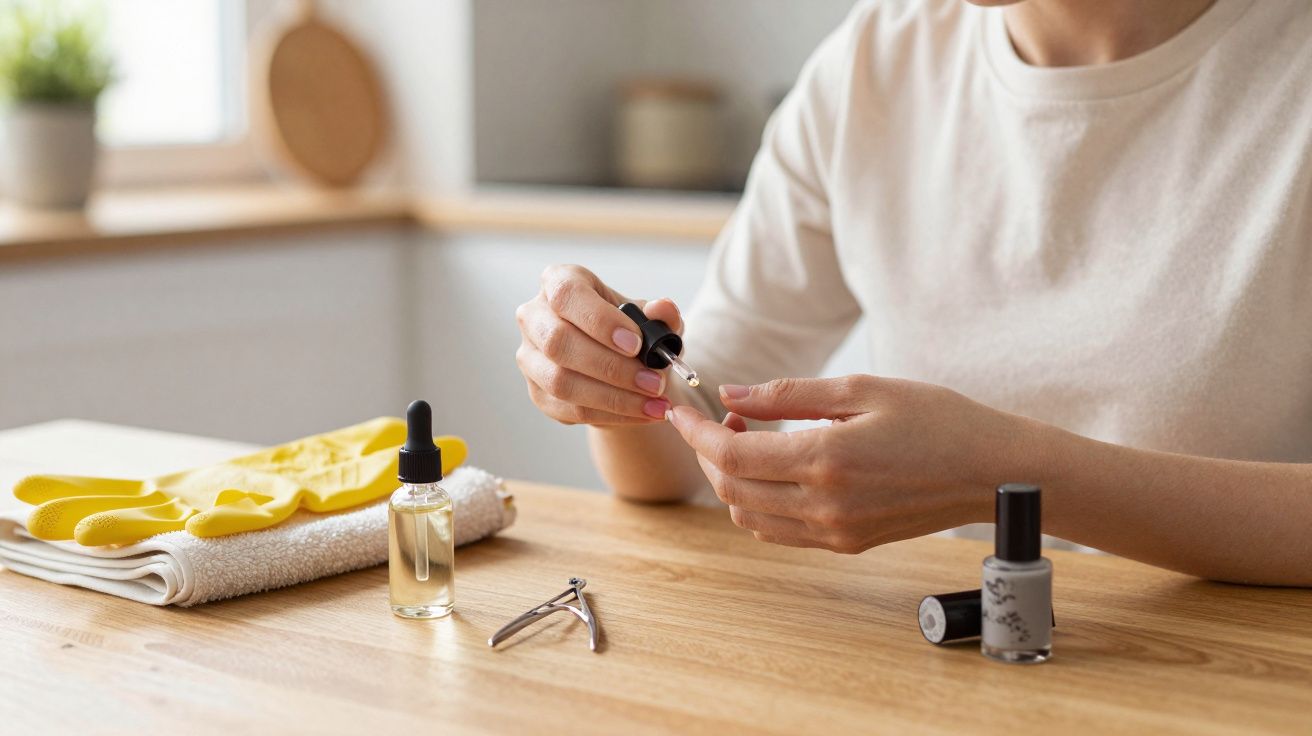
Oil at night is ideal. In the morning, keep it light or avoid the nail plate so polish doesn’t soften and straps don’t slip.
If you’re using gel
Gel can last longer, but it’s not invincible. In open shoes, gel often fails as lifting at the edge rather than a classic chip, especially if the nail tip gets knocked repeatedly.
- Ask for shorter length and fully capped edges.
- Avoid using your toenails as tools (yes, even peeling a sticker off a new candle).
- If you notice lifting, don’t pick. A tiny lift becomes a full peel fast.
A quick “why it’s happening” guide you can screenshot mentally
| What you see | Likely cause | Quick fix |
|---|---|---|
| Tip chips on big toe | Shoe slippage + toe gripping | Tighter fit; shorter nail; cap edge |
| Overall dullness | Pavement grit + micro-scuffs | Re-top coat; choose shimmer next time |
| Chips on smaller toes | Toe rubbing on straps | Different strap placement; add top coat |
| Lifting (gel) | Repeated edge knocks | Shorten; avoid long walks in slides |
The open-shoe strategy that works best: choose your battles
If you’re wearing sandals because it’s hot and you’re out and about, accept that your pedicure is doing fieldwork. You can still get good longevity-you just want to set it up for the job.
The simplest formula is this: stable sandals + capped edges + midweek top coat. Everything else is extra. And if you love loose slides, save them for shorter trips where your toes aren’t clocking up miles like they’re training for something.
FAQ:
- Why does my pedicure chip faster in sandals than trainers? Open shoes increase footwear exposure: your toes get more knocks, grit contact, and sun, plus your foot often grips the shoe to keep it on, stressing the polish at the tip.
- Is gel always better for pedicure longevity? Often, but not always. Gel resists scuffs well, yet in open shoes it can lift at the free edge if your toes repeatedly tap the sandal or kerbs.
- What’s the fastest way to make a pedicure last longer? Reapply a thin top coat every 2–3 days and cap the nail tip. It’s the smallest habit with the biggest payoff.
- Do certain colours last “better”? Some look better for longer. Shimmers and glitters hide micro-scuffs; dark creams and bright whites show chips and dullness fastest.
- My polish isn’t chipped, just looks dull-what’s that? Usually surface abrasion from pavement grit and everyday brushing against straps. A fresh top coat restores shine and helps protect the layer underneath.
Comments (0)
No comments yet. Be the first to comment!
Leave a Comment