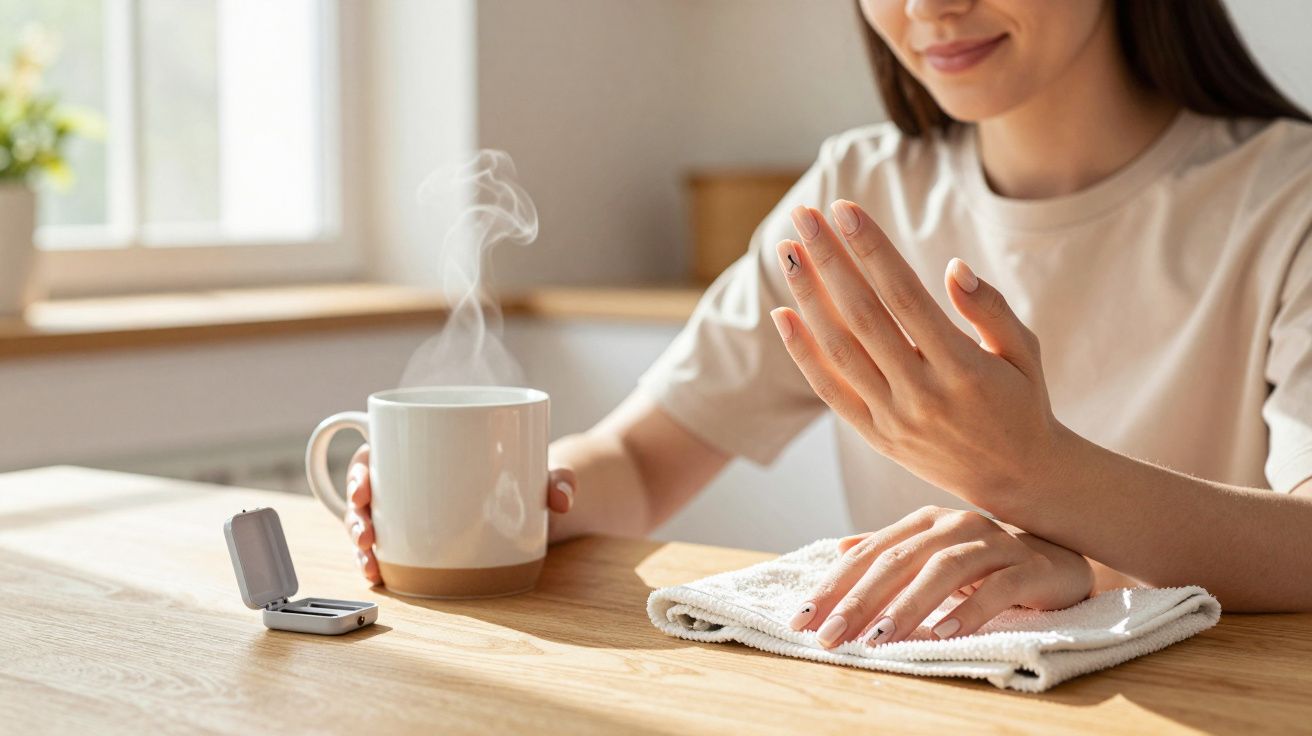
You notice it on day three: the manicure is still presentable, but the big statement nail has a chipped corner that catches on everything. Minimalist nail art, with its small lines, negative space and restrained accents, tends to score higher on wear resistance because there’s simply less to crack, lift, or snag during normal life. If you type all day, wash dishes, or rummage for keys, that matters more than the trend cycle.
It’s not that minimalist designs are “stronger” in some magical way. They just ask less from the polish layer and give stress fewer places to start.
Why chips start where design is busiest
A manicure usually fails at the edges first: free edge, sidewalls, or the tiny ridge where top coat thins out. When you add dense colour blocks, thick layers, chunky glitter, or raised charms, you create more borders and more height differences. Those are perfect initiation points for chips, because everyday friction loves a sharp transition.
Minimal nail art reduces these weak points. A fine line down the centre, a small dot near the cuticle, or a micro-French tip keeps the surface smoother and the thickness more even. The result is boring in the best way: less catching, less peeling, fewer “oh no” moments in the supermarket.
Think of it like paint on a door. A clean, flat coat lasts; a textured, layered collage gets nicked first.
Less product, fewer layers, better adhesion
Long-lasting polish is basically an adhesion problem. The more layers you add, the more chances you give for something to bond poorly: a half-cured colour layer, a top coat that doesn’t fully wrap the edge, a design element that interrupts the seal.
Minimalist nail art often uses:
- fewer coats of pigment overall
- less heavy decoration that needs glue or gel bumps
- more negative space, which means less material to lift
That matters because lifting tends to spread. Once a corner begins to separate from the nail plate, water and soap get underneath, and the peel accelerates. Keeping the manicure thin and well-sealed makes that first lift harder to start.
Let’s be honest: most wear issues aren’t dramatic. They’re slow, tiny failures that build up after ten hand-washes and one rushed hair wash.
Small designs “hide” growth and micro-damage
There’s another quiet reason minimal looks survive: they forgive. A bold full-colour nail shows every millimetre of regrowth, every hairline chip, every scuff that turns glossy into dull. Minimal designs, especially those anchored near the cuticle or using sheer bases, visually blend with daily wear.
A few examples that stay convincing longer than they “should”:
- Sheer base + micro dots: chips are less visible because the base isn’t opaque.
- Negative-space lines: regrowth looks intentional rather than messy.
- Thin French tips: when they wear down, it reads as soft fading, not immediate ruin.
This doesn’t increase physical durability on its own, but it increases perceived durability-which is why people keep the manicure longer without feeling scruffy.
Where wear resistance really comes from (and how minimal designs help)
Wear resistance comes from preparation and sealing, then from avoiding stress. Minimal designs naturally align with that because they don’t demand thick structure or complicated layering. You can still sabotage them with poor prep, but the baseline is friendlier.
A simple, realistic routine that supports a minimalist set:
- Dehydrate the nail plate (wipe with acetone or a proper nail cleanser) before base coat.
- Use a base coat that matches your product (don’t mix systems randomly if you’re using gel).
- Cap the free edge with base and top coat-lightly, but consistently.
- Keep design layers thin: one clean line is better than three “fixes”.
- Top coat twice if needed, but avoid flooding the cuticle (that lifts first).
If you want longevity without babying your hands, choose designs that don’t add height. Raised accents can look incredible, but they behave like tiny doorstops for friction.
“My minimal nails don’t last longer because they’re perfect. They last longer because nothing is sticking out to get caught.” - a truth most people arrive at after their first broken rhinestone.
The best minimal designs for busy hands
If your hands take a beating-cleaning, gym, childcare, hospitality-pick minimal art that keeps stress away from the tips and edges. Those zones do the most work, so they fail first.
- Cuticle-half moons (tiny arcs near the base)
- Single central stripe (vertical line is forgiving and elongating)
- Sidewall micro-French (a whisper of colour that doesn’t wrap the whole tip)
- One accent nail, not ten (less overall exposure, easier touch-ups)
And if you love colour, go for sheer washes instead of opaque blocks. The nail still looks “done,” but it doesn’t show every microscopic knock.
| Choice | Why it lasts | Best for |
|---|---|---|
| Sheer base + fine line | Thin layers, fewer chip borders | Typing, day-to-day wear |
| Micro-French tip | Minimal surface coverage, easy to refresh | Short nails, regrowth-prone |
| Negative space accents | Hides growth and scuffs | Busy weeks, low maintenance |
FAQ:
- Does minimalist nail art last longer with regular polish or gel? It can work with both. Gel usually lasts longer physically, but minimalist designs improve wear resistance in either system because they reduce thickness changes and snag points.
- What’s the most common reason minimal designs still chip early? Poor edge sealing (not capping the free edge) and cuticle flooding. Even a tiny lift near the cuticle can make a neat design peel fast.
- Are nail stickers “minimal” but still long-lasting? They can be, if they’re flat and fully sealed under top coat. Stickers that sit on the edge or overlap the free edge tend to catch and lift sooner.
- Can I do minimalist nail art on weak nails? Yes, and it’s often a good choice. Keeping layers thin reduces stress, but you’ll still want a supportive base coat and gentle removal to avoid peeling the nail plate.



Comments (0)
No comments yet. Be the first to comment!
Leave a Comment