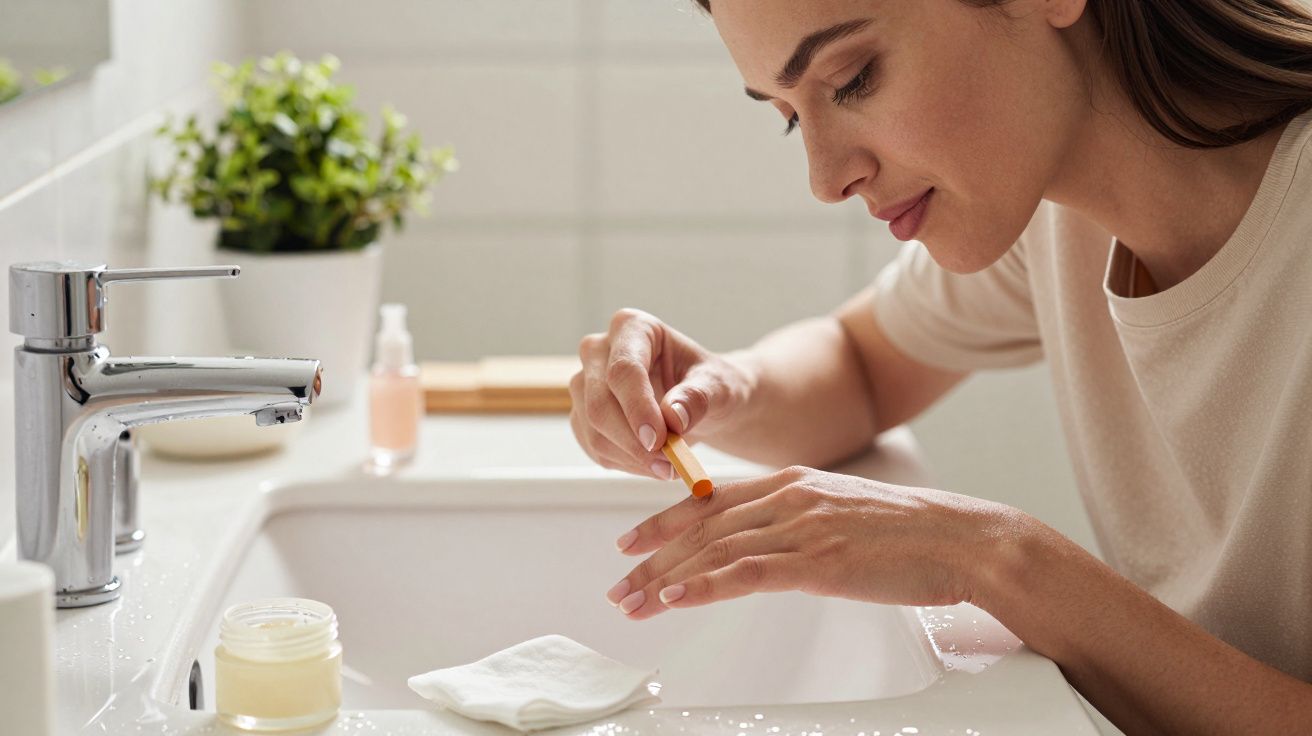
You can walk out of a manicure with the same shade you always choose and still feel like your hands look somehow… richer. It’s rarely the polish. It’s cuticle care - the quiet bit at the start that decides whether the whole finish reads as crisp and expensive or slightly rushed.
I noticed it after two appointments a week apart: identical colour, same salon, same lighting. The first time, my nails looked neat but a touch bulky, as if the colour stopped too soon. The second time, the nails looked longer, cleaner, and smoother from every angle. The only difference was ten minutes of careful cuticle work that made the polish look like it belonged there.
Why cuticles change the whole “result”, even before colour goes on
Cuticles are tiny, but they control the border of your manicure - and borders are what the eye reads first. If there’s dead skin sitting on the nail plate, polish doesn’t lay as flat, top coat can ripple, and the colour line at the base looks thicker than it is. Your brain clocks that as “home job”, even if the colour is perfect.
There’s also a simple shape illusion. When the cuticle area is gently cleared and the proximal nail fold is tidied (without being attacked), more visible nail plate is revealed. The nail instantly looks longer and more even, so the same shade suddenly looks sleeker. A clean cuticle line is basically contouring for nails.
The bit most people miss: it’s about adhesion, not aesthetics
Polish doesn’t stick well to skin, and it doesn’t stick well to a nail plate that’s half-covered in invisible residue. Cuticle work is really prep work: it removes the thin, clingy layer of dead tissue that can creep onto the nail (often called the cuticle on the nail plate), and it helps create a clean surface for base coat to grip.
When that prep is skipped, the manicure can feel different in three ways:
- It chips sooner at the base or sides because the base coat isn’t anchored properly.
- It looks “thicker” near the cuticle, because colour has to stop short to avoid flooding.
- It peels in sheets, especially with gel, because the edge has lifted from day one.
A good polish brand can’t fix a messy starting line. It can only highlight it.
What “good cuticle work” actually looks like (and what it doesn’t)
The best cuticle care is slow and slightly boring. It’s softening, gentle pushing back, precise cleaning of dead tissue on the nail plate, then careful trimming only if there are true hangnails. It shouldn’t feel like scraping, and you shouldn’t leave with a hot, stinging sensation that you mistake for “thorough”.
If you want a quick mental checklist while you’re in the chair:
- The cuticle remover (or warm soak) is given time to work - not wiped off immediately.
- The technician pushes back gently and works on the nail plate, not just the skin edge.
- Any nipping is minimal and targeted (loose bits only), not a full cuticle “mow”.
- The skin around the nail looks calm afterwards, not shiny-red or swollen.
Let’s be honest: plenty of us have sat through a rushed cuticle attack because we wanted the appointment to end. The problem is that aggressive trimming often makes the next week worse - more dryness, more splitting, more ragged edges - which makes the next manicure harder to perfect.
How to get that “clean salon” look without changing your polish
If you’re doing your own manicure, the most useful upgrade isn’t a new bottle. It’s a tiny routine you can repeat without drama.
- Wash hands, then dry thoroughly (water hiding under the nail is a sabotage artist).
- Apply cuticle remover or use a warm (not hot) hand soak for 3–5 minutes.
- Gently push back with a wooden stick or rubber pusher, keeping it flat to the nail.
- Wipe the nail plate clean to remove the softened dead tissue.
- Only nip true hangnails - never “chase” living skin.
- Dehydrate the nail plate (a swipe of alcohol or nail cleanser), then base coat.
The satisfying part is how little polish you suddenly need. With a clean edge, you can float colour closer to the cuticle without flooding, and everything looks sharper even in boring lighting on the bus home.
Why it feels “more expensive”: the eye loves a crisp margin
The difference you’re reacting to is often the negative space at the base of the nail. When cuticles are tidy, the gap looks deliberate and even, not accidental. Light reflects smoothly off the nail plate and top coat, and that reflection reads as quality.
It’s the same reason a freshly edged lawn looks better than a bigger garden with messy borders. The manicure hasn’t changed size - the boundary has changed definition.
| Point clé | Détail | Intérêt pour le lecteur |
|---|---|---|
| Clean nail plate | Dead tissue removed before base coat | Better wear, fewer chips and lifts |
| Crisp cuticle line | Polish can sit closer without flooding | Nails look longer and neater |
| Gentle, not aggressive | Minimal cutting; calm skin afterwards | Less soreness, fewer hangnails later |
FAQ:
- Is it better to cut cuticles or just push them back? Pushing back and cleaning the nail plate is usually enough. Trim only true hangnails or loose, dead bits; cutting living skin can lead to soreness and ragged regrowth.
- Why does my manicure peel near the cuticle after a day or two? Often it’s prep: residue left on the nail plate, or polish applied onto skin at the base so it lifts. Better cuticle care plus proper dehydrating before base coat helps.
- Can cuticle oil ruin polish wear? Not if you use it after the manicure is finished and dry. Oil before painting can interfere with adhesion unless you cleanse the nail plate again.
- What should I ask for in the salon if I want a cleaner finish? Ask for careful cuticle prep and cleaning of the nail plate, and to avoid over-cutting. You can say you want the colour floated close to the cuticle without flooding.
- Does this matter with gel as well as regular polish? Even more with gel. Any lifting at the cuticle edge can spread, because gel behaves like a flexible sheet once an edge is compromised.




Comments (0)
No comments yet. Be the first to comment!
Leave a Comment