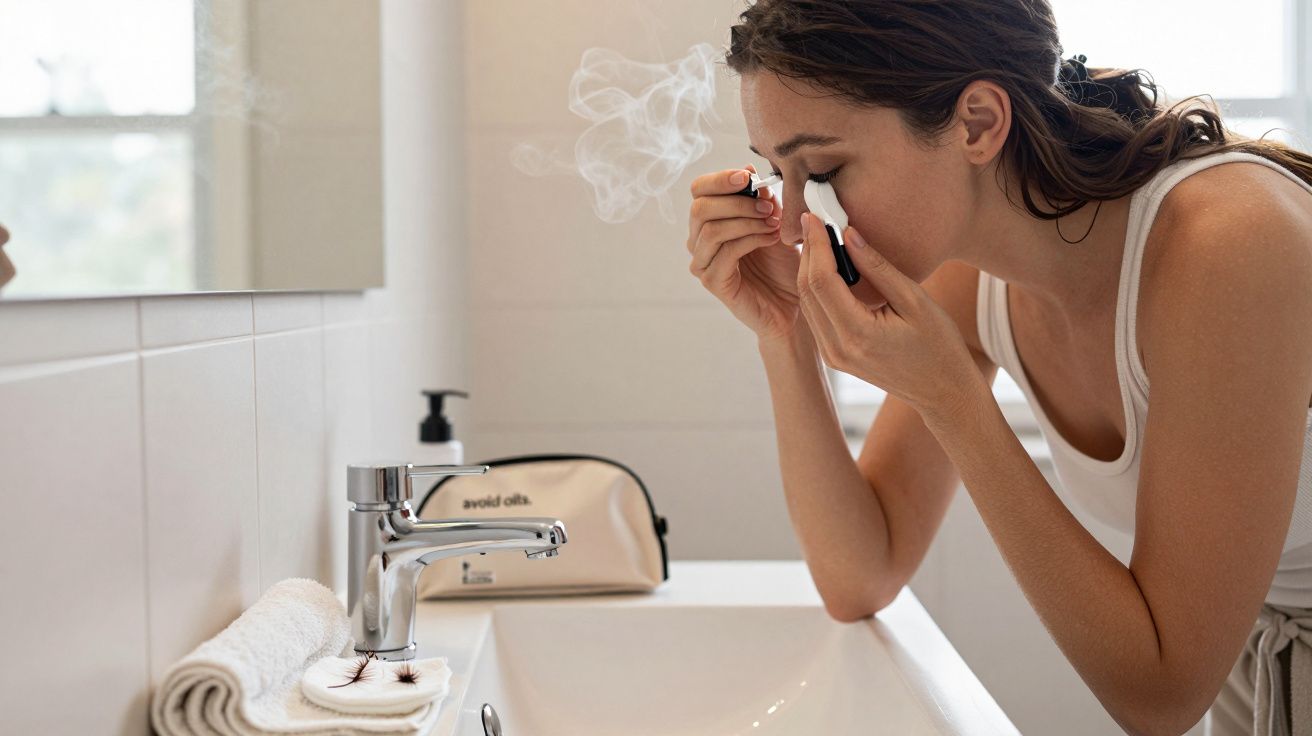
Eyelash extensions are designed to sit on your natural lashes and look effortless day to day, whether you’ve had them applied in a salon or as part of a regular infill routine. When they start dropping sooner than you expected, it’s almost always a mix of retention issues and normal lash biology-plus a few habits that quietly speed up shedding. Understanding what’s “normal fallout” versus a real problem can save you money, time, and that slightly panicked mirror-check on day five.
There’s also a frustrating psychological bit: you notice loss more than you notice consistency. One gap near the outer corner can make the whole set feel like it’s failing, even when most of the extensions are still exactly where they should be.
What “fast shedding” actually means (and what’s normal)
Natural lashes have a growth cycle. A healthy person sheds lashes every day, and if an extension is attached to a lash that was already nearing the end of its cycle, it can drop quickly with the natural lash attached.
The tell is in what you’re seeing on your cotton pad, pillowcase, or sink. If you’re finding extensions with a tiny natural lash still attached, that’s usually normal. If you’re seeing lots of bare extensions with no natural lash, that points to bonding or aftercare problems.
A few lashes a day can be normal; clumps, bare extensions, or sudden corner loss usually isn’t.
Quick self-check: what are you finding?
- Extension + natural lash attached: often normal lash cycle.
- Extension alone (no natural lash): bonding, oil, moisture, or mechanical friction.
- Several from the same area (often outer corners): sleeping position, rubbing, styling, or mapping/weight issues.
The quiet causes that break the bond early
Most “my lashes won’t last” stories come down to the bond being weakened, not the glue being “bad”. Adhesive needs the right conditions to cure properly, and then it needs a relatively calm life: low oil, low friction, and no constant soaking.
The annoying truth is that little, everyday things stack up. Ten seconds of rubbing. A steamy shower with your face under the water. A rich eye cream migrating upwards overnight. None of these feel dramatic, but collectively they are.
1) Oil, skincare migration, and make-up remover shortcuts
Oil breaks down lash adhesive. Even if you never put oil directly on the lashes, it travels: cleanser residue, balm cleansers, heavy moisturiser, SPF around the eyes, and some concealers all creep.
A common trap is “gentle” make-up remover that’s actually oily. It feels kind to the skin, but it can turn your lash line into a slip-and-slide.
- Avoid balm cleansers and oil-based removers near the lash line.
- Apply eye cream lower on the orbital bone, not right up to the lashes.
- Keep brow gels, SPF sticks, and face oils away from the lid margin.
2) Heat, humidity, and long showers
Adhesive is a polymer. Excess heat and frequent steam can soften and stress the bond over time, especially if you combine it with rubbing to “dry off” afterwards.
This is why people who live in very humid environments, go to hot yoga, sauna frequently, or love boiling-hot showers often report faster loss-even when everything else is perfect.
3) Mechanical friction: sleeping, rubbing, towels, and masks
Outer corners tend to shed first because they take the most friction: side sleeping, pillow contact, eye masks, even car heater airflow plus a scarf can add up.
If you wake up with a slightly itchy eye and rub without thinking, you can remove a surprising number of extensions in seconds. It’s rarely “the glue failed”; it’s often “the set didn’t stand a chance”.
When the problem starts in the chair
Sometimes retention issues are baked in from the appointment. That can be awkward to hear, but it’s also empowering, because it’s fixable with a clear conversation and a good lash artist.
The most common technical reasons are prep, placement, weight, and isolation. They’re not always obvious to the client until day two, when losses start arriving faster than your next infill date.
Prep and curing: clean lash line, correct timing
If natural lashes aren’t properly cleansed and dried before application, adhesive bonds to residue rather than the lash. Likewise, if the room conditions (temperature/humidity) don’t match the adhesive’s requirements, curing can be inconsistent.
You don’t need to police your technician. But you can notice patterns: if your sets always fail regardless of your aftercare, it’s worth asking about humidity control, primer use, and cure time.
Too much weight or “pretty, but heavy” styling
If the extensions are too heavy for your natural lashes, the lashes can twist, feel pokey, or shed early because the natural lash is under strain. Drama styles are possible on many people, but they must be matched to lash health and growth phase.
A set that looks amazing on the day can still be mismatched to your lash type. Retention is where that mismatch shows up first.
Poor isolation: the clumping problem that snowballs
When natural lashes are stuck together, they pull on each other as they grow. That can cause discomfort, faster shedding, and that messy look where gaps appear unpredictably.
If you ever feel tugging when you blink, or a lash “catches” when you wash, that’s worth flagging quickly.
The aftercare routine that actually helps (without turning into a lifestyle)
People either under-clean (“I’m scared to touch them”) or over-scrub (“I’m cleaning them properly!”). The sweet spot is gentle, regular cleansing that removes oils and debris without friction.
A simple, repeatable routine usually wins. Not because it’s fancy, but because it’s consistent.
- Clean daily with a lash-safe foaming cleanser and rinse thoroughly.
- Pat dry with a lint-free towel (no rubbing), then use a spoolie to realign.
- Avoid waterproof mascara and heavy eyeliner along the lash line.
- Book infills on a realistic schedule (often 2–3 weeks, depending on your cycle).
Clean lashes often retain better than “untouched” lashes, because the bond isn’t constantly attacked by oils and build-up.
What to tell your lash artist if you want better retention
Retention conversations go better when you bring specifics rather than “they all fell out”. Mention timing, areas, and any lifestyle changes (new skincare, gym classes, medication changes, stress).
Here are the details that actually help a technician troubleshoot:
- When did you notice the first drop (24 hours, 3 days, 10 days)?
- Is it mostly outer corners, one eye, or evenly across?
- Are the fallen extensions mostly with natural lashes or without?
- Any changes: retinol near eyes, new cleanser, steam/sauna, hay fever rubbing?
A quick “cause → fix” map
| What you notice | Likely cause | What to try next |
|---|---|---|
| Outer corners go first | Sleep friction / rubbing | Silk pillowcase, adjust eye mask, be strict about no rubbing |
| Lots of bare extensions | Oil or weak bonding | Lash shampoo daily, swap remover, ask about prep/humidity |
| Early loss after every set | Technique/environment mismatch | Ask about adhesive choice and room humidity; consider a patch test/consult |
When faster shedding is a body signal, not a lash problem
Sometimes the lashes themselves are in a shedding-heavy phase. Stress, illness, hormonal shifts, seasonal changes, and some medications can increase fallout. You can have a perfect application and still see shorter wear during those periods.
If you’ve noticed more hair shedding generally, or your lashes feel finer than usual, it may be time to go lighter with styling, extend infill intervals carefully, and prioritise lash health over maximum density.
FAQ:
- How long should eyelash extensions last? Many people see their set looking good for around 2–3 weeks, with infills typically booked before it looks sparse. Exact wear depends on your lash cycle, styling, and aftercare.
- Is it normal to lose extensions in the first 48 hours? A small amount can be normal, especially if those natural lashes were already shedding. Notice whether the extensions fall with a natural lash attached; bare extensions suggest a bonding or aftercare issue.
- Do I need to clean my lash extensions every day? For most people, yes-gentle daily cleansing helps remove oils and debris that weaken the adhesive and cause retention issues.
- Why do the outer corners fall out first? They take the most friction from sleeping, rubbing, towels, and eye masks. Even perfect bonding can lose to constant mechanical contact.
- Can skincare really make lashes shed faster? Yes. Oils, balm cleansers, heavy eye creams, and some SPFs can migrate and break down adhesive, leading to faster shedding.





Comments (0)
No comments yet. Be the first to comment!
Leave a Comment