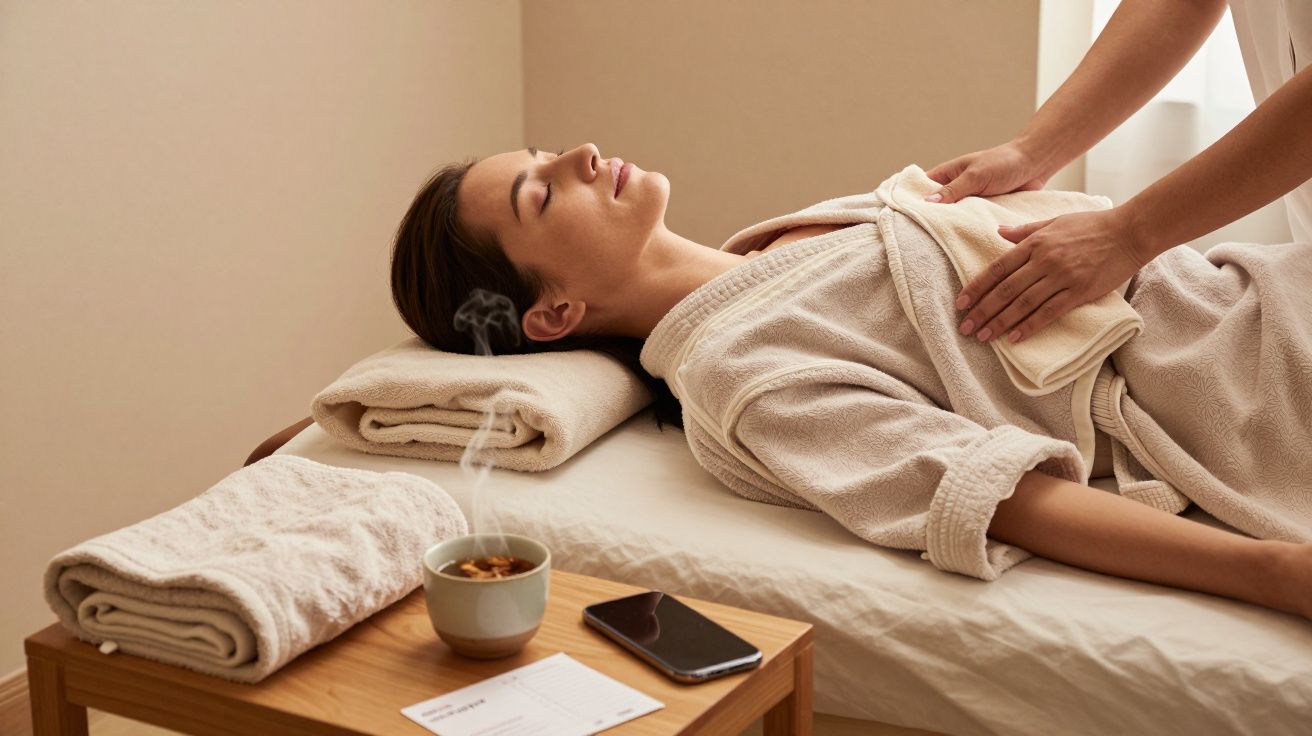
A full day in a salon can look indulgent from the outside, but beauty bundles often deliver something more practical: mental relief you can feel in your shoulders and your breathing. Booked as a sequence-facial, massage, nails, hair, maybe a brow tidy-they turn self-care into a protected block of time where you don’t have to make decisions or be “on”. For anyone running on fumes, that matters, because stress isn’t only in your head; it’s in your nervous system, your posture, and the constant sense of being behind.
Most people don’t realise how much strain comes from the switching: phone buzzing, errands half-done, five-minute gaps filled with scrolling and micro-worry. A full-day session replaces that jagged rhythm with one long, predictable timeline. You arrive, you hand over the plan, and you spend hours in a rare state: being looked after without having to perform competence.
Stress isn’t one feeling - it’s a loop
Stress tends to act like a closed circuit. Your body speeds up, your brain searches for threats, you over-plan, you get more tired, and then the smallest decision starts to feel heavy. In daily life, you keep feeding the loop with tiny inputs: rushing, multitasking, noise, and the background pressure to respond quickly.
A full-day appointment interrupts that circuit in a blunt, almost physical way. You’re not just “resting”; you’re stepping out of your usual environment, handing your phone to a pocket or a locker, and letting someone else manage the sequence. That combination-different space, different rules, fewer choices-can be more calming than an hour on the sofa that still contains emails, laundry and guilt.
When you don’t have to decide what happens next, your body stops bracing for the next demand.
Why “a bundle” works better than one treatment
One treatment can be lovely, but it often keeps the rest of your day intact. You rush there, you rush back, and the mind stays half-latched onto the to-do list. Beauty bundles change the maths: you’re in for long enough that rushing makes no sense, and you stop trying to cram life around it.
There are a few mechanics at play:
- Fewer transitions. You’re not navigating travel, parking, payment, and “what now?” multiple times. Less friction means less adrenaline.
- A clear container. The day has edges. Start time, end time, a plan in the middle. Your brain likes that.
- Decision fatigue drops. You’re guided from step to step, so the constant “should I…?” quietens.
- Permission arrives. It becomes socially and internally easier to be unavailable when you’ve booked a proper block, not a quick add-on.
People often say they want “time off”, but what they really crave is time where they aren’t managing themselves. A bundle quietly provides that.
The hidden relief: not having to be interesting
In normal life, even relaxation can feel performative. Meeting a friend, replying politely, staying upbeat, choosing the “right” thing to do with your free hour. In a long beauty session, conversation is optional, and silence isn’t awkward because it’s expected.
That matters for overstimulated minds. Quiet isn’t just the absence of sound; it’s the absence of social effort.
The body calms down when the pace is predictable
There’s a reason slow, steady systems work well-your nervous system is one of them. Think of the difference between heating a home in sharp bursts and keeping comfort in planned windows: the aim isn’t constant intensity, but smoothness that prevents peaks. A full-day salon plan creates that smoothness for your body.
Instead of one “hit” of relaxation followed by immediate re-entry into chaos, you get repeated downshifts:
- warm water or steam
- slow touch (massage, facial work, scalp work)
- long periods of stillness
- low-stakes attention to detail
After the second or third treatment, many people notice a shift: breathing deeper, jaw unclenching, shoulders dropping without effort. That’s not magic. It’s the body realising it doesn’t need to stay ready for impact.
It’s not vanity - it’s sensory regulation
Beauty treatments are full of controlled sensory input. Warmth, scent, pressure, texture, repetitive motions, dim lighting. For stressed people, the world is often too sharp: loud notifications, harsh lighting, too many tabs open in the mind.
A good session does the opposite. It makes sensation predictable and safe, which can be profoundly regulating. Even small details-the same therapist voice, the same room temperature, the same steps-can move you out of “scan for problems” mode.
Different bundles soothe different kinds of stress
Not everyone relaxes the same way, and bundles can be matched to what’s actually fraying you.
The mentally overloaded planner. Benefits from long, quiet treatments (facials, massage) and minimal choice on the day. The aim is to stop the constant mental organising.
The physically tense mover. Does best with bodywork: deep tissue, scalp massage, heat therapy. The goal is to persuade muscles to let go.
The socially drained carer. Needs low-demand pampering: nails, brow tidy, hair wash and blow-dry, with permission to be silent. The relief comes from not having to give.
The confidence-dented, run-down type. Often finds hair and skin-focused bundles restore a sense of “I’m back”. It’s not superficial; it’s a reset of self-perception that reduces background stress.
The quiet power of being “off grid” for half a day
Stress thrives on constant availability. Even when you don’t answer messages, the mere possibility of them pulls at your attention. A full-day booking creates a practical excuse to disappear. You don’t have to invent boundaries in the moment; the schedule does it for you.
If you want the stress reduction to actually land, treat it like a protected window:
- Put your phone on Do Not Disturb (not just silent).
- Tell one person where you’ll be for safety, then stop updating.
- Avoid stacking the day with errands before and after.
- Plan a gentle landing: a quiet dinner, an early night, a slow walk home.
The point is not to cram “self-care” into a packed life. The point is to briefly step out of the packed life so your system can remember what calm feels like.
How to choose a bundle that genuinely reduces stress
Not all packages are restful. Some are designed like a conveyor belt: fast turnover, bright lights, noisy reception, constant upselling. If you want mental relief, choose for atmosphere and pacing, not just the list of treatments.
Look for:
- Spacing between treatments. Ten minutes to drink water and reset is not wasted time; it’s part of the effect.
- A clear plan. You want to know what happens when, without negotiating it mid-robe.
- Comfort cues. Quiet rooms, soft lighting, low traffic, warm blankets-small things that tell the body it’s safe.
- No-pressure culture. The calm dissolves if you feel sold to at every step.
A bundle should feel like a rhythm problem being solved: fewer spikes, fewer decisions, more steady care.
When it won’t help - and what to do instead
A full day won’t fix chronic burnout on its own, and it can backfire if it becomes another performance (“I must relax properly”). If you leave feeling guilty, rushed, or overstimulated, the structure was wrong for you, not the idea.
In that case, scale the container, not the intention:
- Choose a half-day with fewer transitions.
- Pick one long treatment rather than three short ones.
- Go midweek or early morning to avoid busy, noisy spaces.
- Ask in advance for a quiet appointment with minimal chat.
The goal is simple: create a stretch of time where your mind stops sprinting ahead of your body.
FAQ:
- Are beauty bundles only relaxing if you enjoy salons? No. The stress reduction comes from predictability, reduced decisions, and regulated sensory input. If salons make you tense, choose a quieter spa, book off-peak, or request a low-chat appointment.
- How long is “full-day” in practice? Often 4–7 hours including breaks. Enough time for your nervous system to downshift more than once, rather than snapping back the moment you leave.
- Is it better to book many small treatments or fewer longer ones? For mental relief, fewer longer treatments usually work better because they reduce transitions and keep you in a calm state for longer.
- What should I do afterwards to keep the calm? Avoid squeezing in chores straight away. Eat something steady, hydrate, and keep your evening low-stimulation so the reset has time to settle.




Comments (0)
No comments yet. Be the first to comment!
Leave a Comment