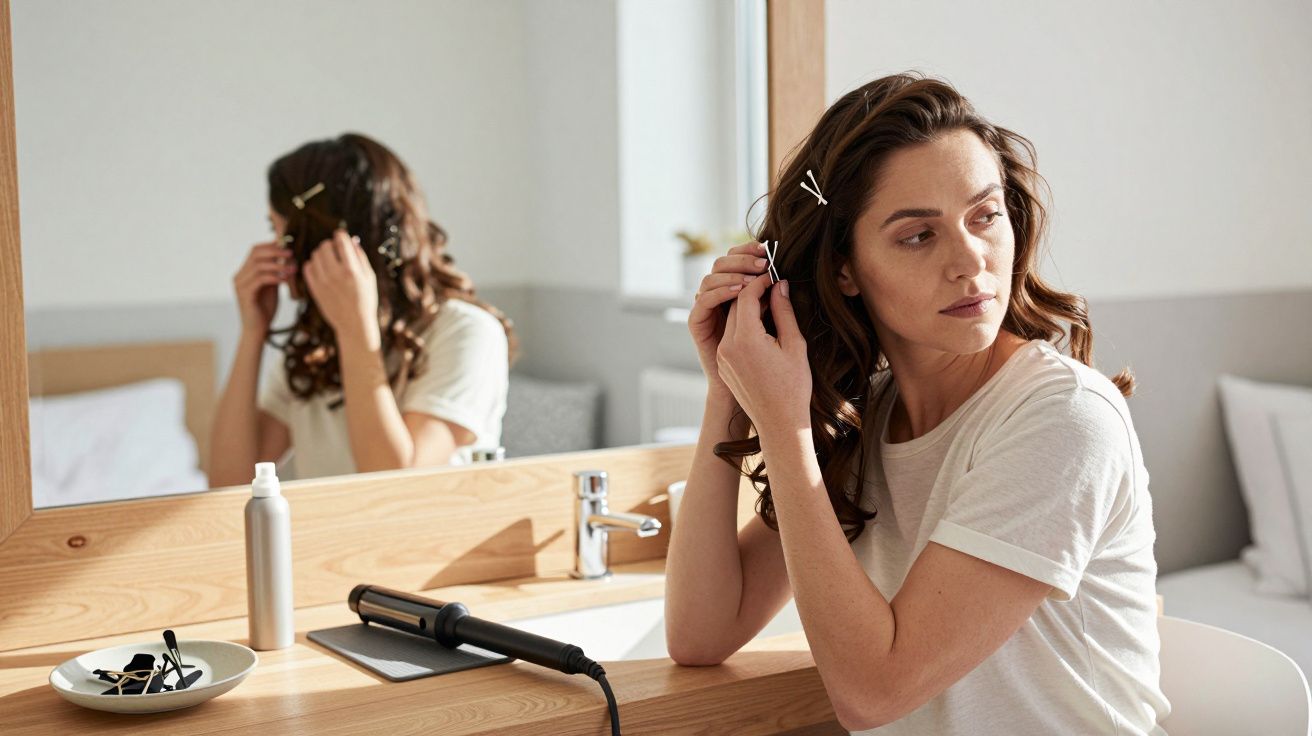
You can spend forty minutes styling, but hair finishing is the part that decides whether you keep that look on a damp Tube platform or lose it by the first coffee run. It’s where lasting shape is either locked in or quietly negotiated away, strand by strand. Most of us only notice it when it’s missing: the curl drops, the roots collapse, the shine turns a bit… tired.
I learned this the boring way, through photos. Two styles looked identical at the door. Only one still looked intentional by lunch, and it wasn’t the one with more heat or more effort. It was the one with a proper finish: cooled, set, protected, and left alone.
Styling is the drawing. Finishing is the fixative.
Styling gets all the credit because it’s visible: the brush work, the curling iron, the neat parting. Finishing is less cinematic. It’s the small, unglamorous steps that tell hair what to do after you stop touching it.
Think of it like paint. The colour is nice, but without sealing it, water and time do what they always do. Hair has weather too: humidity, friction from scarves, the oil from your hands, the heat from a car seat, the wind that finds the weakest section and worries it like a loose thread.
The purpose of hair finishing isn’t “more product”. It’s control: set the shape, manage the surface, and build a buffer between your hair and the day.
The hidden physics of lasting shape
If your style falls, it’s rarely because you didn’t “style hard enough”. It’s because the shape didn’t get a chance to set before you asked it to perform.
Heat temporarily rearranges hair bonds; cooling is when they settle. That’s why curls that are brushed out too soon go soft fast, and why hair that’s pinned to cool holds a wave without feeling crunchy. Moisture matters too: if the air is wet, hair reabsorbs it and relaxes; if your roots are sweaty, lift deflates; if you keep stroking the ends, you break up whatever structure you just made.
A finish that lasts is usually calm. Less fiddling, more setting.
“The look doesn’t need more heat. It needs more time to become itself.”
A simple finishing routine that changes everything
You don’t need a 12-step ritual. You need a repeatable one that matches your hair and the day you’re walking into.
Here’s a finish you can do in a few minutes:
- Cool the shape on purpose. Let curls cool in your hand, clip them, or pin the front sections. Even 5–10 minutes matters.
- Choose your hold based on texture, not fear. Fine hair often needs lighter product more evenly distributed; thick hair often needs stronger hold in fewer, targeted places.
- Protect the roots and the ends differently. Roots need lift and grip; ends need smoothing and sealing. One product rarely does both well.
- Finish with hands off. The most common sabotage is touching, brushing, re-twirling, and “just fixing this bit”.
Let’s be honest: nobody does this perfectly every day. But the days you do it, you feel it in the mirror at 3pm.
Product isn’t the point - placement is
Most “my hairspray doesn’t work” complaints are actually “I sprayed the wrong place at the wrong time”. Finishing is specific.
A few practical placements that tend to work:
- For volume: lift sections, spray into the root area lightly, then let it settle. Spraying the outside can glue the top layer down.
- For curls and waves: mist from a distance after the hair has cooled, then scrunch once and stop. If you spray while it’s hot, you often get stiffness without stamina.
- For sleekness: use a tiny amount of serum or cream on the outside surface and ends, then a clean brush or boar-bristle style to lay the cuticle down.
- For flyaways: spray product onto your hands or a toothbrush/spoolie, then smooth. Direct blasting tends to create a helmet and still miss the small hairs.
If your finish looks good but feels awful, reduce quantity and improve targeting. Hair remembers where you put things.
The finishing mistakes that quietly ruin a good style
These are small, common, and oddly consistent:
- Not letting sections cool. Heat creates the bend; cooling confirms it.
- Brushing too soon or too much. Brush for shape once, then leave it to live.
- Overloading the top layer. Product on the canopy makes hair look done-for-the-day before the day begins.
- Skipping protection when you know it’s humid. Humidity is a vote against your style; a light anti-humidity finish is you casting yours back.
- Trying to “fix” the style all day. The more you touch, the more you undo your own work.
A useful rule: if you’re reaching for your hair every ten minutes, your finish is missing either hold or boundaries.
Match your finish to your real life
A finish for a night out isn’t the same as a finish for a commute. Finishing works best when it’s honest about friction.
- If you wear a scarf or hood: aim for smoother surfaces (serum/cream lightly) and stronger internal hold (root spray/pins) so the outside can move without collapsing the structure.
- If you’re walking in drizzle: prioritise anti-humidity and a slightly firmer hold than you think you need.
- If you’re heat-styling daily: use less heat, more setting. The most sustainable lasting shape often comes from cooling, clipping, and gentle hold rather than turning the iron up.
Your hair doesn’t fail you. It responds to conditions.
| Finish goal | What to do | What to avoid |
|---|---|---|
| Lasting curl | Cool curls clipped/pinned; mist hold after cooling | Brushing hot curls; heavy spray up close |
| Root lift | Product into roots; lift and let it settle | Spraying the top surface flat |
| Sleek shine | Tiny serum on surface/ends; smooth with clean brush | Piling oil at roots; constant touching |
FAQ:
- Is hair finishing just hairspray? No. It’s the whole “set and protect” phase: cooling, clipping, smoothing, sealing, and choosing hold where it’s needed.
- How do I get lasting shape without crunchy hair? Use less product, apply it more precisely, and prioritise cooling/setting. Crunch usually comes from too much product too close to the hair.
- Should I finish before or after brushing? Generally: style → cool/set → brush once (if needed) → finish lightly. Brushing after a heavy finish tends to break the hold.
- What’s the quickest finishing upgrade? Clip or pin sections for 5–10 minutes while they cool. It’s the most boring step with the biggest payoff.


Comments (0)
No comments yet. Be the first to comment!
Leave a Comment