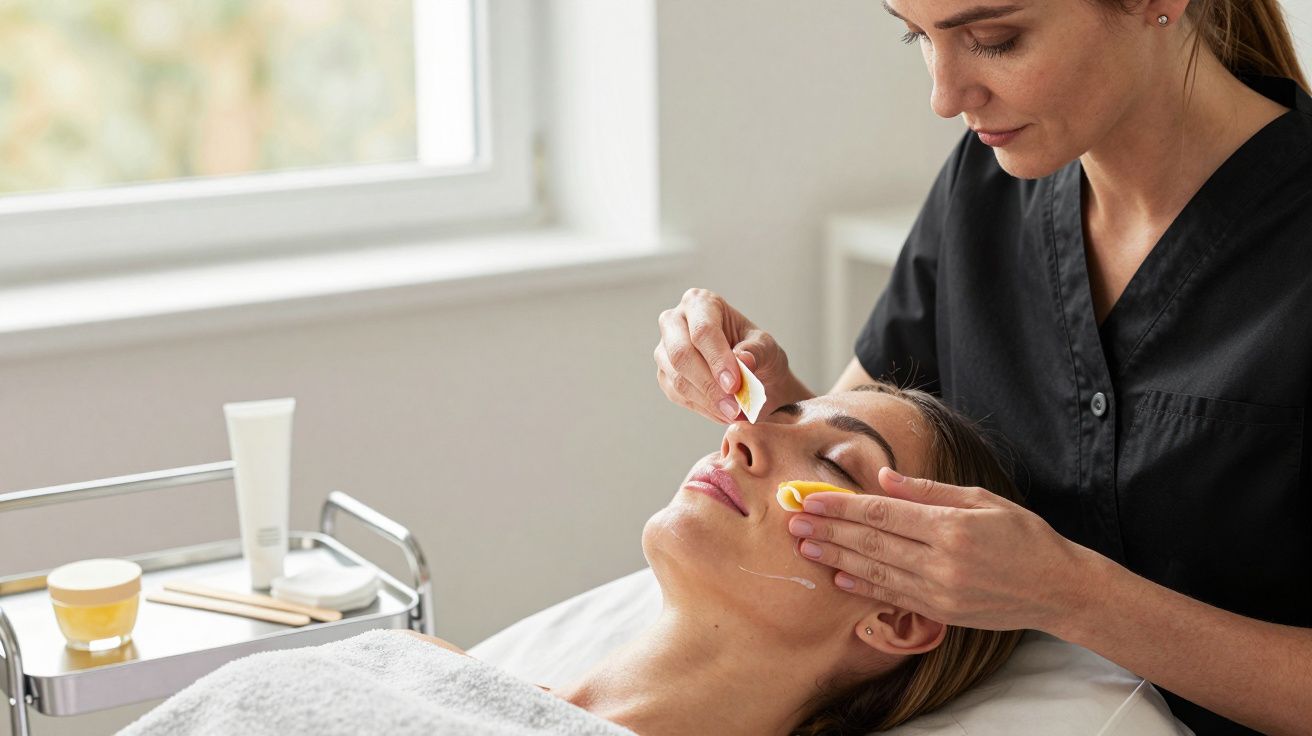
You can walk into a salon expecting waxing to feel the same everywhere, then get surprised when facial waxing reacts faster, stings differently, and leaves a different kind of redness. Hair density plays a quiet part in this: the face often has finer, more varied growth patterns than legs or arms, and that changes how wax grips and releases. Knowing why it behaves differently helps you prep properly, choose the right service, and avoid unnecessary irritation.
People also underestimate how “busy” the face is. It’s exposed to weather, skincare acids, shaving, makeup, and constant movement, so the skin barrier can be more reactive even before the strip goes on.
The face isn’t just “smaller skin” - it’s different skin
Facial skin is generally thinner and more vascular than most body areas, especially around the upper lip, cheeks, and jawline. That means you can see redness sooner, and swelling can look more dramatic even when the treatment has been done correctly.
There’s also more daily friction. Masks, collars, hands resting on the chin, glasses on the nose-small pressures add up, and freshly waxed follicles don’t love being disturbed.
The same wax can be “fine on legs” and feel too aggressive on the face, not because you’re weak, but because the tissue is different.
Faster turnover, more visible reactions
The face tends to show irritation quickly: a flush, tiny bumps, or a warm feeling that lingers. Often it settles within hours, but it’s also the area where over-exfoliation (retinoids, AHAs/BHAs, scrubs) can turn a normal wax into a stingy one.
If body waxing feels like a tug, facial waxing can feel like a snap. That’s not drama-it’s anatomy plus exposure.
Hair density and growth patterns change how wax “grabs”
Hair density varies hugely by zone. On legs or forearms, hair often grows in a more uniform direction, with similar thickness across a wider patch. On the face, growth can be swirly, directional, and mixed: fine vellus hair next to coarser terminal hairs, sometimes within the same strip.
That mix affects the pull. Wax that’s perfect for a dense, consistent body area may not release as cleanly from fine facial hair, especially if the strip overlaps multiple growth directions.
The sneaky part: short hairs and “shadow”
Facial hair can be shorter and more tapered, particularly on the upper lip and cheeks. Even when it’s removed, you might still notice a temporary shadow from follicles and post-wax redness-something less obvious on the body where skin tone is more even and pores are less visible at close range.
Common face-specific patterns include:
- Upper lip hair growing diagonally towards the corners
- Chin hair growing in multiple directions and cycles
- Cheek hair that is mostly fine, but dense enough to trap dead skin and makeup
Wax type, temperature, and technique matter more on the face
Body waxing often tolerates speed: larger sections, firmer pulls, and fewer “micro-corrections”. Facial waxing rewards precision. Smaller sections, controlled tension on the skin, and lower trauma matter because the margin for error is slimmer.
Hard wax is commonly preferred for facial areas because it sets around the hair and can be gentler on fragile skin when used well. Soft wax can still be used on the face, but it demands excellent technique and careful product choice-especially for sensitive clients.
A quick comparison of what tends to change
| Factor | Facial waxing | Body waxing |
|---|---|---|
| Skin | Thinner, more reactive | Thicker, usually more resilient |
| Hair | Mixed texture, varied direction, variable hair density | More uniform direction and thickness |
Why breakouts happen more after facial waxing
Post-wax breakouts aren’t always “dirty tools” or bad products. Sometimes they’re a simple mechanical issue: hair is removed, follicles are open and inflamed, and then occlusion happens-heavy moisturiser, SPF that pills, foundation, or just sweat under a scarf.
The face also has more sebaceous activity in common wax zones (upper lip, chin, jawline). That oiliness can mix with dead skin and bacteria, creating bumps that look like acne but behave more like folliculitis or irritation.
To reduce the risk in the first 24–48 hours:
- Skip retinoids, acids, and scrubs (ideally for a few days before and after)
- Keep makeup light or avoid it for the rest of the day
- Use a bland, fragrance-free moisturiser and a gentle SPF
- Avoid heat: steam rooms, hot yoga, very hot showers
Pain, timing, and the “it feels worse here” reality
Facial waxing can feel sharper because nerves are denser and the skin moves constantly when you talk, eat, smile, and yawn. The upper lip, in particular, combines thin skin, strong nerve endings, and high visibility-so you notice every sensation and every after-effect.
Timing can help. Many people find facial waxing feels easier mid-cycle, and harsher right before a period, when skin sensitivity can spike. It’s not universal, but it’s common enough to plan around if you’ve noticed a pattern.
When to rethink waxing on the face
Some situations make facial waxing a poor match, at least temporarily:
- Prescription retinoids (and often recent use of strong topical retinoids)
- Recent chemical peels, microneedling, or aggressive exfoliation
- Active cold sores around the mouth
- Sunburn, windburn, or a compromised skin barrier
A good therapist will ask, pause, and redirect you to threading, trimming, or another method if the skin isn’t in a safe state.
What “normal” looks like afterwards
A little redness, warmth, and mild tenderness are typical. Tiny raised dots around follicles can show up and fade as the skin calms down. What you don’t want is persistent swelling, broken skin, or a rash that spreads-those are signs the area was too sensitised, the wax was too hot or too aggressive, or aftercare wasn’t suitable.
If you want one practical takeaway, it’s this: treat facial waxing like a skin service as much as a hair service. The hair is the reason you book, but the skin is what determines how it goes.
Practical notes to take into your next appointment
- Arrive with clean skin, minimal product, and no fresh actives
- Tell your therapist about skincare, medications, and recent treatments
- Ask what wax is being used and why it suits the area
- Don’t be shy about smaller sections-on the face, precision beats speed





Comments (0)
No comments yet. Be the first to comment!
Leave a Comment