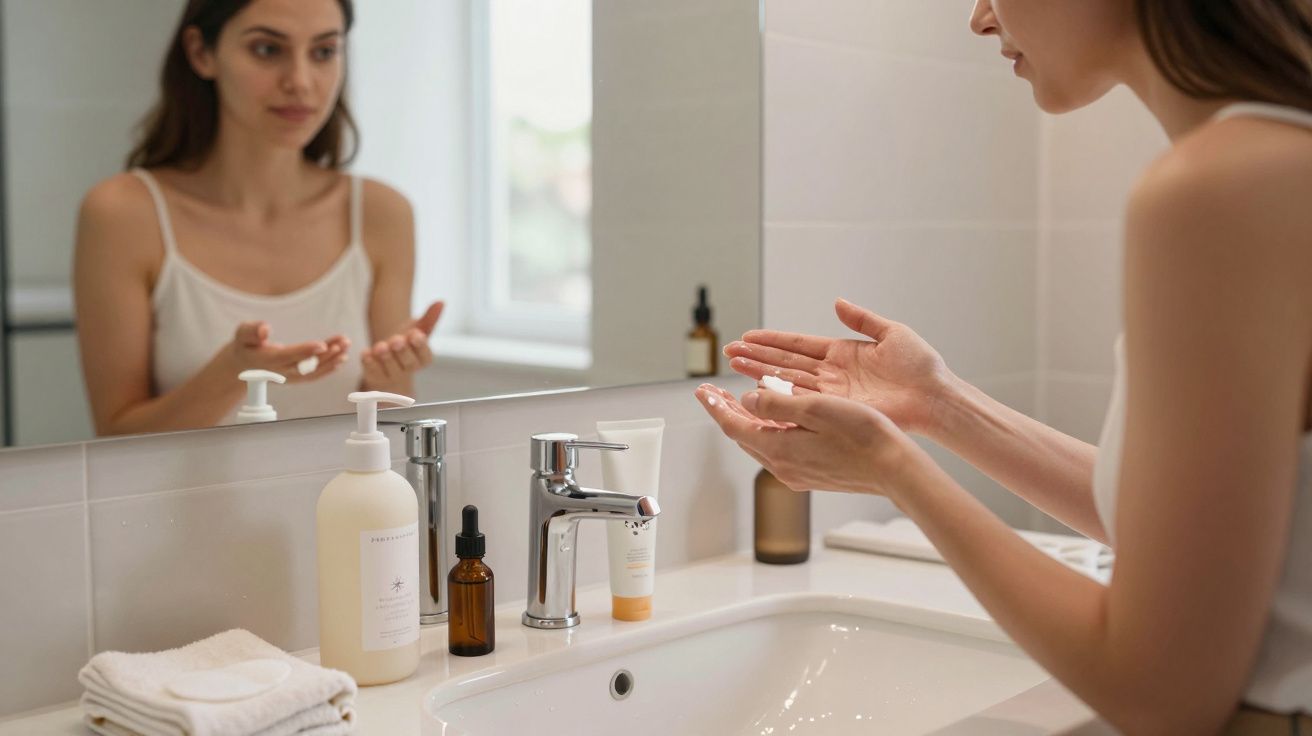
The day after a clinic visit, it’s common to catch your reflection and think, finally. Facial treatments often deliver that immediate “glass skin” look, and it’s exactly why post-treatment care matters as much as whatever happened on the bed under bright lights. If the glow fades by day three, it rarely means the treatment “didn’t work” - it usually means the early shine was a short-lived mix of hydration, swelling and a temporarily smoother surface.
That quick cycle can feel unfair: you paid, you followed the instructions (mostly), and yet your skin seems to revert. The trick is knowing which part of the glow was real improvement, and which part was a very normal, very temporary after-effect.
The day-one glow is often a bit of theatre - in the best way
Most in-clinic facials create an instant payoff because they change how light sits on your skin. Fresh exfoliation removes dull surface cells, rich products top up water, and massage increases circulation so you look brighter even before longer-term changes kick in.
A lot of “wow” comes from simple physics: a smoother, well-hydrated surface reflects light more evenly. Even mild inflammation can help here, too. Tiny, controlled irritation (from acids, extractions, heat, microcurrent, needling) can create slight swelling that plumps the skin and softens fine lines for 24–48 hours.
That first-day shine is often real - it’s just not always the same as a lasting change in texture, pigment, or collagen.
Why it fades by day three: the common culprits
Day three is where the skin’s reality check tends to land. Your barrier starts to re-balance, superficial swelling settles, and your usual environment reasserts itself: hard water, central heating, commuting grime, rushed cleansing, your pillowcase.
Here are the usual reasons the glow drops off:
- Hydration rebound: your skin loses the water it was “topped up” with, especially if you don’t seal it in with the right moisturiser.
- Barrier disruption: over-cleansing or actives too soon can increase dryness and roughness, making light scatter again.
- Post-extraction micro-inflammation: what looked flat on day one can become tiny bumps or redness as follicles calm down.
- Delayed flaking: after acids, peels, dermaplaning or needling, micro-peeling can start around day two or three.
- Lifestyle drag: alcohol, salty food, poor sleep and stress show up quickly on the face - faster than most people expect.
A quick map: what “glow” actually is
Not all glow is created equal. Some parts are fleeting; others build slowly.
| What you’re seeing | Likely cause | How long it tends to last |
|---|---|---|
| Glossy, reflective sheen | Hydration + occlusion + smoother surface | 24–72 hours |
| Slight plumpness | Mild swelling/inflammation | 24–48 hours |
| Better tone/less dullness | Exfoliation + improved cell turnover | Days to weeks (with consistency) |
If your glow is purely the top row, day three can feel like a cliff edge. If you’re also getting the bottom row, it’s often subtler - and easier to miss without photos in the same lighting.
The quiet saboteur: doing too much “after”
Post-treatment care fails most often because people panic when the glow starts to fade and throw the entire bathroom cabinet at it. That usually backfires.
Common day-two/day-three mistakes include scrubs “to keep it smooth”, retinoids “because I’m used to them”, multiple acids layered, hot yoga/sauna “to sweat it out”, and heavy makeup over skin that’s still sensitised. Each one can roughen the surface or inflame the barrier, which kills radiance quickly.
The simplest rule that works more than it should
Treat your skin like it’s recovering from a sunny day, even if it doesn’t look sunburnt. Keep it calm, hydrated, and boring for a short window, then reintroduce your normal routine.
A practical 72-hour playbook that preserves the results
Different facial treatments have different aftercare, so follow your practitioner’s instructions first. But for many common facials (hydrating, exfoliating, LED add-ons, mild peels, microcurrent, extractions), this “low drama” plan fits most people.
Day 0–1: protect the fresh surface
- Cleanse with a gentle, non-foaming cleanser (or just rinse in the morning if advised).
- Use a bland moisturiser (ceramides/glycerin/squalane are usually safe bets).
- Wear broad-spectrum SPF 30+ even if it’s grey outside.
- Skip: retinoids, acids, scrubs, fragrance-heavy products, very hot showers on the face.
Day 2–3: support the barrier, don’t chase shine
- Keep cleansing minimal; avoid “squeaky clean”.
- Add a hydrating serum if you tolerate it (hyaluronic acid works best under moisturiser).
- If you’re flaking, do not pick - use moisturiser and let it pass.
- If you must wear makeup, prioritise lighter base products and remove them gently.
The goal isn’t to keep day-one glow frozen in place. It’s to stop the barrier from wobbling, so the skin can settle into a steadier, healthier brightness.
When fading is a sign the treatment plan needs adjusting
Sometimes day-three dullness isn’t just aftercare - it’s the mismatch between the treatment and your skin’s needs. If you’re consistently glowing then crashing, consider these patterns:
- Very dry or sensitised skin: you may need fewer exfoliating steps and more barrier-focused treatments.
- Acne-prone skin: heavy occlusive products right after a facial can trigger congestion days later.
- Pigmentation concerns: the “glow” won’t replace a plan that includes strict SPF and targeted brightening over time.
- One-off appointments: radiance from a single session is often like a haircut - it looks best right after. Results compound with a sensible schedule.
A good practitioner will explain what should be instant, what should be gradual, and what’s simply maintenance.
The bottom line: aim for a slower, steadier glow
Facial treatments can be brilliant - but day one is often the highlight reel. If you want results that don’t disappear by day three, treat post-treatment care as part of what you paid for: fewer actives, more barrier support, consistent SPF, and a little patience while your skin recalibrates.
If the skin becomes increasingly red, painful, blistered, or hot - or if breakouts become severe - stop actives and speak to your practitioner or a pharmacist/GP. A fading glow is normal; a worsening reaction isn’t.
FAQ:
- Can I use retinol the night after a facial? Usually not. Unless your practitioner explicitly says yes, wait 48–72 hours; applying retinoids too soon is a common reason the glow turns into dryness and texture.
- Why do I look worse on day three than day one? Swelling and surface hydration settle, and any barrier disruption or delayed flaking becomes more visible. It’s often temporary and improves with gentle care.
- Is peeling on day two or three normal? Mild flaking can be normal after exfoliation or peels. Don’t scrub; moisturise and protect with SPF.
- What’s the one product that matters most after most facials? Broad-spectrum sunscreen. UV exposure after exfoliation can undo brightness and trigger irritation or pigmentation.
- How can I tell if the facial “worked”? Compare photos in the same lighting after a week, not the next morning. Longer-term improvements show up as more even tone, calmer texture, and less congestion over time.




Comments (0)
No comments yet. Be the first to comment!
Leave a Comment