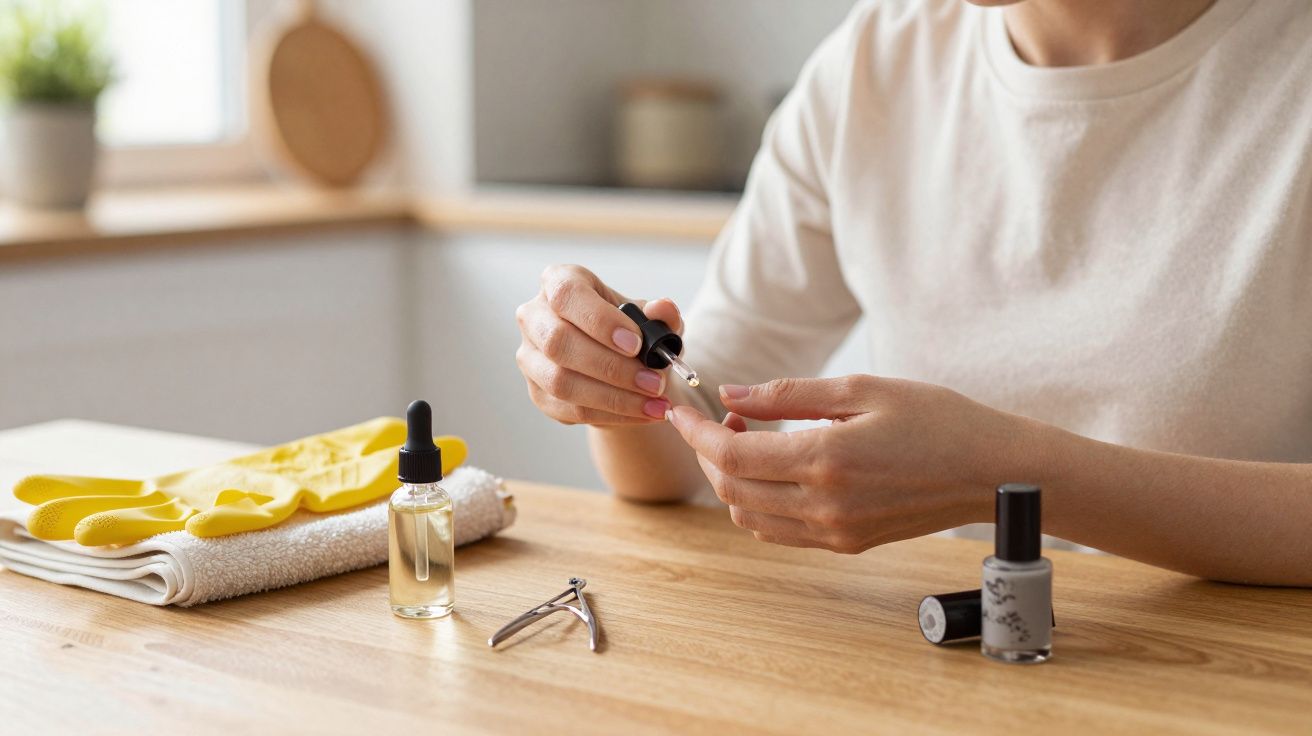
Your nails don’t “grow faster” because of a glossy top coat. They grow from living tissue, and cuticle care is the bit of nail routine that actually touches that biology, directly affecting nail health in a way polish never can. If you’re chasing length, strength, or fewer splits, it helps to stop thinking in colours and start thinking in conditions.
Polish is a shield and a style choice. Cuticle care is maintenance at the source - where new nail is made, and where dryness, inflammation, and picking quietly slow everything down.
What nail growth really responds to (and what it ignores)
Nails are produced in the matrix under the skin at the base of the nail. That area doesn’t “see” your polish, but it absolutely reacts to stress, swelling, dehydration, and micro-trauma around the cuticle line. This is why two people can wear the same manicure and have completely different outcomes a month later.
Polish can prevent some breakage by reducing surface wear, but it doesn’t improve the quality of nail that’s being built underneath. Cuticle care, done well, supports the skin seal and reduces the kind of irritation that turns normal growth into weak, peeling growth.
A shiny nail looks finished. A calm cuticle is what keeps it growing like it has a plan.
The cuticle isn’t the enemy. It’s the seal.
Most people use “cuticle” to mean the whole rim of skin at the nail base. Technically, the cuticle is the thin, dead tissue that can cling to the nail plate, while the living skin around it (the proximal nail fold) is the barrier that protects the matrix.
When that barrier is dry, torn, or constantly pushed back, you get hangnails, redness, and tiny breaks in the skin. Those breaks invite inflammation and infection, and even mild, recurring inflammation can disrupt how smoothly the nail forms. The result isn’t always dramatic; it’s often just slower progress, more peeling, and nails that keep snapping “mysteriously” at the same length.
Seven habits that make cuticle care do the heavy lifting
Think of this as a small ritual you repeat often enough that your nails stop living in recovery mode.
1. Hydrate little and often, not occasionally and intensely
A drop of cuticle oil twice a day beats a once-a-week rescue. Oils and balms reduce water loss from the skin and keep the cuticle line flexible, which means fewer tears and less picking.
2. Treat pushing back as editing, not excavation
Aggressive pushing back creates micro-trauma. If you do it, do it gently after a shower or after applying remover/softener, when tissue is pliable.
3. Clip hangnails cleanly; don’t pull
Pulling a hangnail often rips living skin and creates a deeper wound. Use clean nippers, snip just the loose bit, then oil.
4. Protect your hands from “wet work”
Repeated soaking and drying swells and shrinks both nail and skin. Gloves for washing up are boring, but boring is what gets you length.
5. Be careful with acetone and over-prep
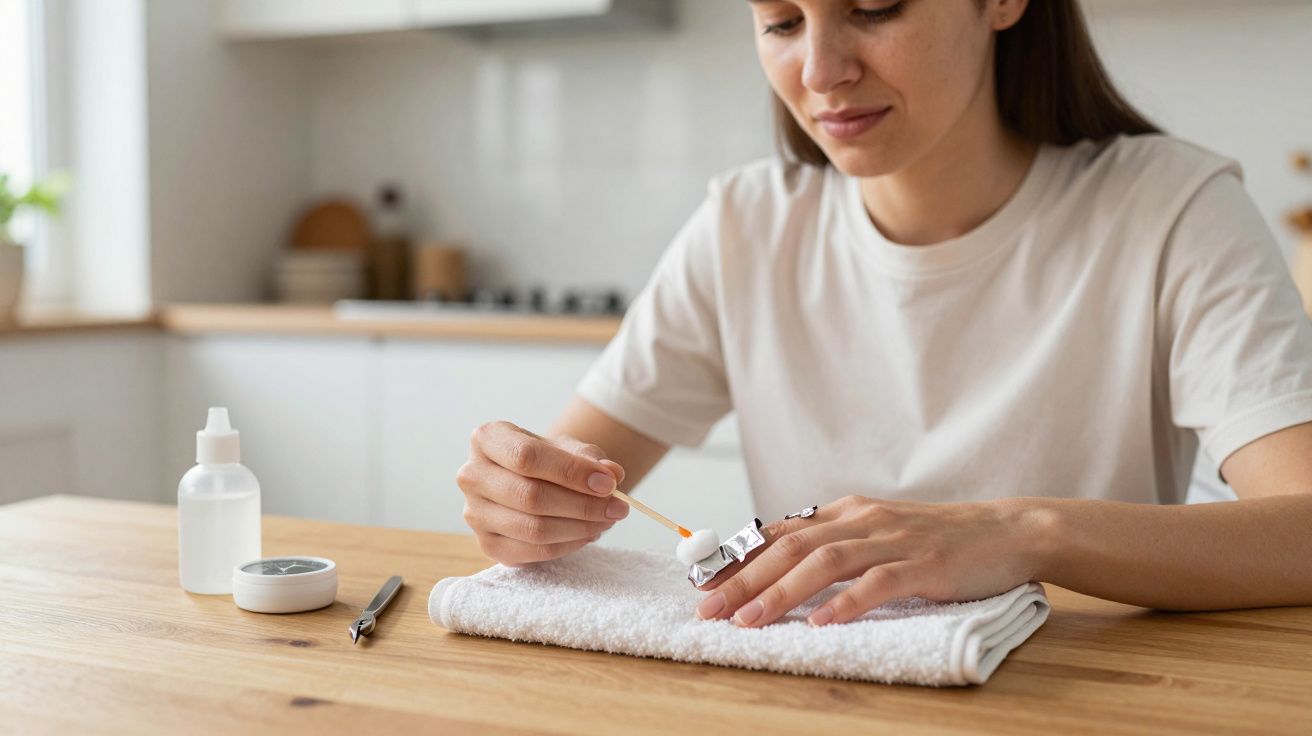
Acetone and heavy buffing don’t just remove polish; they strip the nail surface and dry the surrounding skin. If you’re doing frequent manis, rebuild the moisture around the nail, not just the shine on top.
6. Stop using nails as tools
Prying, scraping, and peeling stickers creates stress right at the free edge, where growth gets “spent” as breakage. Nail growth you can’t keep isn’t growth you benefit from.
7. Watch for persistent redness or soreness
If the cuticle area stays tender, swollen, or looks infected, treat it as a health issue, not a cosmetic one. Ongoing inflammation is a direct tax on nail quality.
Where polish helps - and where it can quietly sabotage you
Polish can be useful: it reduces friction, limits minor chipping, and can discourage biting. Base coat can also reduce staining and, for some people, helps slow down water absorption. Used strategically, polish is a protective layer.
But polish becomes a problem when the routine around it is harsh. Peeling off gel, scraping glitter, repeated acetone soaks, aggressive cuticle trimming - those habits leave the cuticle line ragged, and the nail plate thin. People often interpret that as “my nails are weak”, when it’s really “my nail environment is stressed”.
A quick example: why two manicures can lead to opposite results
One person refreshes polish weekly, uses acetone, then oils their cuticles daily and wears gloves for washing up. Their nails keep length because the skin barrier stays intact and the nail grows out without constant setbacks.
Another person wears polish for two weeks, picks at lifting edges, rips hangnails, and only moisturises when things feel sore. Their nails may grow at a similar biological rate, but the visible length never accumulates because breakage and peeling keep resetting the line.
The difference isn’t willpower. It’s cuticle care.
Cuticle care toolkit (simple, not fussy)
| Tool | What it does | When to use |
|---|---|---|
| Cuticle oil/balm | Reduces dryness and tearing | Morning + evening |
| Gloves for washing up | Limits swelling/drying cycles | Any wet cleaning |
| Clean nippers | Removes hangnails without ripping | As needed, sparingly |
FAQ:
- Do I need to cut my cuticles to make nails look longer? Usually not. Tidying dead tissue can help appearance, but cutting living skin increases the risk of tears and inflammation, which is bad for nail health.
- Is polish bad for nail growth? Polish itself doesn’t stop growth, but removal habits (peeling, harsh acetone use, aggressive prep) can damage the nail and cuticle area, making growth harder to keep.
- How long until cuticle care makes a difference? Skin often looks calmer within a week; nail quality improvements take longer because you’re waiting for new nail to grow out, typically several weeks.
- What’s the one habit that helps most? Daily moisturising (oil or balm) around the cuticle line, especially after handwashing or remover use, because consistency prevents the small cracks that lead to bigger setbacks.



Comments (0)
No comments yet. Be the first to comment!
Leave a Comment