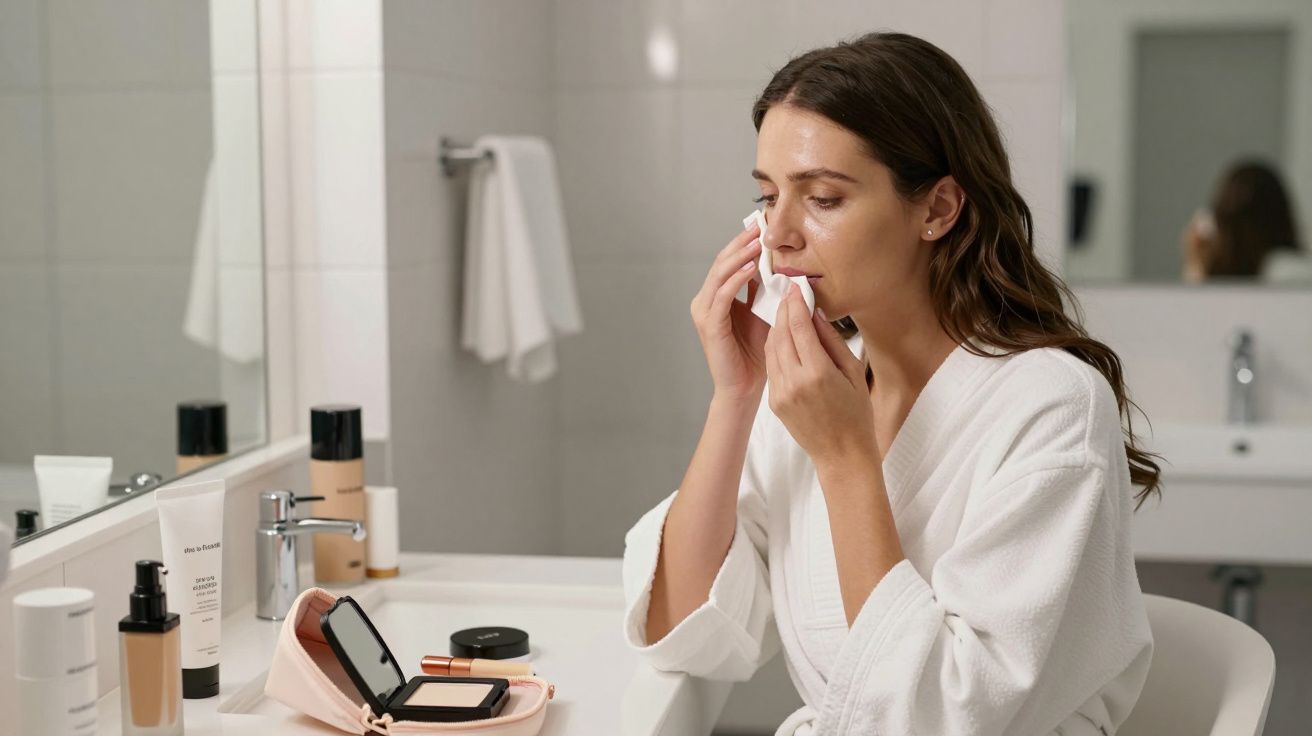
Bridal make-up is meant to hold up through vows, hugs, photos, heat, tears and a long sit-down meal - yet it often starts fading sooner than expected. The surprise usually isn’t about “bad products” so much as skin preparation, timing, and a few invisible clashes between skin and formula. If you know why it slips, separates or turns patchy, you can fix the cause instead of piling on more powder.
It often starts the same way: you look perfect in the mirror at 10am, then by the confetti your foundation has thinned around the nose, your blush has gone shy, and there’s a shine in every close-up. It can feel personal. Mostly, it’s physics.
The real problem: your face is not a still life
A wedding day is basically a stress test. You’re warmer than normal, you’re touched more than normal, and you’re moving between environments that fight your base: car to church, outside to venue, flash photography to warm fairy lights.
Make-up doesn’t “wear off evenly” because your face doesn’t behave evenly. The centre of the face produces more oil, eyes water, lips meet glasses and napkins, and cheeks get hugged. Bridal make-up fades where life happens.
The aim isn’t to make make-up indestructible. It’s to make it fail slowly, and in places you can repair quickly.
Why it fades faster than expected
The causes are usually boring, repeatable, and fixable.
1) Skin care that’s too rich (or too new)
The classic mistake is well-intentioned: a heavier moisturiser “for glow”, a facial oil, a new SPF, a new serum - sometimes all in the same morning. Those layers can stay tacky, or never fully settle, so foundation sits on top like paint on damp plaster.
Even if it looks fine at first, warmth and movement can bring that slip to the surface. The base starts skating, and pigment breaks apart around pores and expression lines.
What helps - Keep wedding-morning skin care familiar, not experimental. - Use lighter layers and let each one set properly before the next. - If you need richness, do it the night before, not right before make-up.
2) Primer and foundation that don’t like each other
Some formulas simply don’t bond. A very silicone-heavy primer under a water-based foundation (or vice versa) can encourage pilling, separation, or that odd “patchy melt” by midday.
It’s not always obvious at application. The clash can appear after 30–60 minutes, once oils start coming through and the face warms up.
Quick check: if you rub a little primer between fingers then add a dot of foundation - does it bead, roll up, or stay smooth? That tiny test can save your whole base.
3) Too much powder, too early
Powder can be brilliant, but the timing matters. If you powder heavily on top of a base that hasn’t set, you trap moisture and oils underneath. Later, those oils push through and the powder goes blotchy, especially on the T-zone, giving you shine and texture.
A more reliable approach is strategic powdering: less product, more patience, and only where you truly need it.
4) Setting spray used like a miracle fix
Setting sprays aren’t all the same. Some melt layers together (great for a natural finish), some form a more rigid film (better for longevity), and some are basically hydrating mists with good marketing.
Also: you can absolutely overdo it. Too much spray too close can re-wet the base and lift coverage, particularly around the nose and mouth where you’re already vulnerable.
5) Tears, heat, and friction - the “wedding day trio”
You can have the best products in the world and still lose make-up to friction. Tissue to the inner corner, kissing cheeks, wiping lipstick, dabbing sweat - it all mechanically removes product.
Heat speeds up oil flow. That’s why make-up fades faster at summer weddings, under marquees, or during a packed dance floor set, even if the venue “doesn’t feel that hot”.
The bit most people miss: the timeline matters more than the brand
A common pattern is rushing skin preparation, rushing complexion, then hoping the final layer (powder or spray) will act like a sealant. That’s the same logic as installing something quickly and expecting it to behave like it was planned properly.
Instead, think in stages: prep, settle, base, set, then leave it alone.
- Apply skincare earlier than you think, so it’s absorbed.
- Give cream products time to “grip” before you lock them in.
- Don’t keep touching and perfecting; constant blending can lift what you just laid down.
A practical approach that actually lasts
You don’t need a 17-step routine. You need a consistent one.
A simple longevity checklist
- Do skin preparation first, then wait: even 10–15 minutes helps.
- Match your base products: water-with-water, silicone-with-silicone (as a rough rule).
- Layer in thin coats: two light passes beat one heavy one.
- Use cream + powder strategically: cream for pigment, a light powder to anchor it.
- Plan touch-ups like a grown-up: blotting papers, a pressed powder, and a lipstick are often enough.
Here’s a useful way to think about it: if you’re oilier, you’re managing shine and slip. If you’re drier, you’re managing texture and cracking. The “same bridal routine for everyone” is why so many faces look great at the start and tired by speeches.
| Problem zone | Likely cause | Better fix |
|---|---|---|
| Nose/chin fading | Oil + friction | Blot, then spot-conceal; avoid heavy powder build-up |
| Cheeks losing blush | Hugging + heat | Use a cream blush under a light powder blush |
| Foundation separating | Skincare/primer clash | Simplify prep; test formula compatibility |
If you’re doing your own bridal make-up: don’t trust the first trial
Do a full wear test on a normal day, not just a “looks nice in the bedroom mirror” check. Put it on, wear it for six hours, go outside, eat something greasy, take photos in daylight, then in indoor lighting.
The aim is to see how it fails. A good trial isn’t one where nothing moves; it’s one where you learn exactly what to change.
- If it breaks up around the nose: reduce emollient products and powder more precisely.
- If it looks heavy by hour three: use less foundation and more targeted concealer.
- If it gets shiny but also dry-looking: you’re probably over-powdering dehydrated skin.
What to ask your make-up artist (without sounding difficult)
A calm, specific question gets you more than “make it last all day”.
- “What’s your plan for my T-zone if I get shiny?”
- “Do you prefer cream products under powder for longevity?”
- “How do you adapt skin preparation if I’m dry/oily/sensitive?”
- “What touch-up products should I keep, and what should I avoid adding?”
If the answer is basically “this setting spray fixes everything”, push gently. Longevity is mostly built before the spray comes out.
FAQ:
- Why does my bridal make-up look perfect, then suddenly fall apart? Because oils and heat build gradually, and friction (tissues, hugs, eating) removes product in specific areas. It’s usually a layering or prep issue that only shows after an hour or two.
- Is skin preparation more important than the foundation itself? Often, yes. Overly rich or tacky prep can make even excellent foundation slide, separate, or wear away quickly.
- Should I powder more to stop fading? Not necessarily. Too much powder can turn patchy as oils push through. Blot first, then add a small amount of powder only where needed.
- Do I need a primer for long wear? Only if it suits your skin and matches your base. A mismatched primer can cause pilling or separation, which looks like “fading” in photos.
- What’s the best way to touch up without making it worse? Blot (don’t rub), then add tiny amounts: spot-conceal where coverage is gone, then lightly powder. Avoid layering more foundation over broken-down areas.




Comments (0)
No comments yet. Be the first to comment!
Leave a Comment