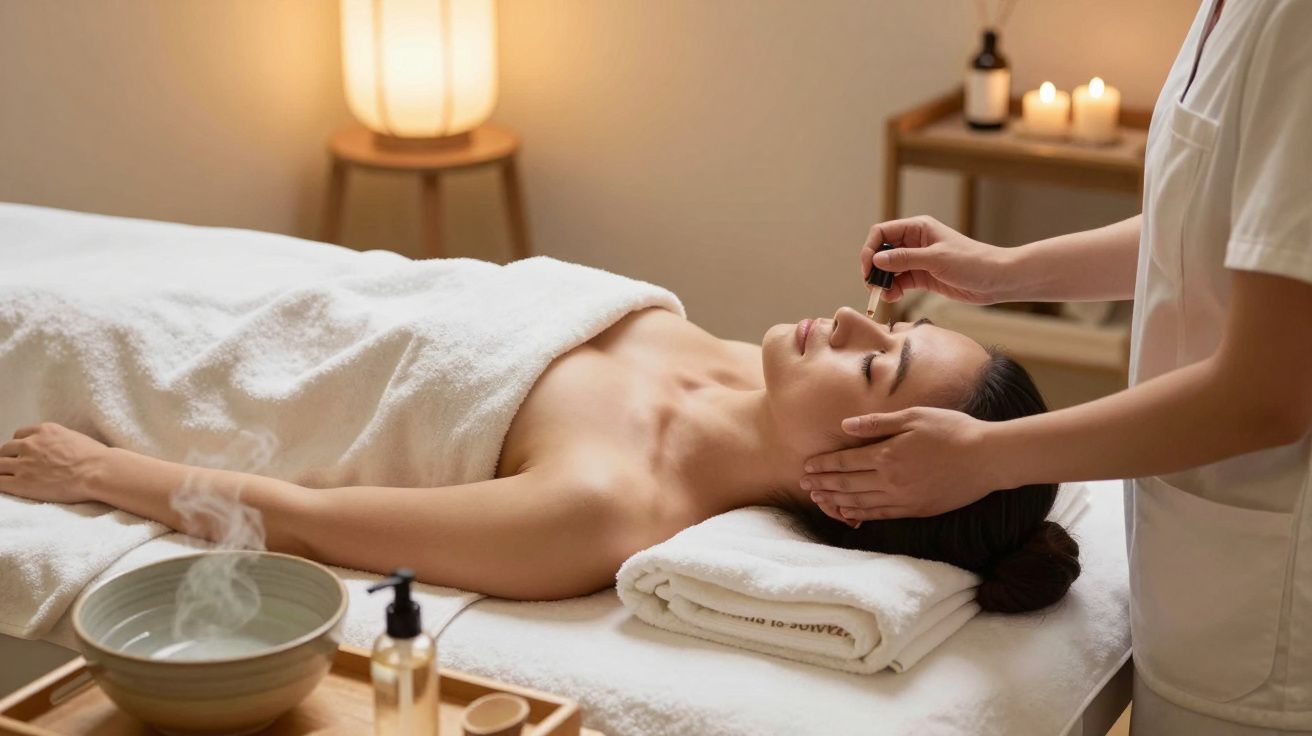
You book the appointment, you turn up on time, and the beauty treatments are the same ones you used to love-but the outcome can feel oddly flat after burnout. That isn’t just “in your head”; your nervous system is the lens that decides what counts as soothing, threatening, or simply too much. If your body has been running on survival mode, even good work can land differently on the skin, in the mirror, and in your mood.
People talk about glow like it’s purely product and technique. In real life it’s also sleep debt, stress chemistry, inflammation, and whether your system can actually receive care without bracing for impact.
Why the same appointment can feel like a different experience
Burnout is not just tiredness; it’s a long stretch of being over-demanded with too little recovery. In that state, small sensations often get amplified, and “relaxing” inputs can register as intrusive. A strong-smelling cleanser, bright treatment room lights, or even friendly small talk can push you closer to overload than ease.
This is the quiet switch: your body stops interpreting a facial or massage as recovery and starts treating it as another task. You leave looking fine, but feeling unheld-like the treatment happened to you, not for you.
When you’re burnt out, the question isn’t “Is this treatment good?” It’s “Can my system safely relax into it?”
What changes underneath: threat, comfort, and recovery signals
When your nervous system is on high alert, it prioritises protection. That can show up as clenched jaw during dermaplaning, shallow breathing during laser, or a racing mind while someone is literally trying to calm your skin.
Common “after burnout” patterns clients report:
- You’re more sensitive to pressure, heat, fragrance, and sound.
- Redness lingers longer than it used to, even when the technique is correct.
- You struggle to enjoy the result because you can’t feel restored.
- You become hyper-focused on imperfections after the appointment, not less.
None of this means treatments are pointless. It means your timing, dosage, and environment matter more than they did before.
The skin isn’t separate from stress: what you see (and don’t)
Burnout often brings a stack of subtle physiological shifts: higher baseline cortisol, disrupted sleep, altered appetite, and less consistent hydration. Skin barrier function can get patchy, and inflammation can sit quietly under the surface until it’s provoked.
So the “result” isn’t only the immediate finish. It’s how your skin behaves for the next 24–72 hours: whether it calms, holds moisture, and recovers, or whether it flares and feels tight.
The mismatch that tricks you: short-term polish vs long-term resilience
Some treatments give instant smoothness but ask a lot from recovery systems-especially if you’re already depleted. That’s where the disappointment creeps in: you paid for glow, but what you needed was stability.
A useful reframe is to think in two lanes:
- Polish: visible brightness, smooth texture, quick impact.
- Resilience: calmer reactivity, stronger barrier, better tolerance over time.
After burnout, resilience tends to win. It’s less dramatic, but it stacks.
Make your next treatment feel better by changing the “dose”
You don’t have to quit everything. You do have to stop treating intensity like a virtue. The goal is to leave with a regulated body and a supported barrier, not a heroic story.
Try adjusting one variable at a time:
- Shorter appointments: 30 minutes can be more effective than 75 when you’re fragile.
- Lower intensity: choose gentler settings, fewer passes, fewer add-ons.
- Less sensory load: ask for dimmer lighting, no fragrance, quieter music, minimal chatting.
- More spacing: stretch your schedule out so each visit lands as recovery, not disruption.
If you do injectables, laser, peels, microneedling, or anything that creates controlled injury, plan like you would for training: you’re not buying the session-you’re buying the recovery window afterwards.
A simple “readiness” check before you book
Borrow the logic of readiness tracking, but keep it human. On the day you book (or the day you go), ask:
- Did I sleep at least reasonably this week?
- Am I craving quiet or stimulation?
- Is my skin already reactive (stinging, tight, itchy)?
- Do I have time to recover without rushing into stress?
If the honest answers are grim, pick a treatment that supports downshifting: barrier-focused facial, lymphatic drainage, scalp treatment, gentle massage, or even a well-done tidy-up (brows, nails) that doesn’t demand recovery.
How to talk to your practitioner without making it awkward
Good practitioners love clear constraints; it helps them do better work. You don’t need a trauma backstory. You need a brief that tells the truth.
Use language like:
- “I’ve been burnt out. I’d like this to feel calming, not intense.”
- “My skin has been more reactive lately-can we keep it gentle and fragrance-free?”
- “If I tense up, please pause and let me breathe for a moment.”
- “No upsells today. I’m keeping decisions simple.”
If you’re used to pushing through discomfort, this can feel strangely vulnerable. It’s also the fastest route to actually enjoying the result again.
What “better results” can mean for a while
After burnout, the win might be leaving and feeling quieter in your body. It might be waking up the next day without tightness. It might be liking your face without hunting for problems.
That counts. In fact, it’s often the sign you’re moving out of survival mode and back towards a system that can respond-rather than just endure.
Beauty isn’t only what the mirror shows. It’s what your body lets you receive.
FAQ:
- Why do beauty treatments sting more after burnout? A sensitised nervous system and a compromised skin barrier can make normal sensations feel sharper, and inflammation can linger longer, even when the treatment is technically sound.
- Should I stop treatments completely? Not necessarily. Many people do better by reducing intensity, shortening sessions, spacing appointments further apart, and choosing barrier-supportive options until resilience returns.
- What should I book if I’m exhausted but want to look fresher? Go for low-recovery options: hydrating or barrier-focused facials, gentle massage, brows/lashes, or a conservative treatment plan with minimal actives and minimal sensory load.
- How do I know if it’s my practitioner or my burnout? If multiple places feel “too much”, or your tolerance has changed across lots of situations (sleep, noise, touch), burnout is likely part of the picture. A good practitioner will adapt either way.


Comments (0)
No comments yet. Be the first to comment!
Leave a Comment