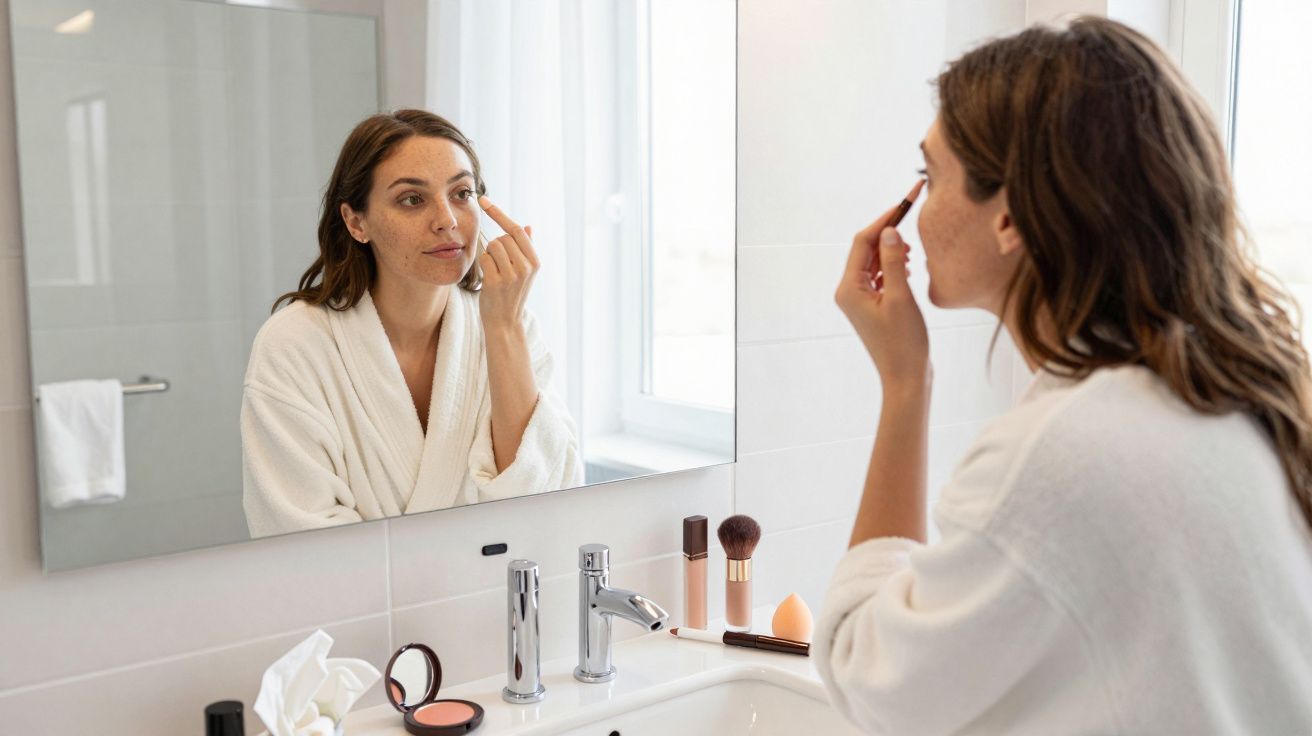
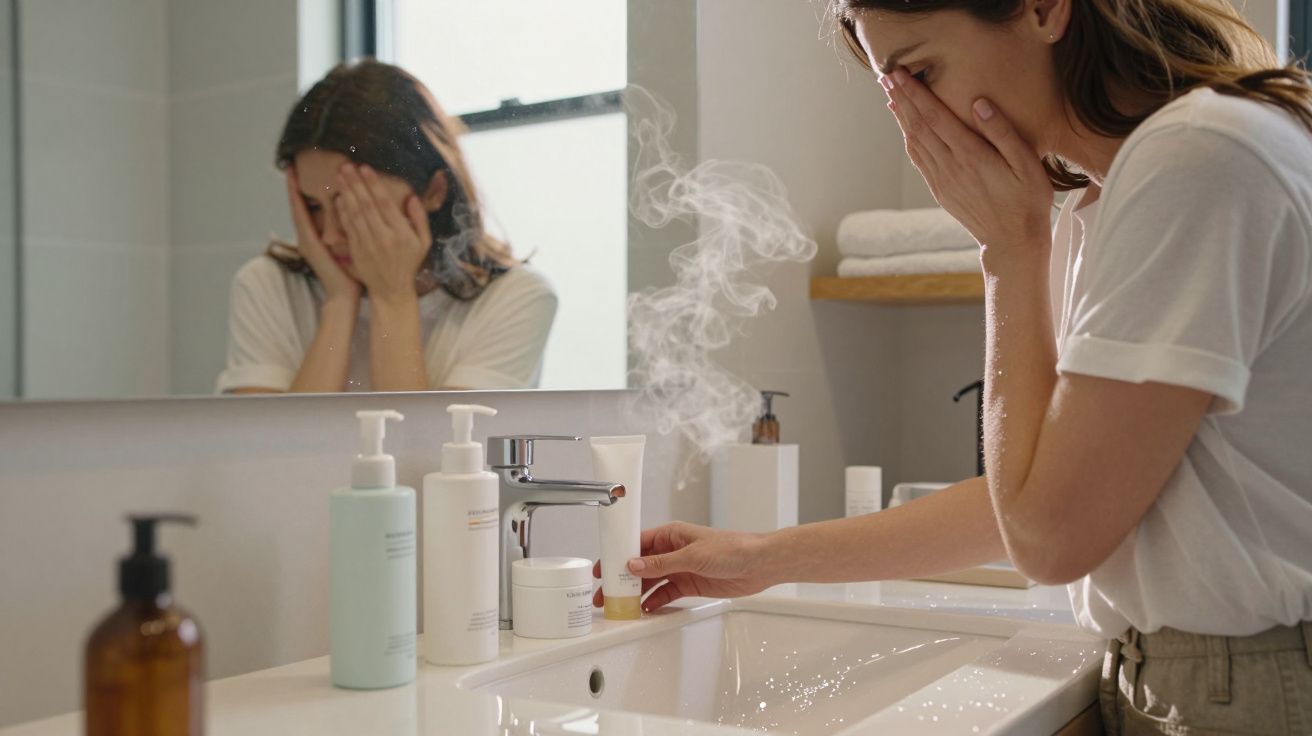
It’s 8:10 a.m., you’re in a too-bright bathroom mirror, and you can see everything: the concealer sitting on the skin, the bronzer that looked “sun-kissed” last year turning slightly orange, the mascara that insists on announcing itself by lunchtime. Beauty trends are shifting under that light, and 2026 aesthetics are the reason: less performance, more presence. This matters because the new goal isn’t to look “done” - it’s to look like yourself, just better rested, better cared for, and harder to place.
The surprise is how practical it is. Subtlety isn’t a moral stance; it’s a response to tired faces, tired routines, and a collective itch for things that last past first coffee.
The quiet pivot: from statement looks to skin you can live in
For years, beauty has been loud in a very specific way - sharp lines, heavy pigment, high shine, obvious transformation. It photographed brilliantly. It also demanded constant maintenance, perfect lighting, and a tolerance for feeling your own face.
2026 aesthetics favour what survives real life. Think less “what’s the look?” and more “what holds up?” Products are being chosen for how they wear at 3 p.m., how they behave in rain, and whether they can be applied in the back of a taxi without regret. The vibe is controlled, not concealed.
Subtlety also reads as modern because it’s harder to copy. A bold lip is a template; a healthy, calm complexion is a system.
Why subtle looks are winning (and it’s not just ‘clean girl’ again)
Calling it “clean” misses what’s happening. The new softness isn’t about looking minimalist for the sake of it; it’s about looking believable up close. That’s partly cultural - we’re seeing more bare-faced content, more daylight, more unedited reality - and partly technical, because skincare, tints, and at-home devices have made “quiet improvement” achievable.
Three forces are pushing beauty trends towards subtlety:
- Hyper-visibility: HD cameras, office lighting, video calls, and phone flashes punish thick layers and harsh edges. A thinner base looks better in motion.
- Skin sensitivity and barrier talk: More people are treating redness, dehydration, and texture as normal. The makeup that works now tends to cooperate with skincare, not fight it.
- Time and money fatigue: Fewer steps, fewer specialist products, and fewer “one look only” purchases. If it doesn’t multitask, it doesn’t stay.
Let’s be honest: nobody wants to spend 40 minutes building a face that collapses the moment they put on a scarf.
What subtlety actually looks like in 2026
It’s not “no makeup”. It’s makeup that disappears into the person wearing it.
You’ll see it in the base first: sheer-to-light coverage, targeted concealing, and finishes that look like skin rather than sheen. Powder is back, but used like punctuation - centre face, under eyes, around the nose - not a full matte mask. Blush placement is lower and softer, and bronzer is more about warmth than contour.
Eyes are calmer too. Liner goes smudged, brown, and close to the lash line; mascara is separated and flexible; brows are groomed but not laminated into immobility. Lips lean blurred and hydrated - stains, balms, soft pencils - the kind of colour that fades gracefully instead of breaking apart.
The tell is that nothing is fighting anything. Not the texture. Not the freckles. Not the day.
The “when” test: how to tell if a trend will last past your morning
A useful way to judge 2026 aesthetics is to run a simple sequence in your head: when real life happens, what does this do? When you sweat. When you eat. When you forget to reapply. When someone hugs you.
Trends that pass the test tend to share the same logic:
- When it fades, it fades evenly. (Tinted moisturiser, cream blush, lip stain.)
- When you layer it, it still looks like skin. (Thin formulas, flexible powders, sheer pigments.)
- When you’re rushed, you can still apply it well. (Sticks, cushions, small palettes, one good brush.)
The point isn’t perfection. It’s predictability.
How to do it without looking washed out
Subtle can slide into “unfinished” if you remove definition and don’t replace it. The trick is to choose one or two anchors - structure, warmth, or contrast - and keep them consistent.
Try this as a quick framework:
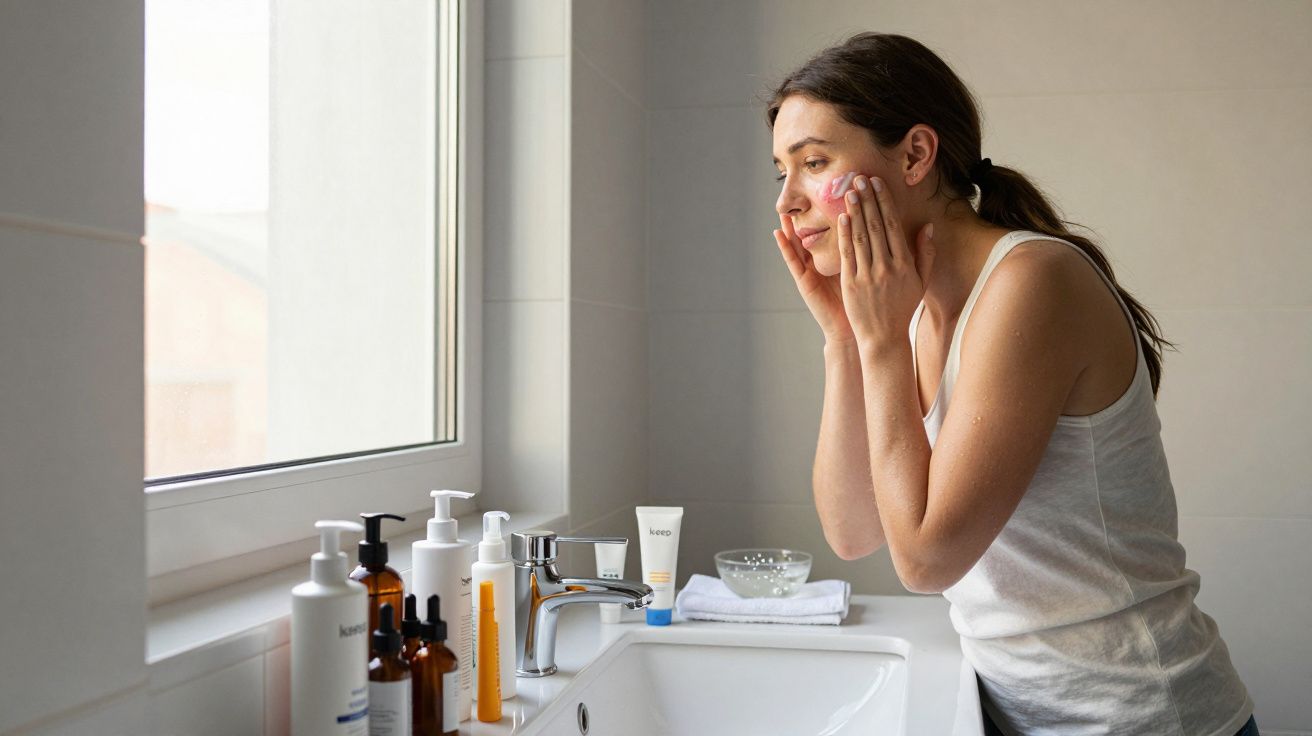
- Anchor the face: a small amount of concealer where you actually need it (inner corners, around nose, any redness), then blend until you can’t see edges.
- Add living colour: cream blush first, then base on top if you want it even softer. The result looks like it’s coming from under the skin.
- Create quiet contrast: tightline with a brown pencil, curl lashes, and use mascara only at the outer third if you want lift without drama.
- Keep lips easy: a stain or tinted balm that you can reapply without a mirror.
Common mistake? Trying to get the same impact with less product. Subtlety isn’t shrinking a bold look; it’s building a different one.
“The modern face isn’t blank. It’s edited.”
The new luxury: restraint, repetition, and products you finish
There’s also a shift in what feels aspirational. A bathroom full of half-used launches looks less like abundance and more like noise. The 2026 aesthetics version of “expensive” is calm: one base that matches, one blush that works year-round, one lip you actually keep in your coat pocket.
It’s the return of personal signatures - the same softly defined eye most days, the same healthy flush, the same skin-first routine - because repetition is what makes subtlety read intentional. Loud looks can be random and still look like effort; subtle looks need consistency to look like taste.
Quick kit: the subtlety staples that do the heavy lifting
- Sheer base or skin tint (with SPF if it suits you)
- Small, high-coverage concealer
- Cream blush (neutral rose, warm peach, or soft berry)
- Brown pencil + mascara you trust
- Tinted balm or stain
- One powder (fine, not chalky) + one brush you like using
Keeping it realistic (and not performative)
Subtle beauty is kinder to faces that change: hormonal skin, winter dryness, post-travel puffiness, the odd breakout that arrives with zero notice. It’s also kinder to people who don’t want to be “on” all the time.
The goal for beauty trends in 2026 isn’t to hide effort. It’s to spend effort where it pays off: better blending, better undertones, better skin comfort, better wear. The result is quieter - and, for most people, far more flattering.
| Shift in 2026 aesthetics | What you’ll see | Why it works |
|---|---|---|
| Less coverage, more correction | Target concealer, sheer base | Looks better up close and in motion |
| Softer definition | Smudged liner, flexible brows | Adds structure without harshness |
| Wear-first products | Stains, creams, thin layers | Fades evenly; easier to maintain |
FAQ:
- Will subtle makeup show my skin texture more? Not necessarily. Heavy base can emphasise texture by sitting on top of it. Thin layers, good prep, and targeted powder usually look smoother in real life.
- Is this just the ‘clean girl’ look rebranded? It overlaps, but 2026 aesthetics lean less “minimal for status” and more “wearable for life”: comfortable formulas, soft definition, and realistic finishes.
- How do I avoid looking pale with lighter makeup? Add warmth and contrast in small amounts: cream blush, a touch of bronzer, and subtle lash-line definition. Skin can be sheer without being flat.
- Do I need to buy new products to follow 2026 beauty trends? Often no. Try using less base, switching to cream textures, and focusing on blending and undertones. One good blush and one reliable concealer can change everything.
- What’s the quickest way to make a subtle look feel intentional? Repeat one signature detail (your blush placement, a soft brown tightline, or a consistent lip tint) so it reads as a choice, not an absence.
Comments (0)
No comments yet. Be the first to comment!
Leave a Comment