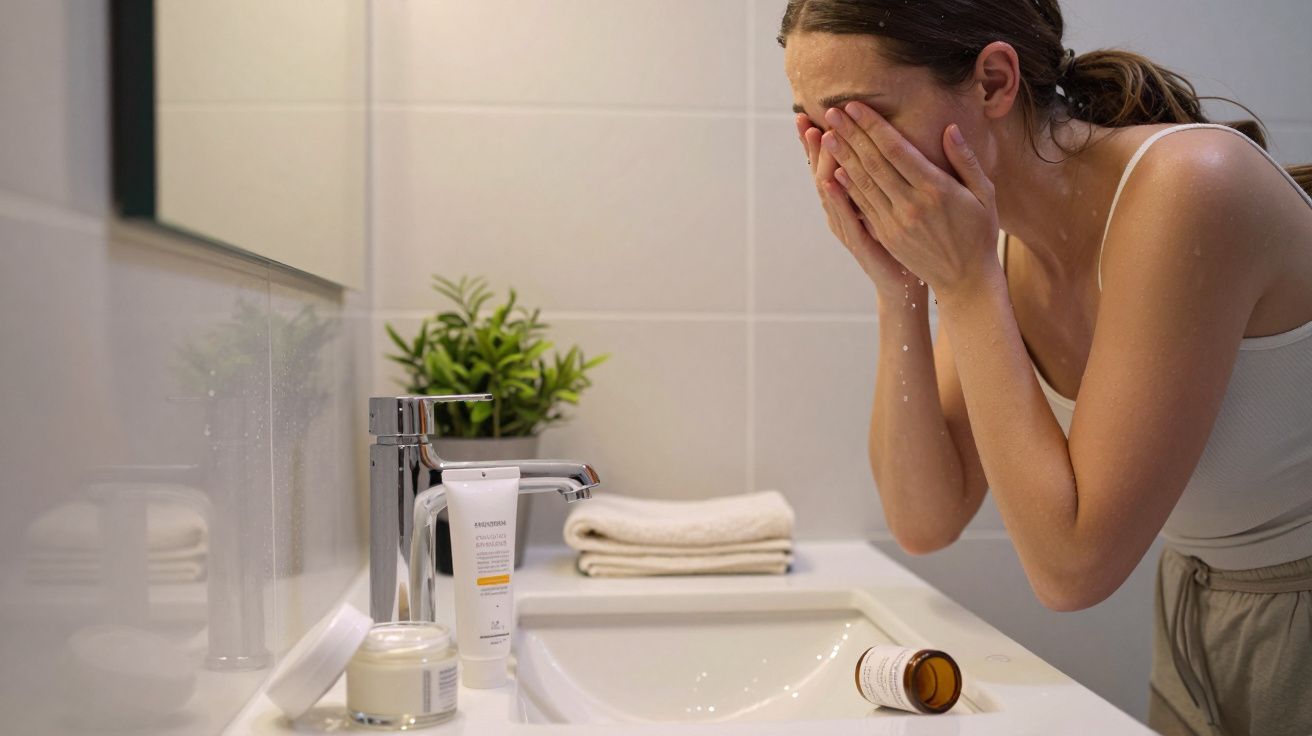
You book a treatment, lie back under soft lighting, and for 48 hours you feel like your face has been quietly upgraded. Glow facials can do that - but without aftercare, that “new skin” look can vanish fast, replaced by tightness, blotches or a surprise breakout. If your glow faded overnight (or never showed up at all), it’s rarely “your skin being dramatic”; it’s usually a chain of small missteps.
The confusing bit is that the facial can still be well done. The slip often happens in the hours around it: what you used before, what was used during, and what you did afterwards because you assumed “gentle” means “foolproof”.
The fast-fade pattern most people don’t spot
The disappointment usually arrives on a delay. Day one looks fine in the clinic mirror, under flattering light, with a bit of post‑treatment plumpness doing heavy lifting. Then you get home, wash your face the way you always do, and the magic drains away like it was never there.
A glow facial is basically controlled encouragement: exfoliate a little, hydrate a lot, calm inflammation, nudge circulation. That’s useful - but it also makes your skin temporarily more reactive. If you treat it like a normal Tuesday, it behaves like a normal Tuesday: oil, irritation, dehydration and all.
A “glow” is often just balanced hydration plus a calm barrier. Disturb the barrier, and the shine turns into shine and sting.
What went wrong (in plain English)
There are a few repeat offenders. None of them sound dramatic, which is why they keep happening.
1) You stacked actives because you didn’t want to “waste the facial”
The night after a glow facial is when people get ambitious. Retinoids, acid toners, vitamin C, peeling pads - the whole ambitious routine, because you’re already “invested”.
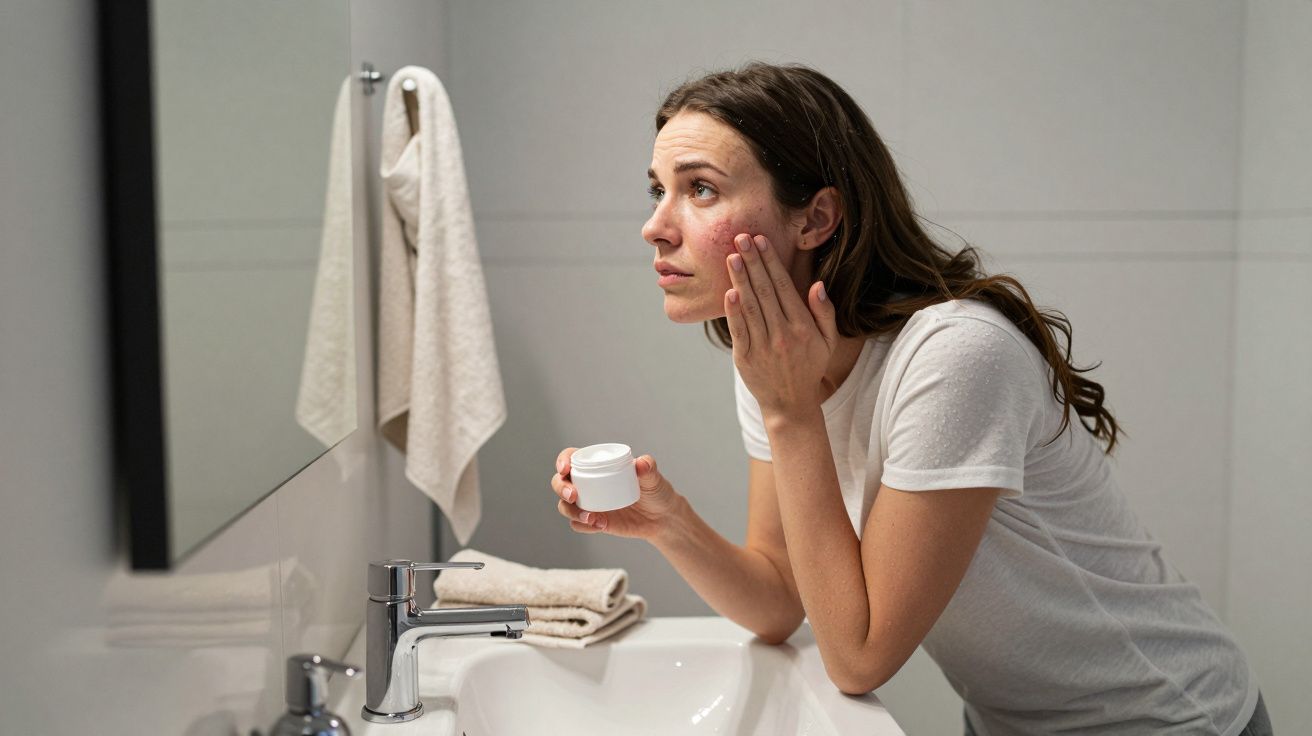
But many glow facials already include exfoliation (enzymes, mild acids, micro‑polish) and a lot of massage. Adding more can tip you from “fresh” into “over‑thinned”, where skin looks shiny in a way that’s not healthy.
Common next‑day signs you overdid it:
- tightness that feels like cling film
- stinging with plain water
- redness that comes and goes in patches
- tiny bumps that weren’t there before
2) The cleanser you love was suddenly too harsh
If your glow disappears after your first wash, look at what you washed with. Foaming cleansers, exfoliating cleansers, scrubs, cleansing brushes - all fine on sturdy days, not great on a freshly-treated barrier.
After a facial, your skin often needs a “boring” cleanse: low-foam, fragrance-free, no grit, no acids. If the cleanser leaves you squeaky, it’s not “clean”; it’s stripped.
3) Heat and friction quietly undid the work
Glow facials calm and hydrate. Heat and friction inflame and dehydrate. The clash is simple.
A hot shower with your face under the stream, a sauna, a spin class where you towel-scrub sweat off your cheeks, even leaning your face into a pillowcase that hasn’t been changed - all of that can turn a calm complexion into irritated shine.
If you only remember one rule, make it this: keep things cool, keep hands off, keep it gentle.
4) You expected a one-off facial to fix a long-term issue
Sometimes the glow doesn’t “fade”. It just never truly arrives, because the baseline problem is bigger than one appointment: persistent dehydration, barrier damage, ongoing acne inflammation, or pigmentation that needs a longer plan.
A glow facial can boost the surface. It can’t rewrite your skin’s habits in one hour. That’s not a failure; it’s just physics meeting biology.
The aftercare that actually protects the glow
Aftercare isn’t a long list of products. It’s a short list of things you don’t do, plus a couple of supportive basics that stop your skin panicking.
Think 48 hours, not forever. You’re giving your skin time to settle back into itself.
The 48-hour “boring on purpose” plan
- Cleanse gently at night (lukewarm water, mild cleanser, no scrubs)
- Moisturise like you mean it (simple cream, apply to slightly damp skin)
- SPF the next day even if it’s grey outside (your barrier is more vulnerable)
- Skip actives: retinoids, exfoliating acids, strong vitamin C, benzoyl peroxide
- Avoid heat: saunas, steam rooms, very hot showers, intense cardio if you flush easily
- Don’t pick at “purging” bumps; they often settle faster if left alone
If you’re not sure what counts as an “active”, treat anything that tingles as suspicious for two days. Calm first. Clever later.
A quick guide to what to use vs what to pause
| Category | Use | Pause (48 hours) |
|---|---|---|
| Cleansing | Mild, fragrance-free | Exfoliating cleansers, brushes, scrubs |
| Treatment | Hydrating serum (e.g., hyaluronic) | Retinoids, acids, benzoyl peroxide |
| Protection | Moisturiser + SPF | New products “to test” |
When the fade is a clue, not a catastrophe
A fast fade can actually be useful information. It tells you your skin loves the idea of the facial - hydration, calming, gentle stimulation - but struggles to hold onto it.
That usually points to one of two things:
- Your barrier is running thin, so the glow only lasts while the clinic products are sitting on top.
- Your routine is too aggressive, so the facial’s work gets undone by your normal week.
In both cases, the fix is less exciting than the problem. Fewer actives. More consistency. Better sun protection. And a facial choice that matches your skin reality, not the trend.
When you should message the clinic (and not just power through)
Some reactions are normal: slight pinkness, a bit of warmth, mild tightness that improves with moisturiser. Others are your skin asking for help.
Contact the clinic if you have:
- swelling that increases after you leave
- hives, intense itching, or spreading rash
- blistering, weeping, or scabbing
- burning that doesn’t settle within a few hours
And if you’re getting repeated breakouts after glow facials, say so. It can be as simple as switching the oils used in massage, adjusting extractions, or choosing a less exfoliating treatment.
The glow that lasts is usually the quietest one
The best glow facials don’t create drama. They create balance - a face that looks rested because it is calmer and better hydrated. That kind of glow survives daylight, your own bathroom mirror, and the first wash at home.
If yours vanished fast, don’t assume the facial was pointless. Assume the window afterwards mattered more than you were told, and let aftercare do its unglamorous job: keeping your skin steady long enough for the glow to stick.
FAQ:
- How long should a glow facial last? Typically a few days to a week, depending on what was done and how well your skin barrier holds hydration. If it vanishes in hours, aftercare or irritation is often the reason.
- Can I wear make-up after a glow facial? Ideally wait until the next day, especially for heavier base products. If you must, keep it light and use clean brushes/sponges.
- Is “purging” normal after a glow facial? Mild congestion can surface, but true purging is more associated with strong actives. Sudden, angry breakouts can also be irritation or product reaction.
- What’s the biggest aftercare mistake? Using strong actives (retinoids/acids) or over-cleansing in the first 24–48 hours, which can strip the barrier and flatten the glow.
- Should I book another one straight away if it didn’t work? Not immediately. First adjust aftercare and routine, then reassess with the therapist; repeating the same approach can repeat the same outcome.


Comments (0)
No comments yet. Be the first to comment!
Leave a Comment