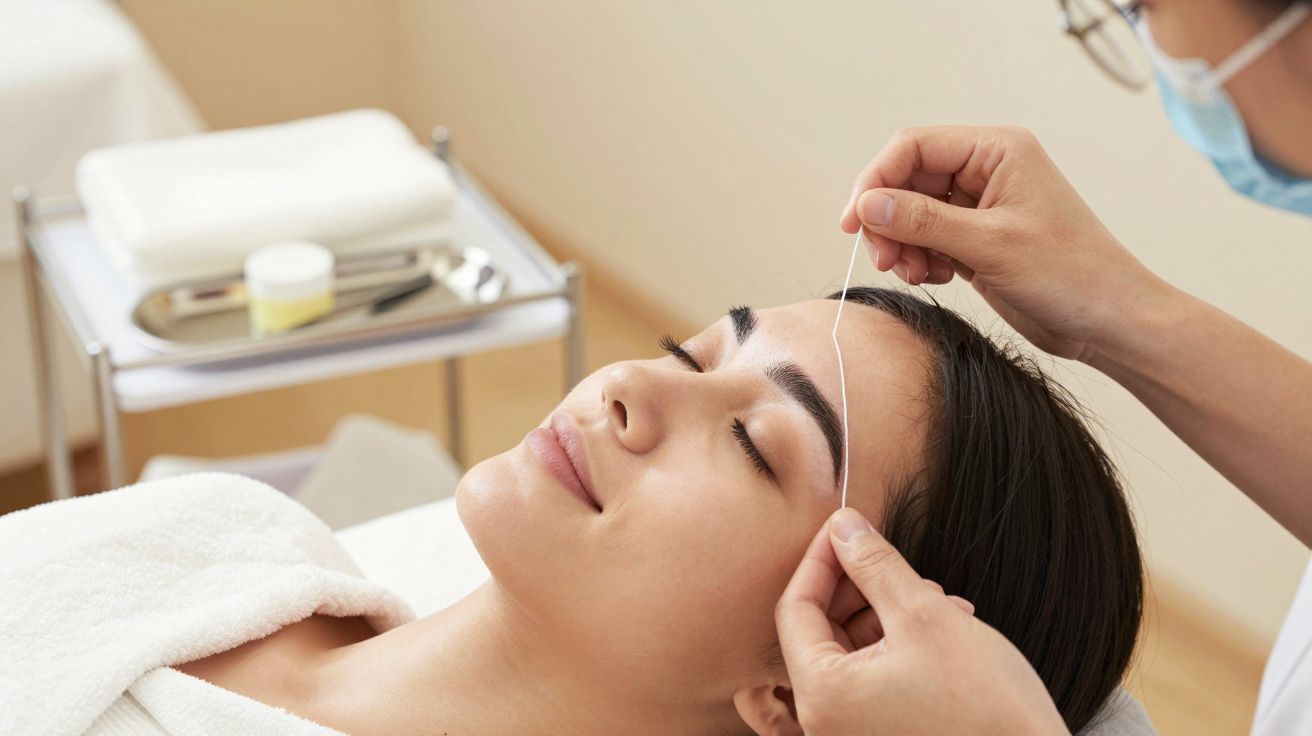
People ask for eyebrow threading when they want clean lines without the “waxed” look, but the waxing comparison usually gets reduced to pain stories and price. In real salons, the choice is more about skin behaviour, hair direction, and how precise you need the finish to be. Get that wrong and you don’t just lose a few hairs - you lose shape, symmetry, and sometimes a week of calm skin.
Both methods remove hair from the root, so both can last, and both can irritate. The difference nobody explains clearly is how they grip hair, what they tug on besides hair, and what that means for your brows over time.
Two techniques, two types of control
Threading is a twisted cotton thread that traps and pulls hair out in a tight, repeatable motion. It’s basically a manual “lasso” that can pick up a single hair or a small row, depending on the technician’s tension and angle. Because the working area is tiny, threading is naturally geared towards detailing: tails, arches, and the underside line.
Waxing uses a sticky medium that adheres to hair and the surface layer of skin oils, then removes a strip of hair in one pull. It’s fast and it clears wide areas cleanly, which is why some people love it for surrounding fuzz and quick reshapes. But that speed comes from covering more skin at once - which is also where most waxing issues start.
What you actually feel: pain isn’t the useful metric
Pain varies wildly by person, cycle, caffeine intake, and how recently you’ve exfoliated, so “threading hurts more” or “waxing is worse” doesn’t help much. What matters is the type of sensation and what it does afterwards.
- Threading tends to feel sharp and repetitive: quick pinches in a line, with a bit of watering if the brows are dense.
- Waxing tends to feel like a single hot pull: intense for a second, then either relief or a lingering sting if your skin reacts.
A good technician can make either feel manageable. A rushed one can make either a problem.
Skin reaction: the part that decides your method
Threading is mostly hair-focused, but it can still cause redness because the thread rubs the skin and creates friction. That redness often looks dramatic for 30–60 minutes and then settles, especially if your skin isn’t compromised.
Waxing adds extra variables: temperature, ingredients (rosin, fragrance), and the risk of lifting or micro-tearing if your skin is dry, sensitised, or on certain skincare.
Watch-outs where waxing is more likely to go wrong:
- You use retinoids/retinol, prescription tretinoin, or have had a recent peel.
- You’re prone to pigmentation marks after inflammation.
- You get flaky or “tight” skin around the brow from actives or cold weather.
- You’ve had a previous wax reaction (tiny bumps, rash, or prolonged burning).
Threading isn’t automatically “safe” - it can trigger breakouts in acne-prone areas if aftercare is poor - but it removes fewer skin variables.
Precision: why threading wins on shape, and why waxing wins on speed
If you’re growing out a brow, correcting asymmetry, or trying to keep thickness while cleaning edges, threading gives you micro-control. The technician can step back, take one hair, reassess, and keep the line soft rather than over-cut.
Waxing is brilliant when the map is already clear and you want efficiency: a defined shape maintained every few weeks, with tidy areas above and below. The trade-off is that one slightly misplaced strip removes more than you intended, and brows do not forgive “more than intended”.
A quick rule that helps in the chair
- Choose threading when you want detail (arch definition, tail clean-up, minimal removal).
- Choose waxing when you want coverage (clearing wider areas quickly, maintaining an established shape).
Hair type and regrowth: what changes, what doesn’t
Both methods remove from the root, so neither should create thicker hair - that’s a myth that won’t die. What people notice is bluntness when shaving (not relevant here) versus soft taper when hair regrows after root removal.
Where you may see a difference is breakage. Threading can snap hair if the tension is wrong or the hair is very fine and the angle is off, which can look like quicker regrowth. Waxing can also break hair if the wax isn’t gripping well or is removed against the best direction.
If you keep getting stubble within a week, it’s often technique rather than your biology.
How to choose without guessing
Bring it back to three practical questions: your skin, your goal, your tolerance for risk.
- Sensitive or “active” skincare routine? Threading is usually the calmer bet.
- Need a full reshape fast? Waxing can be efficient if your skin tolerates it and the tech is cautious.
- Trying to grow out sparse areas? Threading gives better control so you don’t lose the hairs you’re protecting.
- Prone to pigmentation? Minimise inflammation; patch-test wax, and avoid waxing if you’re already sensitised.
If you’re unsure, ask for a hybrid: threading for the main shape, tweezers for strays, and only minimal wax outside the core brow line (if appropriate).
Aftercare that actually prevents the “why is my face angry?” phase
No method is magic if you go straight from salon bed to gym, steam, or heavy makeup. Hair follicles are open and your barrier may be slightly irritated.
- Keep the area clean and hands off for 24 hours.
- Avoid heat (sauna, hot yoga), heavy oils, and strong actives for a day or two.
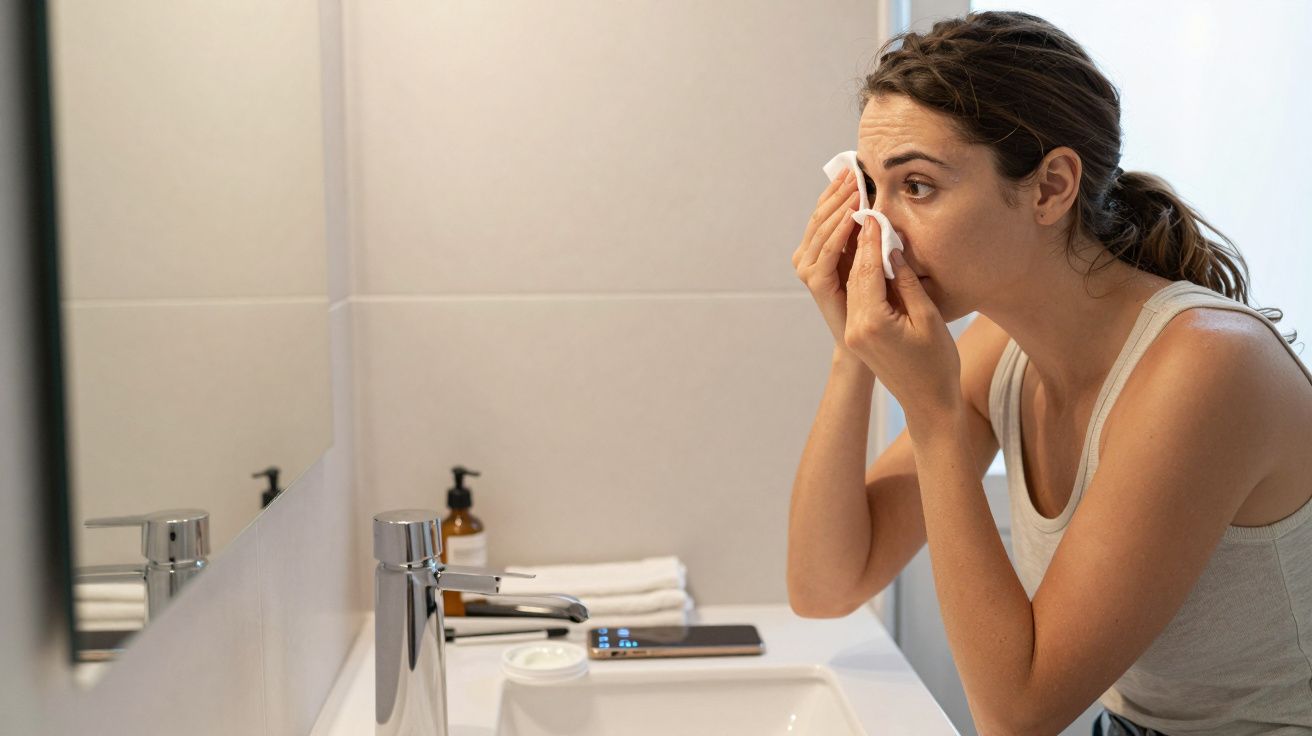
- If you get bumps, don’t scrub. Use a gentle cleanser and a bland moisturiser; treat it like irritated skin, not “dirt”.
- Book brow appointments away from big events if you’re trialling a new method.
Threading vs waxing at a glance
| Factor | Threading | Waxing |
|---|---|---|
| Best for | Precision shaping, tidy edges | Fast maintenance, wider clean-up |
| Skin variables | Friction-based redness | Heat + ingredients + skin lift risk |
| Common downside | Breakage if technique is poor | Irritation/tearing if skin is sensitised |
FAQ:
- Is eyebrow threading better than waxing for sensitive skin? Often, yes - mainly because there’s no heat or adhesive pulling at the skin. But friction can still irritate, so technique and aftercare matter.
- Can I wax my brows if I use retinol? It’s risky. Many professionals advise avoiding brow waxing if you use retinoids (including prescription tretinoin) due to increased chance of lifting or tearing; ask your clinician or therapist and err on the cautious side.
- Which lasts longer: threading or waxing? They’re usually similar because both remove hair from the root. Longevity depends more on your growth cycle and whether hairs are being removed cleanly rather than breaking.
- Why do I get spots after threading or waxing? Follicles can get inflamed or clogged, especially with sweat, makeup, or touching. Keep the area clean, avoid heavy products for 24 hours, and don’t pick.
- Can I switch between methods? Yes. Many people thread most of the time and wax occasionally, or use a combination depending on season, skin condition, and how much reshaping they need.



Comments (0)
No comments yet. Be the first to comment!
Leave a Comment