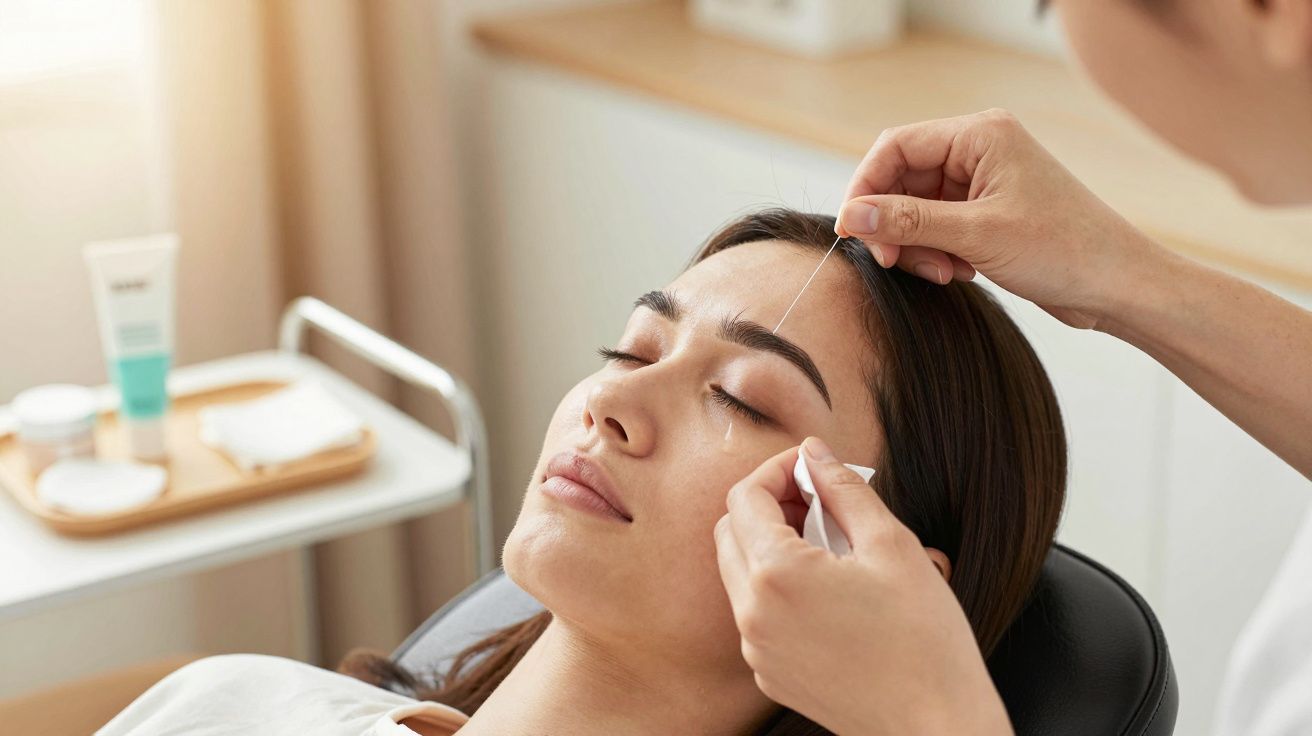
The sting of eyebrow threading often feels like it picks favourites: one brow fine, the other watering like you’ve just stepped into a cold wind. But the discomfort is closely tied to skin tension - the way your skin is held, braced, and pulled while the thread grabs hair. If you understand that link, you can make sessions noticeably easier without changing your whole face routine.
In most salons, threading is quick, precise, and brilliant for shaping. It’s also a tiny tug-of-war between hair, follicle, and the skin around it. When the balance is off, you feel it immediately.
Why the “same” threading can feel completely different
Two people can sit in the same chair, with the same therapist, and report totally different pain. That doesn’t mean one person is “dramatic” or the other has superhero nerves. It usually means the conditions around the hair are different on the day.
Pain during threading isn’t random; it’s predictable. It rises when the thread pulls hair while the skin underneath shifts and bunches rather than staying steady. Stable skin tends to register as sharp, quick “plucks”. Unstable skin tends to register as longer, scratchier sting.
A useful mental model is this: the thread is fast, but your skin has to decide whether it moves with it. When skin movement wins, the sensation spreads.
The role of skin tension (and why it matters so much)
Skin tension is basically the amount of “hold” your skin has in the moment. High, even tension creates a firm surface so the thread can lift hairs cleanly. Low or uneven tension allows tiny folds and micro-slips, which makes each pull feel harsher.
Threading around the brows is especially sensitive because the skin is thin, mobile, and close to bone. A millimetre of slack can change everything. That’s why good therapists stretch the area constantly: not for drama, but to stop the thread dragging the skin before it removes the hair.
You can often feel the difference yourself. When the therapist braces your forehead and lifts the brow area taut, the sting is sharper but shorter. When you’re not well braced - or you flinch and the brace breaks - the sting turns into that hot, teary scrape.
What makes tension worse: the hidden triggers
Some of the biggest pain spikes come from things people do before they arrive, not from the thread itself. The common theme is skin that’s sensitised or “grippy”, or hair that’s harder to release.
Here are the usual culprits:
- Retinoids and strong acids (retinol, tretinoin, AHAs/BHAs): they can thin and sensitise the surface layer, so each pull feels louder.
- Very dry or dehydrated skin: dryness reduces glide and makes the sensation feel more scratch-like.
- Heat and flushing: exercise, hot showers, saunas, or even rushing in from the cold can increase reactivity.
- Around your cycle: plenty of people notice lower tolerance in the days before a period.
- Caffeine + stress: not “in your head” - your nervous system is simply more switched on.
- Overgrown length: longer hair can be grabbed more aggressively by the thread, and the pull can feel heavier.
None of these mean you shouldn’t thread. They just explain why one appointment can be surprisingly spicy.
Technique matters, but so does your part in the chair
A skilled threader controls angle, speed, and how much hair is taken per pass. But you also influence pain more than most people realise.
The biggest mistake is holding your breath and bracing your whole face. It sounds sensible - “stay still” - yet it often increases the sense of threat in the nervous system and makes you flinch at the worst moment. The second mistake is talking mid-pull, which changes tension across the brow and breaks the therapist’s stretch.
Try this instead:
- Keep your eyes soft and your jaw unclenched; it reduces that full-face tightening.
- Do a slow exhale when you feel the thread set; many people find it blunts the peak sting.
- Let the therapist re-stretch if you’ve moved; restarting clean is better than “pushing through” on slack skin.
If you’re prone to watering eyes, bring a tissue and plan for it. Tears don’t mean it’s going wrong; they’re a normal reflex when the area is irritated.
A simple pre-thread routine that reduces the sting
You’re not trying to numb your face. You’re trying to give the thread a calm, stable surface.
A practical, salon-friendly routine:
- Skip actives for 2–5 days (especially prescription retinoids). If you’re unsure, ask your GP/dermatologist or the prescriber.
- Arrive with clean skin: no heavy oils or thick balm right on the brow area, which can make grip unpredictable.
- Hydrate, don’t slick: a light moisturiser the night before helps dryness without making the thread slip and tug.
- Cool, not hot: avoid hot showers or a brisk run right before your appointment if you’re already sensitive.
- Ask for smaller passes if it’s painful: taking fewer hairs at a time can reduce the “rip” sensation.
If you use makeup, expect the therapist to wipe the area. That wipe can sting if your skin barrier is compromised, which is another clue that the “pain problem” isn’t the thread - it’s the skin condition on the day.
When it’s not “normal pain”: red flags worth respecting
Threading is meant to be uncomfortable, not alarming. If you’re seeing reactions that look out of proportion, it’s worth pausing rather than booking the next appointment and hoping.
Watch for:
- Broken skin, scabbing, or raw patches afterwards
- Persistent swelling beyond a few hours
- Hives, intense itch, or spreading redness
- A history of eczema/dermatitis flares in the brow area
In those cases, the right move may be spacing appointments further apart, patch-testing post-care products, or switching hair removal methods temporarily. “More often” isn’t always “easier” if the skin is never fully settling.
What to say to your therapist (so they can actually help)
Most people sit down and apologise for being sensitive. Better is to give useful information in one sentence, before the first pull.
Try:
- “My right brow hurts more - can you stretch that side extra and take smaller sections?”
- “I’m using retinoids, and I’m more sensitive this week.”
- “Can we do a quick pause if I need to reset? I don’t want to flinch mid-pass.”
Good therapists prefer this. It helps them control skin tension and pace, which is exactly what reduces pain.
| What changes the pain | What it affects | What to do |
|---|---|---|
| Uneven skin tension | Dragging vs clean pluck | Ask for firmer stretch, smaller passes |
| Sensitised skin barrier | Higher sting, longer redness | Pause actives, hydrate, avoid heat |
| Stress/anticipation | Flinching, tight face | Slow exhale, unclench jaw, brief pauses |
FAQ:
- Is eyebrow threading meant to hurt this much? It’s meant to sting, especially on the first few visits, but it shouldn’t feel like burning or leave broken skin. If it’s escalating rather than improving, look at sensitised skin and poor tension rather than “low pain tolerance”.
- Does pulling the skin tighter really reduce pain? Often, yes. Better skin tension reduces dragging, so each removal is quicker and more precise, which many people experience as less overall discomfort.
- Can I use numbing cream before threading? Some salons don’t allow it, and it can change skin feel and grip. If you’re considering it, ask the salon first and avoid applying anything without guidance, especially near the eyes.
- Why does one eyebrow hurt more than the other? Growth direction, density, prior over-plucking, and how well the skin is being braced on that side can all differ. Small asymmetries in tension create big differences in sensation.
- What should I avoid after threading? For 24–48 hours, skip strong acids/retinoids on the area, avoid heavy heat (sauna, very hot showers), and keep hands off to reduce irritation and spots.



Comments (0)
No comments yet. Be the first to comment!
Leave a Comment