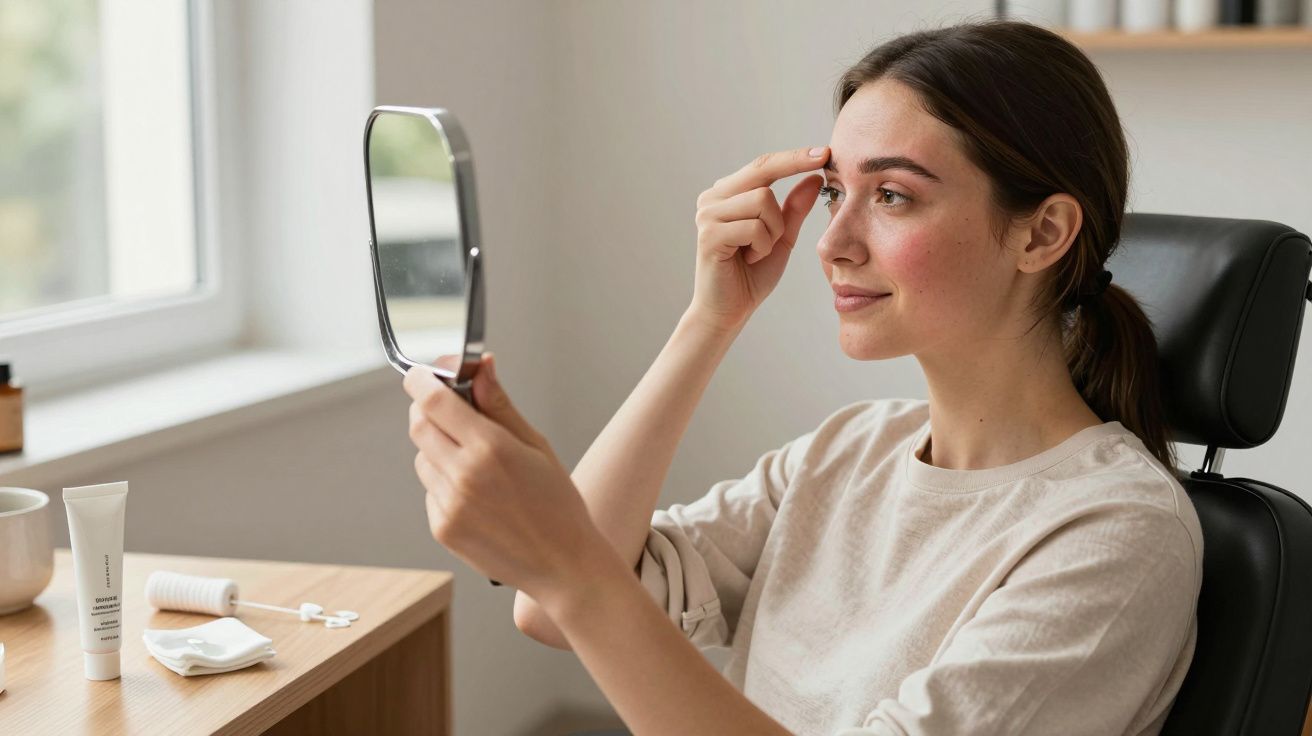
Eyebrow threading looks so clean and simple from the chair: a loop of cotton, a few quick pulls, a sharper shape in minutes. Yet for some clients it feels weirdly brutal, and skin sensitivity is usually blamed in a vague, shruggy way-“you’re just sensitive”-as if that explains the sting, the watering eyes, the redness that hangs around.
The missing piece is not your pain threshold. It’s the state of your skin barrier on that day, in that hour, in that exact patch of brow where the thread is doing its tiny, repetitive friction. Same technique, same therapist, different skin-completely different experience.
The skin factor nobody names: your barrier, not your bravery
Threading doesn’t cut hair like a blade; it traps and lifts it from the follicle, and the thread also skims the surface as it moves. If your barrier is calm and well-oiled, that surface contact is background noise. If your barrier is already a bit inflamed, dry, or over‑exfoliated, the thread can feel like sandpaper plus plucking at the same time.
This is why you can have one appointment that’s “fine” and the next one that makes you wince, even though nothing obvious changed. Your nervous system is reading the skin’s alarm signals, not the salon’s intention. The same pull lands differently on a sensitised barrier.
What makes skin “sensitised” before you even arrive
Think of your brow area as a small strip of skin that gets a lot of quiet wear: cleansing, makeup, SPF, heat, cold wind, screen‑level stress rubbing, and the occasional enthusiastic active. A few common patterns load the area before the thread even touches you.
Here are the big culprits that turn a normal appointment into a spicy one:
- Retinoids and retinol (including prescription tretinoin): they can thin the outermost layer temporarily and increase reactivity.
- Acids and exfoliants (AHA/BHA/PHA, scrubs, peels): even “gentle” can be too much near the eye.
- Benzoyl peroxide and strong acne treatments migrating upward from the cheeks/forehead.
- Barrier drought: cold weather, central heating, dehydrating cleansers, skipping moisturiser because makeup sits better without it.
- Recent sun exposure (including “I didn’t burn”): UV can prime inflammation without drama.
- Flare conditions like eczema, contact dermatitis, rosacea, or perioral dermatitis-often subtle at the brow until it’s touched.
There’s also the timing effect. A stressful week, poor sleep, and a bit more caffeine can make your skin feel jumpier; it’s not mystical, it’s inflammation and perception turning the dial up together.
A quick self-check: is today a “threading day” for your skin?
You don’t need a magnifying mirror and a degree in dermatology. You need 20 seconds and honesty.
Before you book-or before you sit down-look for:
- Tightness after cleansing, like your brow skin feels a size too small.
- Flaky makeup around the brows (a quiet sign the barrier is compromised).
- Stinging with basic products you normally tolerate.
- Pinkness that lingers after a warm shower or a brisk walk.
If two of those are true, threading may still be possible, but it’s worth adjusting expectations and aftercare, or choosing a different hair-removal method that week. The goal isn’t to be tough; it’s to avoid turning a five‑minute service into a three‑day irritation.
How to make threading feel gentler without changing your whole life
The best fixes are small, specific, and timed. You’re not reinventing your skincare; you’re reducing friction-literally.
48 hours before: stop “polishing” the area
If you use actives, treat your brows like the eye area they sit next to.
- Pause retinoids and exfoliating acids on/around the brows for 2–3 nights if you can (especially if you’re new to them).
- Skip scrubs, cleansing brushes, and anything that leaves you feeling squeaky-clean.
- Prioritise a plain moisturiser; think boring, not brilliant.
On the day: arrive with a calm surface
Come in with clean skin if possible, but not freshly stripped. If you wear makeup, ask whether they prefer you to remove brow product there; aggressive wiping right before threading can be its own mini-exfoliation.
If you know you react, say it early and plainly: “My skin’s been sensitive this week-can we go slower / take breaks / avoid going over the same area?” A good therapist would rather adjust rhythm than manage a flare.
After: treat it like a tiny abrasion, because it kind of is
Right after threading, your job is to reduce heat and friction and give the barrier an easy night.
- Use a cool compress for a minute or two if you’re hot and red.
- Apply a simple barrier moisturiser (fragrance-free if you’re prone to reactions).
- Avoid actives, heavy fragrance, and strong makeup removers on the area for 24–48 hours.
- Try not to “check” the brows by rubbing the skin-this is when people accidentally prolong redness.
Redness is normal; lingering sting, swelling, or scaly patches aren’t a badge of honour. They’re feedback.
When “sensitive” is actually contact irritation (and how to spot it)
Some clients aren’t reacting to threading itself so much as what touches the skin around it: pre-cleanse products, antiseptics, soothing gels, fragranced aloe, or even the residue of your own skincare mixing with salon products. Contact irritation often feels like burning and looks more like a patchy rash than a neat post-thread flush.
A useful tell: if you’re red only where hairs were removed and it fades within a few hours, that’s typical. If you develop itch, bumps, or dry plaques that spread beyond the brow shape and last days, consider that it might be product-related-and tell the salon what was used last time.
A small reset plan if you always flare
If threading reliably wipes you out, you don’t need to quit forever. You need a calmer baseline.
- Thread less frequently so hairs are longer and fewer passes are needed.
- Book at a time you’re not already flaring (after heavy sun, after a new active, after a reaction).
- Consider alternatives for a while: tweezing for maintenance, or professional waxing only if your skin tolerates it better (and you’re not using retinoids).
- If you suspect eczema/dermatitis, speak to a pharmacist or GP; treating the underlying inflammation changes everything.
A good brow shape should feel like a quiet upgrade, not like your face has been told off.
FAQ:
- Is eyebrow threading meant to hurt? Some discomfort is normal because hairs are being removed from the root, but sharp, scratchy pain often points to a compromised skin barrier rather than “low tolerance”.
- Should I stop retinol before threading? If you get redness or stinging, pausing retinoids around the brow area for 2–3 nights beforehand often helps. If you use prescription tretinoin, be extra cautious and follow clinical advice.
- Why do I get bumps after threading? It can be temporary follicle irritation, product contact irritation, or friction on already-sensitised skin. If bumps itch, spread, or last several days, flag it to the salon and consider a medical opinion.
- What should I put on afterwards? A bland, fragrance-free moisturiser is usually safest. Avoid acids, retinoids, and heavily fragranced “soothing” gels for 24–48 hours.
- How long should redness last? Often a few hours. If it persists into the next day with heat, swelling, or scaling, your skin likely needed a gentler approach or more barrier support.



Comments (0)
No comments yet. Be the first to comment!
Leave a Comment