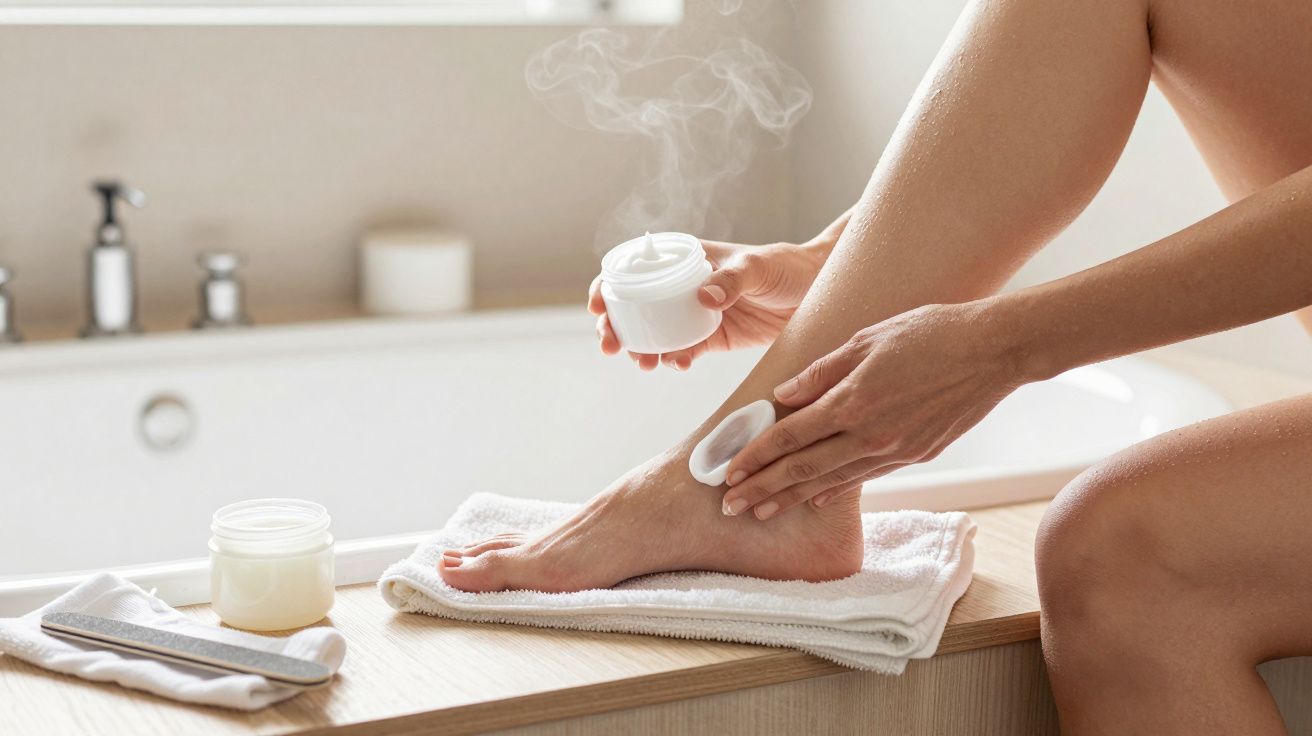
A pedicure can make your feet look instantly smoother, but it’s also where many people accidentally set themselves up for cracked heels a week later. The difference usually isn’t the brand of cream or the fancy file - it’s one small finishing detail that decides whether the skin stays flexible or snaps back into fissures.
I learned this watching a senior nail tech work on a client who “always cracks again”. She didn’t file more. She didn’t chase the last rough patch like it was a stain. She changed how she ended the smoothing, then sealed it like she meant it.
The detail that decides everything: stop at “smooth-ish”, then seal on damp skin
Most cracked heels don’t come from not exfoliating. They come from over-exfoliating in one go, then leaving the skin dry and unprotected afterwards.
Heels are designed to be tough. When you file them down to baby-skin smooth, you strip the thicker outer layer too far. The body reads that as damage and responds the only way it knows: by laying down more thick, dry skin - fast. That new build-up is rigid, and rigid skin splits when you walk.
The better target is counterintuitive: aim for even and comfortable, not perfectly smooth, then lock in water with an occlusive layer while the heel is still slightly damp. Hydration gives flexibility; the seal keeps it there. Without that seal, you’ve basically sanded a wall and left it out in the rain.
Think of it as “soften + protect”, not “remove + hope”.
What “too much filing” looks like (even if it feels satisfying)
The trap is that aggressive filing works in the moment. Your heel feels amazing in the chair, and then three days later the texture is back - sometimes worse.
Watch for these signs that your pedicure is pushing too far:
- The heel looks pale, chalky, or slightly “fuzzy” after filing.
- You can see a sharp edge where thick skin stops and thinner skin starts.
- The skin feels tight later that day, especially after a shower.
- Cracks reappear along the same lines, like the heel has “fault lines”.
A good tech will reduce thickness gradually over multiple sessions. At home, most of us go too hard because we want a one-and-done fix.
The simple finish routine that keeps heels from cracking again
You don’t need a 12-step foot routine. You need the right order, the right stopping point, and a seal that lasts through socks, shoes, and winter air.
1) Soften first, then do minimal smoothing
After a shower or a 5–10 minute foot soak, pat the feet so they’re not dripping but still hydrated. Use a foot file lightly, focusing on evenness rather than chasing perfection.
If the skin is thick, do less than you want to. You can always repeat in a few days. You can’t un-file.
2) Apply a humectant cream while the skin is still damp
Look for urea (10–25% for maintenance; higher is for very thick skin), glycerin, or lactic acid. This pulls and holds water in the outer layer so the heel can bend instead of split.
3) Seal with an occlusive layer - this is the “decider”
Add a thin layer of petroleum jelly or a balm over the cream. This is what stops overnight moisture loss and prevents that tight, dry rebound that turns into cracked heels.
Then put on cotton socks for an hour, or overnight if you can tolerate it. The sock isn’t the treatment - it’s the lid.
Tools that help - and the ones that quietly sabotage you
Electric grinders, blades, and very coarse rasps make it easy to go too far. They create a “polished” finish that looks great, but often triggers the rebound thickening that leads to cracking.
Here’s a practical guide:
| Item | Use it? | Best practice |
|---|---|---|
| Foot file/pumice | Yes | Light pressure, short passes, stop early |
| Urea foot cream | Yes | Apply to damp skin for better hold |
| Petroleum jelly/balm | Yes | Seal over cream, especially at night |
If you love the feeling of super-smooth heels, treat it like a slow project: a little each week, not a major scrub once a month.
The two biggest mistakes people make after a pedicure
The heel doesn’t crack in the salon. It cracks in the days after, when friction and dryness stack up.
Mistake one: leaving the salon (or bathroom) with “naked” freshly filed skin and no proper barrier.
Mistake two: moisturising once, then forgetting until it hurts again.
The skin on your heel is working every time you stand. Give it flexibility and protection more often than you “fix” it.
A good pedicure doesn’t just remove roughness - it teaches your heel how to stay supple.
A quick checklist to keep by your socks drawer
- Stop filing when the heel feels comfortable, not flawless.
- Apply cream to damp skin, not bone-dry skin.
- Seal with a balm or petroleum jelly at least a few nights a week.
- If you’re prone to cracking, choose closed-back shoes and socks more often than sandals, especially in cold weather.
- Treat deep or bleeding cracks as a skin issue, not a cosmetic one - they can get infected.
FAQ:
- Should I cut hard skin off my heels? It’s best not to. Cutting increases the chance of going too deep, triggering rebound thickening, and creating openings for infection.
- Is urea cream enough on its own? For some people, yes - but if your heels crack again, adding a sealant over the top is often the missing step.
- How often should I file my heels? Lightly once a week is plenty for maintenance. If your heels are very thick, do small sessions 2–3 times a week for a couple of weeks, rather than one aggressive scrub.
- When should I see a professional? If cracks are deep, painful, bleeding, or you have diabetes, poor circulation, or nerve issues - get proper medical or podiatry advice.



Comments (0)
No comments yet. Be the first to comment!
Leave a Comment