Foot care is meant to make your feet softer, calmer, more comfortable in shoes - yet a lot of people unknowingly build a routine that drives moisture loss instead. It usually happens in the same place: heels, where skin is thicker, pressure is constant, and dryness turns into rough edges fast. You can buy the nicest cream in the chemist and still end up with cracks if one small habit is working against you.
It looks responsible. It feels tidy. And it’s the reason your heels keep going back to “sandpaper” a week later.
The mistake isn’t “forgetting moisturiser”. It’s how you prep.
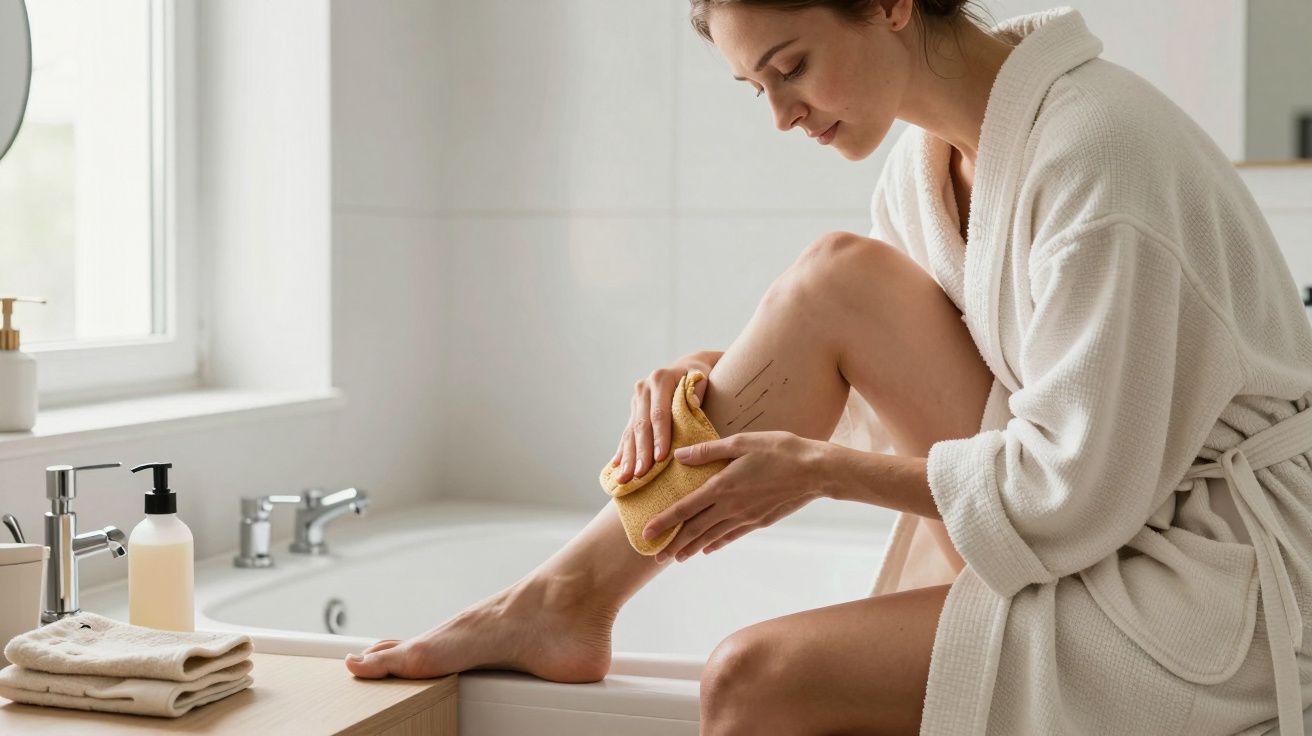
The most common heel routine goes like this: long hot shower or bath, then a good scrub with a foot file or pumice, then a quick rinse, towel off, and a dab of lotion if you remember. It’s satisfying because you see skin come off straight away, like you’ve done something.
But in that sequence, you’ve often done two things at once: you’ve removed the top layer and set up the conditions for it to dry out harder afterwards. Heat, soaking, and vigorous filing can disrupt the barrier, and when the water evaporates, the skin can feel tighter than it did before.
The heel isn’t being “stubborn”. It’s responding to pressure and trying to protect itself.
Why filing after a long soak keeps heels in a loop
Soaking swells the outer skin and makes it look like it’s ready to shed. If you file aggressively at that point, you can take off more than you meant to - including the bits that were actually helping hold moisture in. Then you step out into dry air, towel roughly, walk around barefoot on warm floors, and the last of that surface water disappears.
That’s moisture loss in real time: water leaves the skin, the surface tightens, and the body reads it as “we need more armour here”. Over the next few days the heel thickens again, and you’re back at the file, harder this time, because the quick fix didn’t stick.
It’s not that you can never exfoliate. It’s that the timing and intensity matter more than the product you buy.
“If you’re chasing a squeaky-smooth heel with a file every time you bathe, you’ll often end up with thicker, drier skin,” says podiatrist Clare Houghton. “You want gradual change, not a weekly reset.”
The small shift that actually holds hydration in
Think of it like this: soften first, seal second, and only then take off what’s clearly dead. The goal isn’t to win a scrubbing duel in one night. The goal is to stop the heel panicking and overcompensating.
Here’s a simple, repeatable rhythm that tends to work:
- Keep bathing water warm, not scorching, and don’t soak for ages. Ten minutes is plenty.
- Pat dry - don’t rub. Leave the skin slightly damp rather than bone-dry.
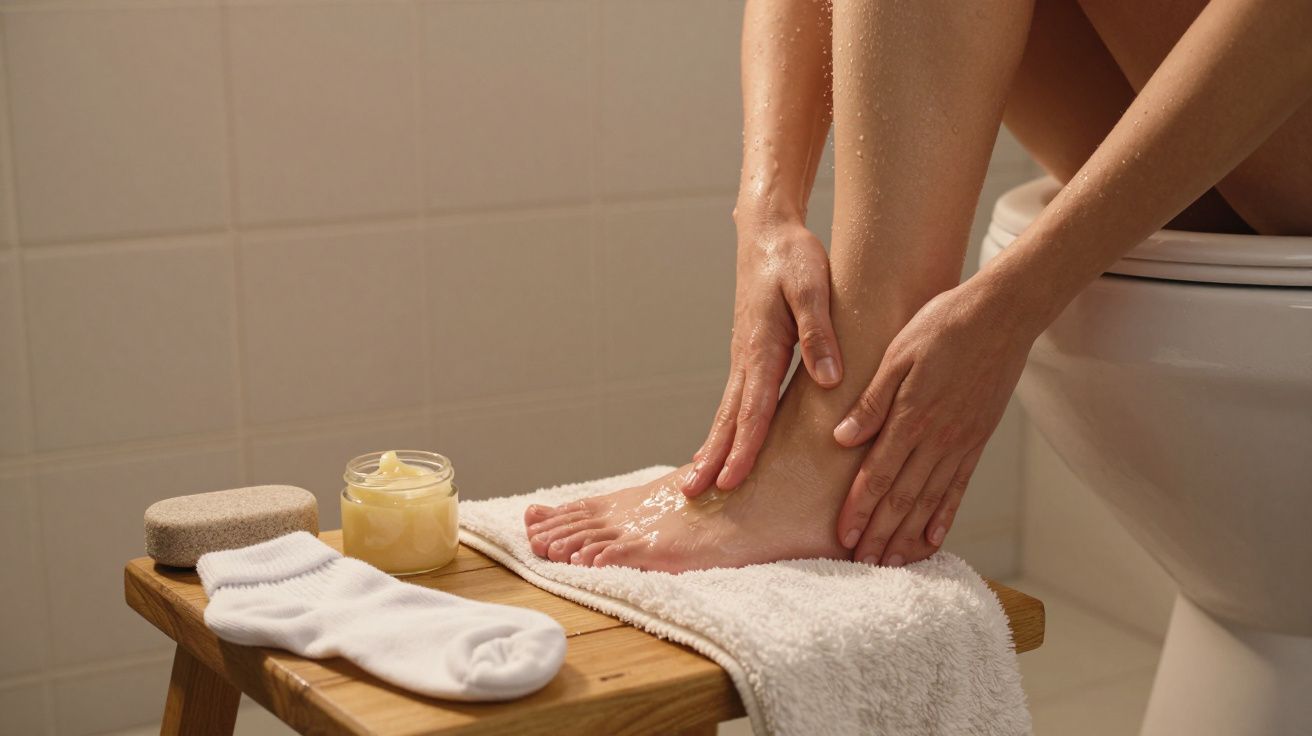
- Apply a heel product that seals (a thicker balm or an ointment-style moisturiser). Look for urea, glycerin, lactic acid, ceramides, or plain petrolatum.
- Cover for an hour or overnight with cotton socks to reduce evaporation and friction.
- Exfoliate lightly, on dry skin, not soaked skin, 1–2 times a week at most. A few gentle passes; stop before you feel heat or tenderness.
This is the bit people skip: occluding (covering) after moisturising. Without that, you’ve done the “add water” step but not the “keep it here” step.
A 3‑minute “seal it in” routine for busy evenings
If your heels are already cracked, the fancy routine usually fails because it’s too much to keep up. This one is designed for weeknights when you’re tired.
- Rinse feet quickly, no long soak.
- Pat dry, leaving a trace of dampness.
- Apply a generous layer of balm to heels (not just a polite smear).
- Put on socks and leave them on while you brush teeth and tidy up.
That’s it. It’s not glamorous. It is consistent. And consistency is what stops that tight, papery feeling from returning.
What to avoid if your heels split
A few traps look helpful but tend to prolong the cycle:
- Metal graters and aggressive “cheese” files: they remove too much too quickly and can trigger thicker regrowth.
- Hot water + long soaks: feels soothing, but often worsens dryness afterwards.
- Alcohol-heavy foot sprays: can make feet feel fresh while quietly drying the skin.
- Walking barefoot at home: friction plus dry air is a heel’s worst combination.
- Skipping the spaces you don’t see: the edge of the heel and the sides are where splits often start.
If a crack is deep, bleeding, very painful, or you have diabetes or poor circulation, it’s worth speaking to a pharmacist, GP, or podiatrist rather than battling it alone.
The “do less, but do it daily” rule
Most people don’t need harsher tools; they need a calmer pattern. When you reduce the big swings - soak, scrub, dry out, repeat - the skin stops acting like it must build a fortress.
You’ll know you’re on the right track when your heels feel slightly pliable in the morning, not glassy-tight. The roughness doesn’t vanish overnight, but it starts to look less angry. The cracks soften at the edges. Shoes feel nicer. And the whole thing becomes boring, which is exactly what you want from foot care.
FAQ:
- Should I stop using a pumice stone completely? Not necessarily. Use it lightly on dry skin once or twice a week, and prioritise moisturising plus socks on the other days.
- Is urea cream better than regular moisturiser for heels? Often, yes. Urea helps soften thickened skin and attracts water, which can be useful when heels are rough and prone to splitting.
- Why do my heels crack more in winter? Cold air holds less moisture and indoor heating dries the environment, so moisture loss increases unless you actively seal hydration in.
- Do heel masks or peel socks help? They can, but they’re easy to overdo and may irritate already-split skin. If you use them, keep frequency low and follow with a sealing balm and socks.
- When should I get professional help? If cracks are deep, bleeding, infected, very painful, or not improving after a couple of weeks of gentle daily moisturising-especially if you have diabetes or circulation issues.




Comments (0)
No comments yet. Be the first to comment!
Leave a Comment