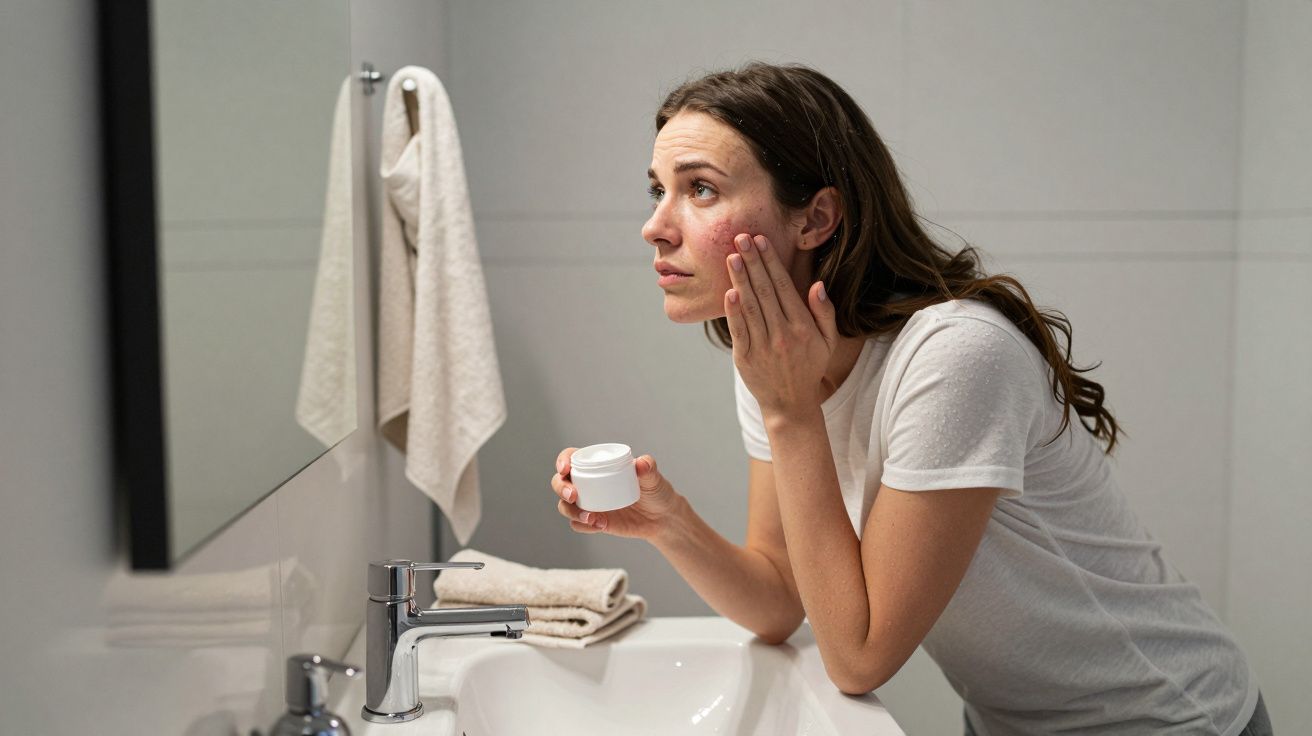
You leave the salon glowing, convinced the money was worth it, and then - by the time you’ve made it home - your skin starts peppering itself with little bumps. Facial treatments are meant to calm, clear, and soften, yet over-exfoliation during one specific step can flip that promise into an hours-later breakout that feels personal. It’s relevant because you can’t fix it with a better cleanser; you fix it by understanding what happened on the bed, not what you did after.
Most people blame the last product applied - the moisturiser, the SPF, the “finishing” oil. But the culprit is usually earlier, quieter, and weirdly easy to overdo when everyone’s trying to give you that freshly-polished look.
The step that starts the trouble: “just one more pass”
The breakout trigger is often the exfoliation phase: scrubs, enzyme masks, acids, microdermabrasion, dermaplaning, or a combo layered in the same appointment. Each can be appropriate on its own. The problem is the stacking, the pressure, and the temptation to chase smoothness in real time.
In the room, it looks like progress. Your skin feels squeaky, looks brighter, and makeup would probably glide on like silk. But that “clean” feeling can be your barrier waving a little white flag.
Why it shows up hours later, not instantly
Over-exfoliation doesn’t always sting on the spot. Sometimes the skin behaves in the moment, then reacts once it’s back in the wild: heat, friction from a scarf, your car’s warm air, the bacteria you always live with, your own sweat.
When the outer barrier is thinned too far, the skin loses water faster and becomes more permeable. That can mean irritation bumps (which look like acne), inflammation around pores, or a flare of whatever you’re prone to anyway - acne, rosacea, perioral dermatitis - just louder and faster than usual.
The difference between “purging” and “you’ve been sanded down”
There’s a myth that any post-facial breakout is a “purge”, as if it’s a detox you must spiritually endure. Actual purging is specific: it tends to happen with true cell-turnover actives (like retinoids or certain acids), it appears in your usual breakout zones, and it unfolds over days to weeks - not on the same afternoon.
What happens after an aggressive exfoliation session is often irritation masquerading as acne. It’s not your pores “clearing out”. It’s your skin reacting to being overworked.
A quick sense-check:
- Hours later + stinging/tightness + clusters of tiny bumps = more consistent with irritation/over-exfoliation.
- Days later + your normal acne pattern + no burning = could be purging or standard breakout triggers (occlusion, hormones, stress).
The “more is more” facial menu problem
Modern facial treatments can be brilliant, but menus can read like a tasting flight: cleanse, steam, enzyme, acid, extractions, microcurrent, LED, mask, dermaplane, oxygen spray, finishing acids, then SPF. The issue isn’t that any of these exist - it’s that skin isn’t a countertop you can keep polishing without consequence.
There’s also a human factor. You’ve paid, you’ve booked, you want a visible result, and the therapist wants you to leave impressed. The easiest visible result is exfoliation. It gives instant smoothness, and instant smoothness sells.
Extractions can make it worse (even if they’re done “properly”)
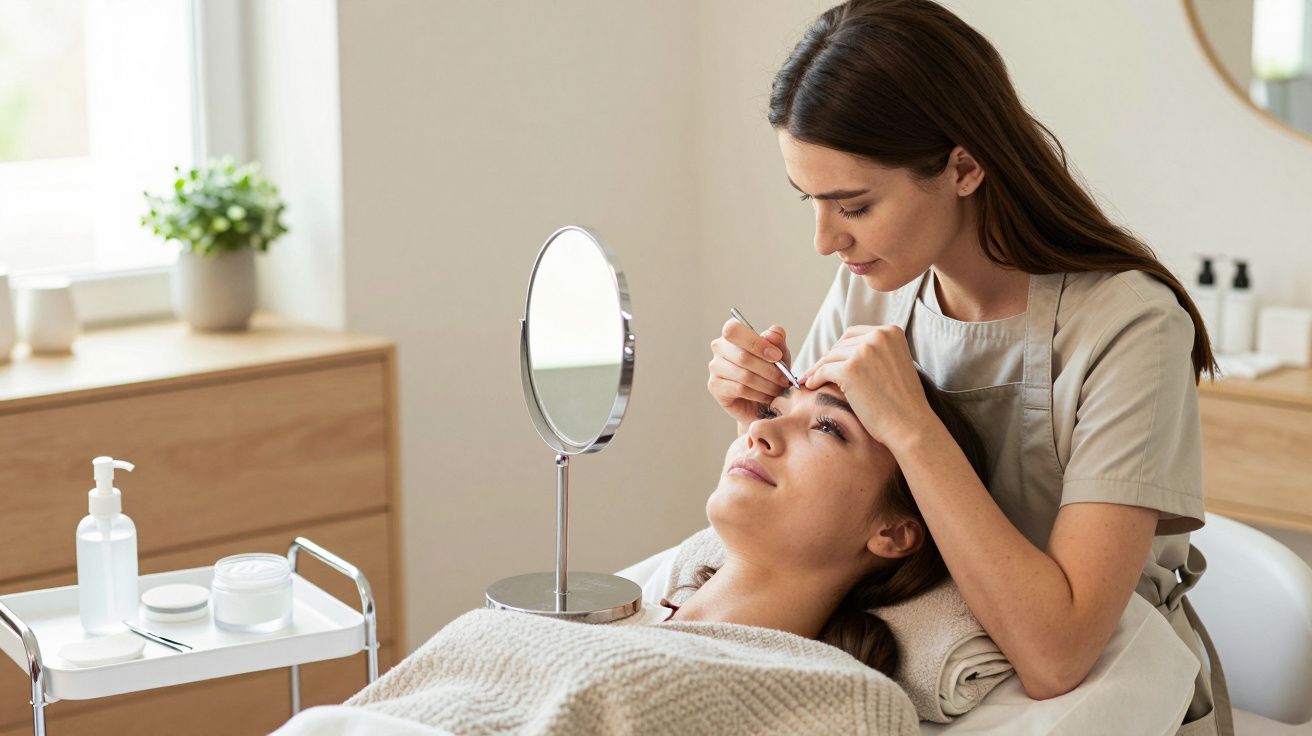
If you’ve been exfoliated hard and then go straight into extractions, you’re working on skin that’s already more fragile. That increases the chance of micro-tears, swelling around pores, and the kind of inflammation that looks like “I broke out from the facial” even when no new comedones were formed.
It’s not that extractions are always bad. It’s that extractions on an over-exfoliated base are a different sport.
How to spot you’re being over-exfoliated in the room
You don’t need to be an expert. You just need to watch for a few tells - and give yourself permission to interrupt the script.
Red flags worth speaking up about
- You’re getting multiple exfoliation types in one session (scrub + acid + microdermabrasion, for example).
- The therapist keeps saying your skin is “tough” or “can take it” without asking about retinoids, acne meds, eczema, or recent peels.
- You’re feeling heat, burning, or sharp stinging that isn’t quickly settling.
- Your skin looks uniformly beetroot-red rather than mildly flushed in specific areas.
A good practitioner won’t be offended by “Can we keep it gentle today?” They’ll be relieved you’re paying attention.
What to do if you’ve already left - and the bumps are arriving
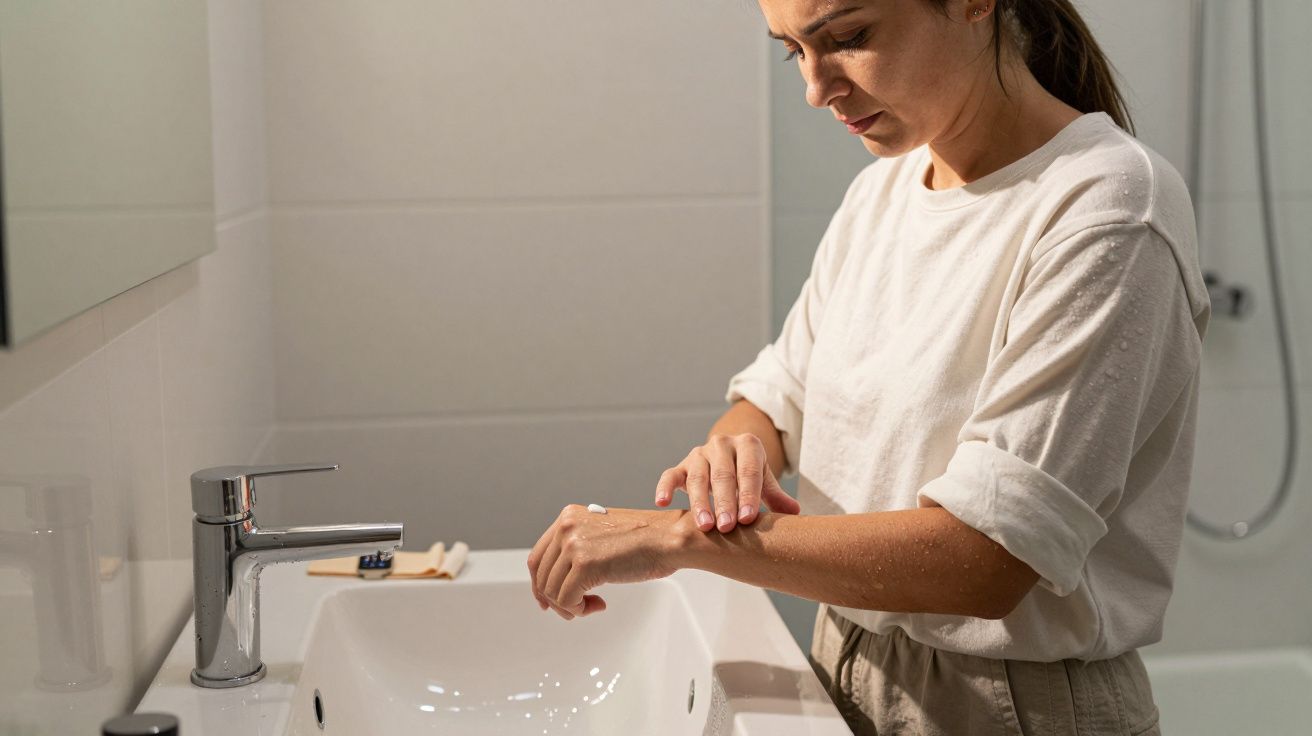
The goal for the next 48 hours is boring: reduce variables, reduce friction, and let the barrier rebuild.
- Skip actives: no retinoids, no exfoliating acids, no vitamin C if it stings, no scrubs, no cleansing devices.
- Cleanse gently once (or twice max) with a mild, non-foaming cleanser.
- Moisturise like you mean it with a simple barrier-supporting moisturiser.
- Use SPF in the morning, but choose one you already tolerate; don’t test a new “dewy” formula on irritated skin.
- Hands off: no picking the bumps “just to release pressure”.
If you’re dealing with significant swelling, spreading rash-like bumps, or intense burning, treat it as irritation first - and consider checking in with a pharmacist or GP, especially if you’re prone to dermatitis or rosacea.
How to ask for facial treatments that don’t backfire
You can keep getting facials without living in fear of the car-ride breakout. The win is choosing the right intensity and making the plan match your skin’s week, not the salon’s menu.
A simple script that works: “My skin breaks out with over-exfoliation. Can we do one exfoliation method only, keep extractions minimal, and focus on hydration and calming today?”
The “one main thing” rule
In most appointments, pick one primary goal:
- If you want brightness, do one controlled exfoliation method and skip the rest.
- If you want decongestion, keep exfoliation mild and focus on careful extractions plus calming steps after.
- If you want barrier repair, skip exfoliation entirely and lean into hydration, LED (if suitable), and massage that doesn’t drag the skin.
Skin loves consistency more than it loves drama.
Take this with you
The facial step that causes breakouts hours later is rarely the fancy serum at the end. It’s the moment exfoliation turns from “helpful” into “too much”, and the barrier pays for it on a delay. Once you start judging facial treatments by how calm your skin feels tomorrow - not how shiny it looks in the reception mirror - you’ll pick sessions that actually improve things instead of resetting you every month.
FAQ:
- Is it normal to break out after a facial? A small flare can happen, but breakouts within hours often point to irritation or over-exfoliation rather than a “purge”.
- Should I use salicylic acid to fix the bumps? Not immediately. If your skin feels tight or stingy, adding acids usually prolongs the reaction. Go gentle for 48 hours first.
- What should I avoid booking before an event? Anything that stacks exfoliation (peels + dermaplaning + microdermabrasion) or includes heavy extractions. Choose a calming, hydrating facial instead.
- How do I know if a therapist is being too aggressive? Burning/stinging that escalates, repeated “one more pass”, or multiple exfoliation methods layered are the big tells. Ask them to stop or scale back.



Comments (0)
No comments yet. Be the first to comment!
Leave a Comment