The moment you choose nail art for a weekend away, a wedding, or simply to feel put-together on a Tuesday, you’re also making a quiet decision about wear resistance. Most people don’t think about it until a corner catches on a jumper, a stone goes missing, or a perfect finish turns into a snaggy little problem by day three.
There’s one design choice that looks stunning in photos and under café lighting, but asks your nails to do a job they’re not built for: raised, 3D embellishments.
The look that wins the scroll-and loses the week
A high-shine top coat, crisp lines, a neat French tip: these tend to age politely. But add height-pearls, chunky glitter, rhinestones, sculpted gel “bows”, chains, or heavy chrome charms-and you’ve moved from “polish” to “tiny sculpture”.
That extra dimension is the whole point. It catches light, creates shadows, and makes your hands look styled even when you’re holding a plain paper cup.
It also creates leverage. Every time you press a button, pull on tights, dig for keys, or wrestle with a seatbelt, the raised piece takes the hit first.
Why 3D nail art fails faster (even when it’s applied well)
Durability isn’t just about the product. It’s about physics and daily life. The higher an embellishment sits off the nail plate, the easier it is for normal movement to turn into prying.
A nail tech in Manchester once described it to me like this: flat designs wear down; raised designs get knocked off.
The weak points are predictable:
- Edges and corners lift first because they catch on fabric.
- Glue or gel bonds can shear when a charm is bumped from the side.
- Top coat can’t “seal” height the way it seals a flat layer, so water and oils creep in.
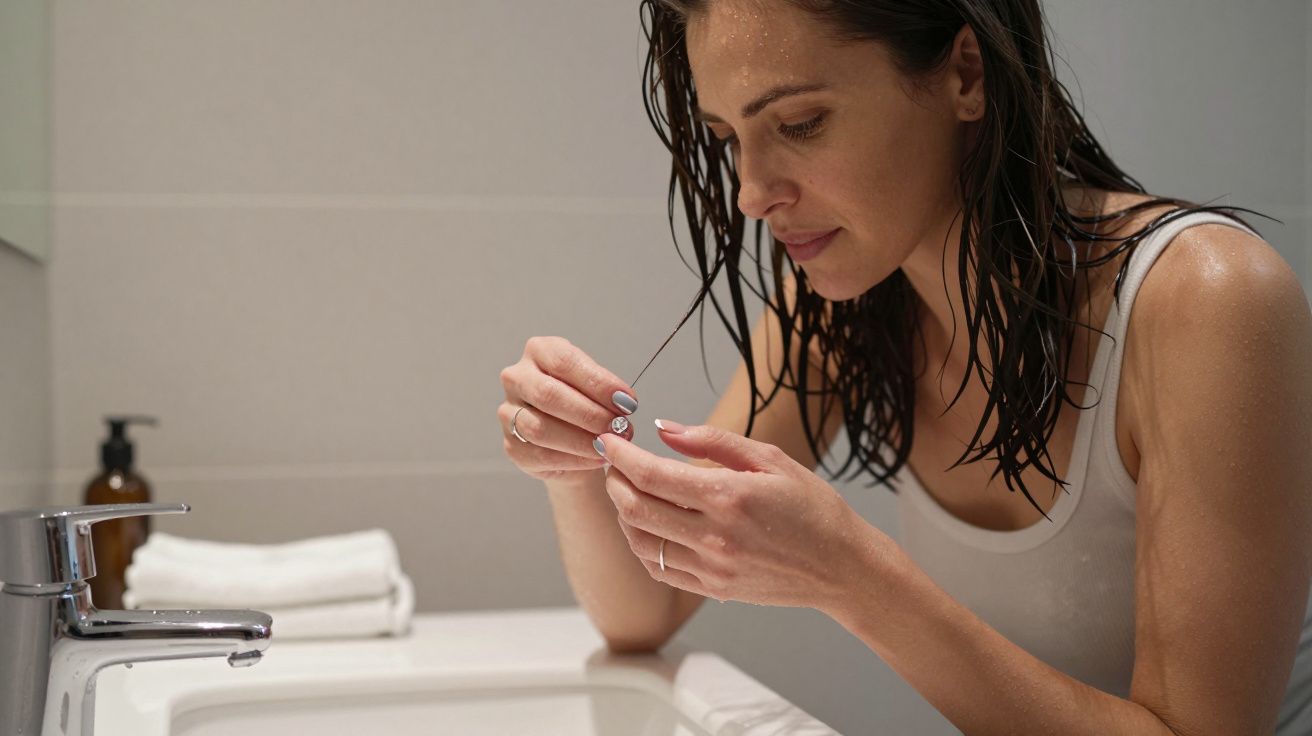
- Hair is the secret enemy-one strand under a stone can start a lift you won’t notice until it’s too late.
If you wash your hair daily, type for work, or clean without gloves, you’re basically stress-testing your manicure on purpose.
The hidden trade: comfort, maintenance, and “life friction”
Most people agree to the look, then get surprised by the lifestyle tax. It’s not dramatic, just constant: a faint snag here, a little catch there, a careful way of putting on jeans so you don’t ping a gem into the void.
You also lose that easy feeling of “I can forget about my nails now”. 3D sets demand you remember them.
Common real-world complaints aren’t about beauty-they’re about friction:
- Pulling tights, zips, or bra hooks becomes fiddly.
- Contact lenses feel riskier.
- Hair washing turns into a search-and-rescue mission.
- One missing charm can make the whole set look unfinished.
And because the decoration is the focal point, a single failure reads louder than a small chip on plain colour.
How to get the aesthetic without sacrificing all the wear resistance
If you love the 3D look, you don’t have to abandon it. You just have to choose where and how you place it, the way you’d choose shoes for the day you’re actually having-not the day you wish you were having.
Small changes that keep the vibe but behave better
- Keep embellishments on accent nails only (ring fingers are classic for a reason).
- Choose low-profile stones over tall charms; flatter backs sit closer and snag less.
- Ask for “encapsulation” where possible (a layer of builder gel over glitter or smaller pieces).
- Avoid edge placement; centre placement takes fewer knocks.
- Match the design to your week: events and photoshoots? Go big. Normal life? Go lower.
If you want maximum drama with minimal height, chrome powder, cat-eye gel, and layered art under top coat can look expensive without creating a snag point.
A simple way to decide before you commit
Before you pick the design, do a quick mental run through the next seven days. Not the ideal version-your real week.
- Are you washing hair often?
- Do you type all day?
- Are you travelling, packing, dealing with suitcases?
- Do you have to wear tights, gym kit, or do any cleaning?
If the answer is “yes” to most, a heavily raised set will look incredible and then slowly annoy you. That doesn’t mean you chose wrong; it means you chose “aesthetic first”, and you’ll want to plan the upkeep accordingly.
| Choice | What you gain | What you risk |
|---|---|---|
| 3D charms / tall gems | Maximum impact, photo-ready hands | Lower wear resistance, snags and pop-offs |
| Low-profile stones / decals | Sparkle with less bulk | Some edge lift over time |
| Flat art (chrome, liner work) | Sealed finish, easy living | Less “statement” from a distance |
FAQ:
- What type of nail art lasts longest in day-to-day life? Flat designs sealed under top coat-plain colour, chrome, fine glitter, and line work-tend to outlast raised embellishments because there’s less to catch and lift.
- Can 3D nail art be made more durable? Yes, but not indestructible. Keeping embellishments small, centred, and limited to accent nails helps, and proper gel bonding makes a big difference.
- Why do my rhinestones fall off so quickly? Usually it’s snagging plus a weak bond: oily nail plate, inadequate curing, or stones placed too close to the edge where they take constant knocks.
- Is builder gel better for wear resistance than regular gel polish? Often, yes. Builder gel can add structure and help anchor art, but raised pieces still have the same snag-and-leverage problem.
- What’s a good “high impact, low snag” alternative? Magnetic cat-eye gel, chrome powder, or encapsulated fine glitter give a dramatic finish while staying smooth and sealed.





Comments (0)
No comments yet. Be the first to comment!
Leave a Comment