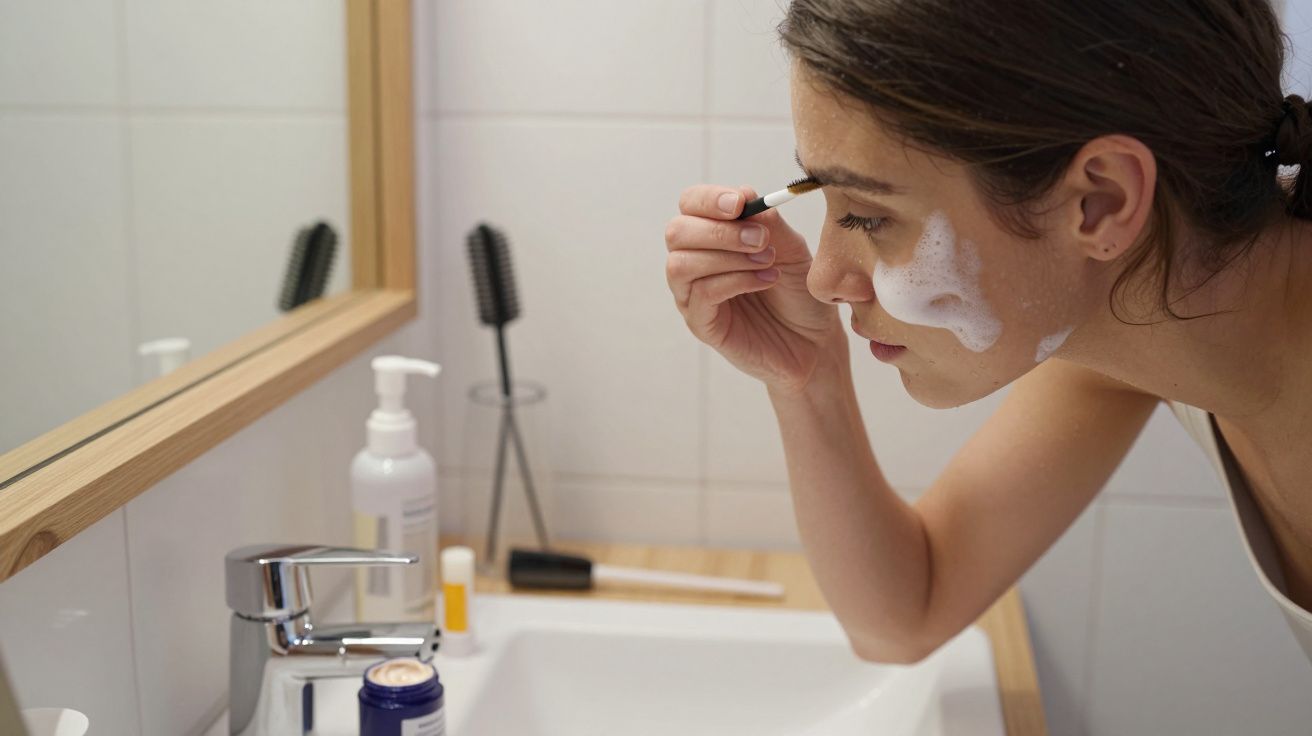
It usually starts as a nice, grown-up habit: you finish your lashes, you moisturise, you do your skincare, you feel put together. But lash aftercare can unravel quietly when oil exposure sneaks into the routine - not in a dramatic, instant-fallout way, but in a slow loosening that shows up days later as gaps and early shedding.
Most clients don’t connect the dots because the lashes still look fine on day two. Then day five arrives and the outer corners look tired, like they’ve been brushed too often. You blame the glue, the weather, your sleep, your hormones - anything except the one product you use twice a day, right where the extensions sit.
The moment oil meets adhesive (and retention starts to slip)
Lash adhesive doesn’t fail all at once. It softens at the edges, then lets go strand by strand, especially where your skin is naturally oilier: inner corners, outer corners, the lash line closest to the lid.
Oil exposure is the quiet saboteur because it’s rarely “oil” in a bottle. It’s balm cleanser that didn’t rinse clean. It’s a rich eye cream that migrates overnight. It’s SPF that creeps up when you sweat on the walk to the train. Even some “lash-safe” makeup removers leave a film that behaves like oil once it warms on skin.
The frustrating part is how sensible it feels in the moment. Hydrated skin. Dewy finish. A little slip so your concealer doesn’t crease. Retention pays for that comfort, and it does it slowly enough that you can’t pinpoint the cause.
The aftercare habit that does the damage: skincare first, lashes last (but too late)
Here’s the pattern I see constantly: skincare goes on as normal, then lashes get a quick cleanse - or nothing at all - because “I didn’t wear makeup today.” The products have already had ten minutes to travel.
Creams and balms don’t stay where you place them. Heat, blinking, sleeping on your side, even your natural tear film nudges them towards the lash line. By the time you remember aftercare, you’re washing the tips and hoping that fixes what’s sitting at the base.
If you want a simple rule that holds up in real life, make it this: anything that leaves a slippery finish near the eyes is a retention risk unless you cleanse the lashes properly afterwards. Not aggressively. Just thoroughly, at the base, with something that truly rinses clean.
What “oil exposure” looks like in real routines (so you can spot yours)
Most people aren’t drenching their lashes in face oil. They’re doing normal, modern skincare. These are the usual suspects:
- Cleansing balms and oil cleansers that aren’t fully emulsified and rinsed away
- Eye creams and thick moisturisers placed too close to the lash line “because it feels dry there”
- SPF around the eyes (especially stick SPF and very emollient formulas)
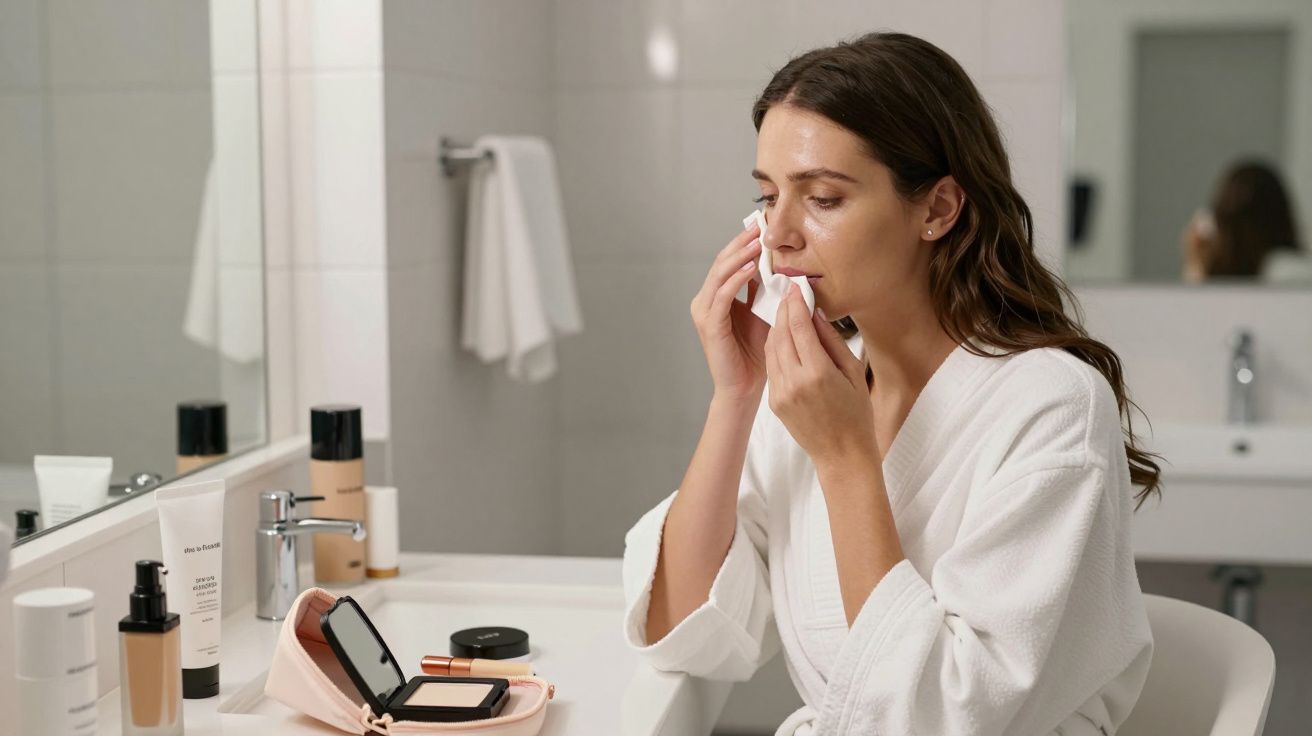
- Makeup removers marketed as gentle that leave a conditioning residue
- Hair products: dry shampoo fallout, serums, and aerosols settling on lashes
- Steam plus skincare: hot showers that melt product and move it upwards
If your lashes look best right after an infill and then suddenly “let go” in clusters, oil exposure is a strong candidate. Natural shedding is one-by-one. Poor retention often looks like little groups, or sudden sparseness in specific zones.
How to do lash aftercare in a way that fits your life (and keeps the bond clean)
The goal isn’t to live like a monk who never moisturises. It’s to keep the lash line clean and the adhesive area free from residue.
Try this routine for seven days and watch what changes:
- Do your skincare, but keep heavy products a finger-width away from the lash line. You can still hydrate - just don’t park cream at the roots.
- Cleanse your lashes once daily, twice if you wear makeup. Use a lash cleanser or a gentle, extension-safe foaming cleanser that rinses clean.
- Work at the base, not the tips. The bond lives at the base; that’s where build-up matters.
- Rinse longer than you think you need. Most retention problems come from residue, not from the cleanser itself.
- Dry properly. Pat around the eyes, then use a clean spoolie and, if you like, a cool setting on a hairdryer from a distance.
Let’s be honest: nobody does that perfectly every day. The win is consistency on most days, especially after SPF, workouts, and makeup removal.
“I didn’t change my lashes. I changed what touched them.”
The small switches that protect retention without ruining your skincare
You don’t need to bin your entire bathroom shelf. Start with two swaps that reduce oil exposure at the lash line:
- Switch balm cleanser at night for a two-step approach: balm for face, then a proper rinse, then a foaming cleanse around the eyes.
- Choose lighter textures near the eyes: gel-cream instead of butter-rich eye cream, and apply with a clean ring finger, stopping short of the lash roots.
- Treat SPF like paint, not moisturiser: press it in, don’t smear it up to the lashes. If it migrates, cleanse lashes that evening.
- Avoid “conditioning” removers on lash days: that soft, silky feel is often the film that weakens the bond.
If you’re a lash artist, this is also where client education lands best: not as a lecture, but as a tiny checklist that explains why their “good skincare” might be costing them days of wear.
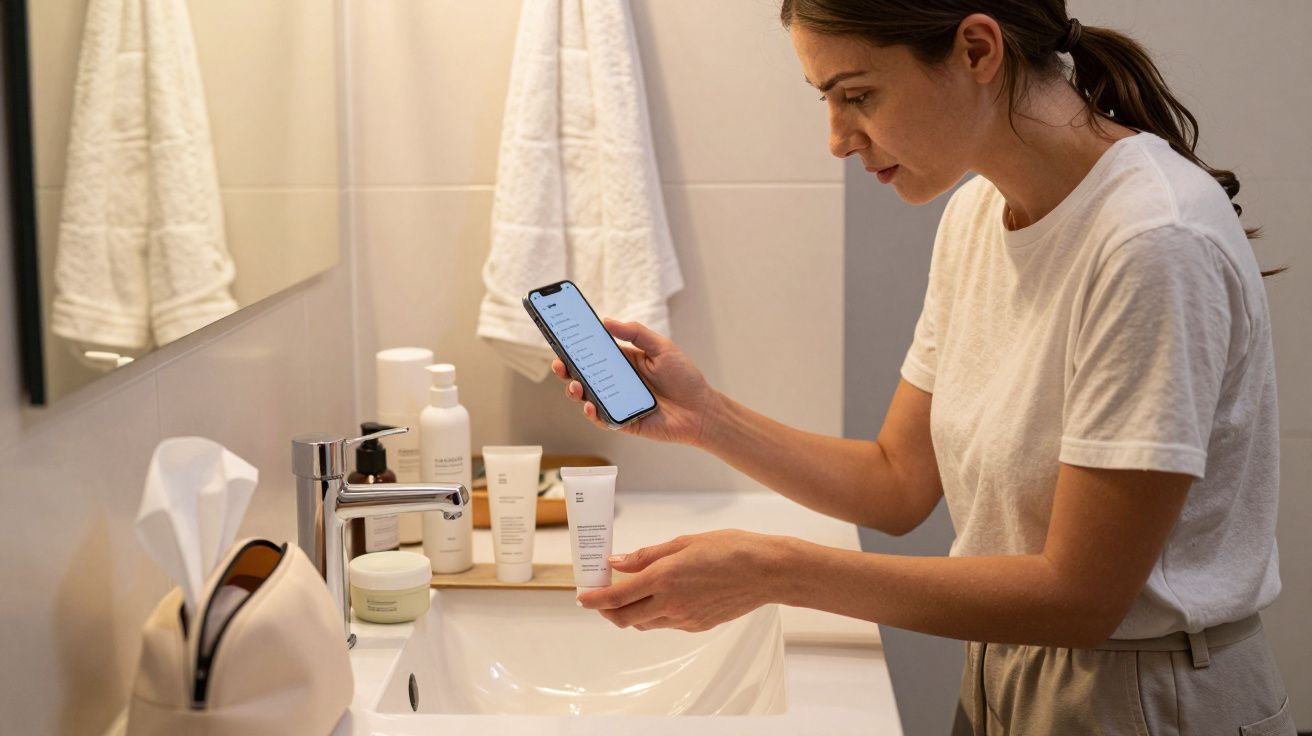
A quick retention check you can do in the mirror tonight
Stand under a bright bathroom light and look along the lash line. If you see a sheen at the roots - that slightly glossy, moisturised look - assume there’s something there that can interfere with the bond.
Now cleanse properly and look again. The skin can still look healthy, but the lash line should look clean rather than slippery. Extensions don’t need dryness; they need a residue-free base.
Retention symptoms and the likely cause
| What you notice | Likely culprit | What to change |
|---|---|---|
| Early shedding at inner/outer corners | Skincare/SPF migration | Apply further away + cleanse lashes nightly |
| Lashes twisting or slipping | Oil film at the base | Rinse longer, dry fully, brush daily |
| Patchy gaps after workouts | Sweat + SPF + residue | Cleanse after heavy sweat or that evening |
FAQ:
- Do I have to stop using face oil completely? No. Keep it away from the eye area and cleanse the lashes properly afterwards so residue doesn’t sit at the bond.
- Is “oil-free” makeup remover always safe? Not always. Some oil-free formulas still leave a film. The test is whether it rinses clean and your lash line feels residue-free.
- Can I use eye cream with extensions? Yes, but use a light texture and stop short of the lash line. If it migrates overnight, cleanse lashes in the morning or evening.
- Why do my lashes last better on holiday when I’m wearing more makeup? Many people cleanse more thoroughly when wearing makeup. Better cleansing can improve retention even with extra products.
- How often should I cleanse my lashes? Daily is a strong baseline; twice daily if you’re oily-skinned, wearing makeup, using SPF heavily, or working out a lot.



Comments (0)
No comments yet. Be the first to comment!
Leave a Comment