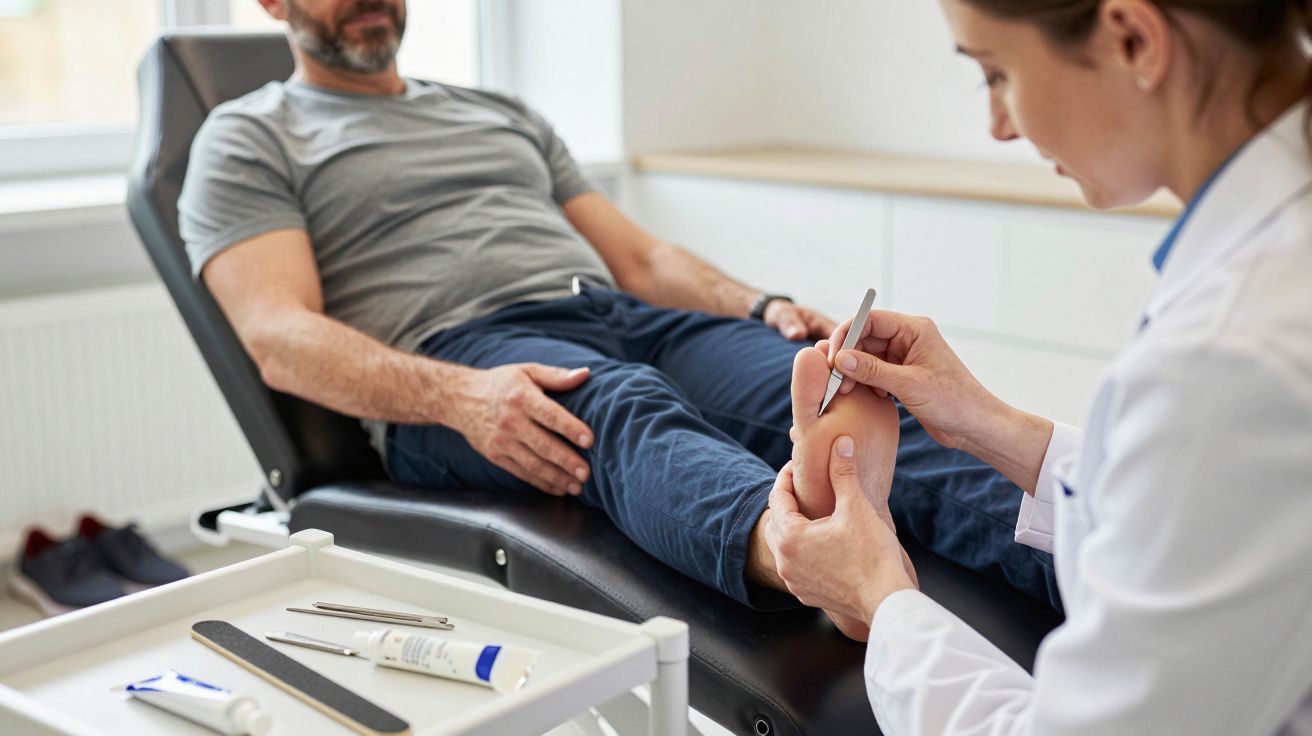
On an ordinary Tuesday, you can ignore your feet all day and still get where you need to go. That’s why foot treatments so often fall to the bottom of the list, filed under “later”, even when the warning signs are already there. The frustrating truth is that preventative care works best when you feel fine - and most of us only look down properly when something starts to hurt.
I saw it last month in a podiatry clinic off a busy high street: a man in his forties, good shoes, tidy socks, wincing like he’d stepped on a drawing pin. He’d been “meaning to sort it” for months. What he needed wasn’t dramatic. It was basic, unglamorous, and long overdue.
The treatment people put off (until it becomes a problem)
The most delayed foot treatment is often the simplest: a proper assessment and debridement - the careful removal of hard skin, corns, thickened callus, and the edges of nails that keep digging in. Not a quick scrape in the bathroom after a shower, not a ten-minute “file and hope”, but a clinical look at what’s causing pressure and friction in the first place.
People postpone it because it feels cosmetic. Hard skin is so common it’s almost background noise, and mild nail pain is easy to normalise when you’re rushing for the train. But the feet don’t stay in the mild stage forever. Pressure turns into deeper pain, small cracks become open splits, and a slightly ingrown corner turns into redness and infection.
There’s also a quiet embarrassment factor. Plenty of adults would rather limp for a month than let someone else see their soles up close. Clinics know this. They’ve seen everything, and the thing they worry about isn’t how your feet look - it’s what you’re risking by leaving the problem to bake in.
The goal isn’t pretty feet. It’s reducing pressure and preventing the small issues that snowball into the ones that stop you walking.
Why “just a bit of hard skin” can turn nasty
Hard skin forms for a reason: your body is trying to protect you from repeated load. That load might be a bunion changing how you land, a slight toe deformity rubbing in one spot, a collapsed arch, a shoe that’s fine for the office but brutal after 8,000 steps.
Left alone, callus can build thickness like a dense plug. Under that plug, skin can bruise and break down. The first sign is often a hot, sharp tenderness that makes you shift your weight - and that weight shift creates a brand-new pressure point elsewhere. It’s a chain reaction that can end with more pain, more hard skin, and a gait that starts to upset your knees or hips.
Cracked heels are another one people try to “live with”. Dryness plus pressure makes fissures. Fissures can bleed. Bleeding can invite infection. Most of the time it’s manageable and treatable, but it’s exactly the sort of avoidable escalation that preventative care is meant to catch early.
What a proper appointment actually does (and why it feels like relief)
A good foot appointment isn’t just someone sanding your heel and sending you home. It’s usually three things: assessment, removal of the problem tissue, and a plan to stop it returning at the same speed.
In practical terms, that can include:
- checking your skin and nails (including signs of fungal infection, eczema, or pressure damage),
- reducing callus and corns safely with sterile instruments,
- dealing with ingrown nail edges before they become inflamed,
- advice on footwear fit (width matters more than people think),
- simple padding, toe props, or insoles to offload pressure points,
- a moisturising and maintenance routine that’s realistic, not fantasy.
For many people the immediate effect is almost emotional. You walk out and realise you’ve been subtly bracing with every step for weeks. The floor feels flatter. The ache that made you clench your jaw at the end of the day just… isn’t there.
The DIY trap: when home fixes make it worse
Home care has its place. The problem is that many people only do the aggressive bits and skip the preventative bits, which is like tightening a loose screw without checking why the door keeps slamming.
Common missteps include:
- Over-filing in one go. You can remove too much skin, cause soreness, and trigger the body to rebuild thicker callus in response.
- Using “corn plasters” without caution. Acid-based treatments can burn healthy skin, especially if you have reduced sensation or circulation issues.
- Cutting nails too short at the corners. This is how many ingrown nails start, particularly if your shoes compress the toes.
- Ignoring footwear. You can moisturise diligently and still keep re-creating the problem if your shoes are narrow, stiff in the wrong place, or worn down unevenly.
If you’re tempted to take a blade to a corn because it “looks like it’s sticking out”, pause. If you’ve got diabetes, poor circulation, neuropathy, or you’re on blood thinners, don’t gamble - get proper advice. A small wound on a foot can be a big deal in the wrong body.
A simple preventative care routine that actually sticks
Most people don’t need an elaborate regimen. They need a boring, repeatable baseline that keeps problems from re-forming at speed.
Try this:
- Moisturise little and often. A urea-based foot cream a few nights a week beats a heroic once-a-month effort.
- File gently, not violently. Use a foot file on dry skin once or twice weekly, then moisturise. Stop if it becomes tender.
- Cut nails straight across. Leave the corners visible, not dug out. File the edge if it snags.
- Rotate shoes. Let pairs dry out; damp shoes and pressure are a rough combination for skin and nails.
- Check the “hot spots”. If one area always builds hard skin, that’s a clue - pressure needs offloading, not just sanding down.
If you do one thing today: look at the soles properly, in good light. Hard skin is information. Repeated pain is a message. You don’t have to wait for it to become a limp.
When not to wait (the red flags)
Delay is most costly when there’s inflammation, broken skin, or a health condition that reduces healing capacity. Book help sooner rather than later if you notice:
- redness, swelling, heat, or pus around a nail,
- a crack that’s bleeding or won’t close,
- sudden increase in pain under a callus (it can hide bruising underneath),
- numbness, tingling, or loss of sensation,
- you have diabetes, peripheral arterial disease, or a history of ulcers.
The point of early foot treatments isn’t to create a new chore. It’s to keep you walking comfortably with less drama, fewer flare-ups, and fewer “I wish I’d sorted it earlier” moments.
FAQ:
- Should I see a podiatrist or can a pedicure handle it? A cosmetic pedicure can help with general tidying, but persistent pain, corns, recurring callus, ingrown nails, or any broken skin is better assessed by a podiatrist.
- How often do people typically need routine foot treatments? It varies, but many find a visit every 6–12 weeks keeps callus and nail issues under control, with simple home care in between.
- Are corn plasters safe? They can be risky, particularly for anyone with diabetes, poor circulation, or reduced sensation. If you’re unsure what you’re treating, it’s safer to get it checked.
- What’s the quickest footwear fix for recurring hard skin? Start with width and toe space: many “correct size” shoes are too narrow. A wider fit and softer uppers often reduce friction quickly.






Comments (0)
No comments yet. Be the first to comment!
Leave a Comment