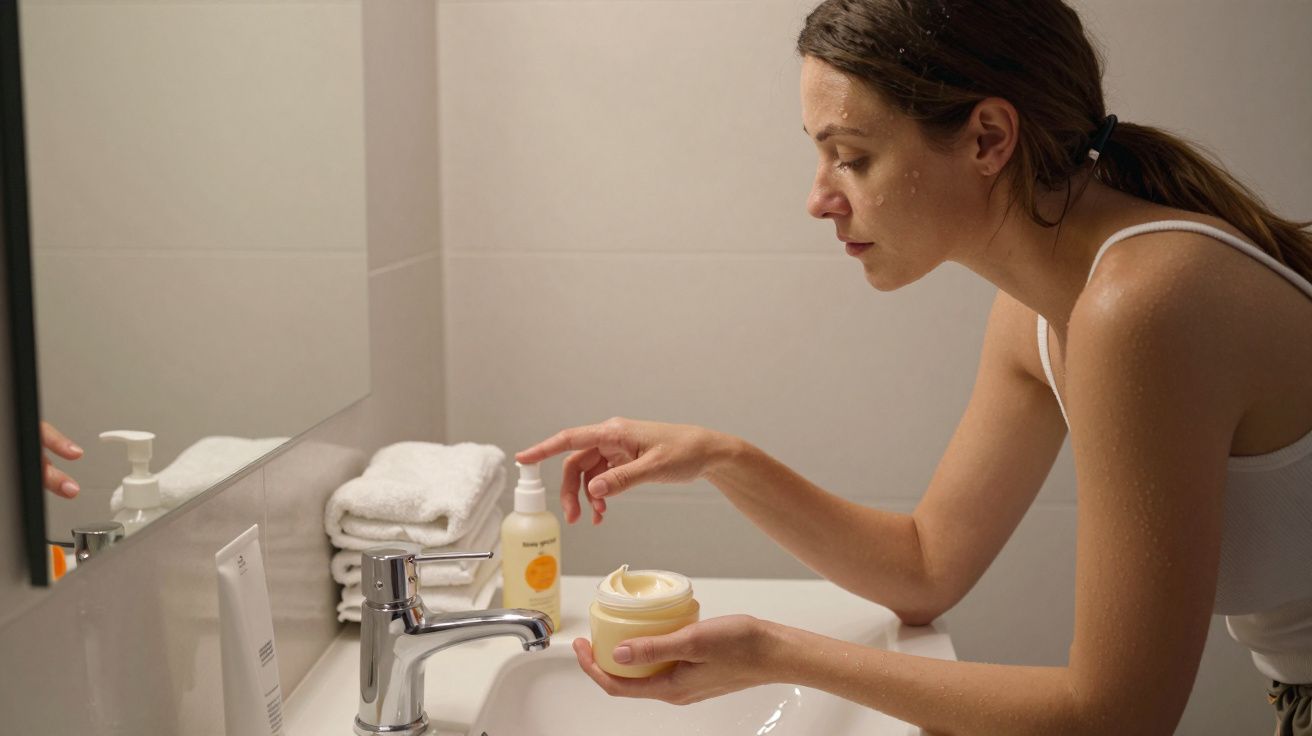
You book facial treatments for the glow - a brighter tone, a smoother texture, that “just slept eight hours” finish. Yet the days after can be when skin sensitivity shows up, and not always as obvious redness: sometimes it’s tiny bumps, clogged pores, or a full breakout that feels unfair. The facial mistake behind it is usually simple, well‑intentioned, and incredibly common.
It happens between the treatment room and your bathroom mirror. You treat newly exfoliated skin like it’s business as usual, when it’s actually in a short, vulnerable window where the barrier is more permeable and easily overwhelmed.
The mistake: smothering freshly treated skin
Right after a facial, your skin is often cleaner, warmer, and more absorbent than normal. Extractions, acids, dermaplaning, steam, massage - even a “gentle” facial can temporarily thin the margin between calm and reactive. Then we go home and do the thing that feels protective: we pile on product.
Thick moisturisers, facial oils, slugging with petrolatum, multiple serums, a sleeping mask, rich SPF, makeup the next morning. On a normal day, many of these are fine. After treatment, they can turn into a traffic jam - sealing in heat, trapping sweat, and pushing already‑loosened debris back into pores.
The result looks like “the facial broke me out”. Often it’s not the treatment itself. It’s the aftercare blanket that doesn’t let skin settle.
From glow to bumps in 48 hours
Post‑treatment breakouts tend to follow a recognisable timeline. Day one looks great: plump, shiny, almost polished. Day two brings texture you can feel before you can see it, like sand under the fingertips.
By day three, you’re scanning the mirror for culprits. Was it the practitioner’s product? The face towel? Your hormones? Sometimes, sure. But very often it’s the combination of a temporarily open door (exfoliation + barrier disruption) and a heavy occlusive lock afterwards.
Common “breakout after facial” patterns include:
- Closed comedones clustered around the jaw, chin, and cheeks.
- Inflamed pimples where extractions were done, especially if you touch.
- Follicular bumps after dermaplaning if you trap sweat and oil under rich layers.
- Little itchy spots that aren’t acne so much as irritation, which can mimic it.
Why it happens (and why it feels so personal)
The science isn’t exotic; it’s the sequence that gets you. A facial can increase cell turnover, loosen oil plugs, and reduce the barrier’s “tightness” for a short period. Add heat (from steam, exercise, hot showers, central heating) and a heavy film on top, and you create a warm, sealed environment where pores behave badly.
This is also where skin sensitivity changes the rules. Sensitive skin doesn’t just react to “harsh” ingredients; it reacts to too much, too soon, including products you normally tolerate. The sting isn’t always immediate. Sometimes it’s delayed congestion that arrives like a bill you didn’t know you ran up.
And let’s be honest: nobody spends money on a facial to go home and do nothing. We want to keep the result, so we do more. That instinct is the trap.
The simplest aftercare that prevents most breakouts
Think of the first 24–48 hours as a cooling‑off period, not a time to “feed” your skin. You want light layers, low friction, and fewer variables.
- Cleanse once, gently, with lukewarm water and a mild cleanser.
- Use a light, bland moisturiser (no strong actives, minimal fragrance).
- Apply SPF in the morning, but choose a breathable formula and don’t double up “just in case”.
- Skip makeup for 24 hours if you can; if you can’t, keep it minimal and remove it gently.
- Avoid slugging, facial oils, sleeping masks, and heavy balms for 48 hours unless your practitioner specifically advised them.
- Keep hands off. Post‑facial “checking” is basically a slow extraction with dirty tools.
If you feel tight or dry, add hydration with a simple humectant (like a basic hyaluronic serum) under a light moisturiser, rather than sealing everything under an occlusive layer.
The other small errors that quietly make it worse
The loudest problems are often little habits done at the wrong time.
- Hot showers and saunas: heat + occlusion is a breakout combo.
- Gym the same day: sweat under rich skincare can trigger bumps fast.
- Scrubs, retinoids, acids “because I’m already exfoliated”: stacking irritation rarely ends well.
- Switching products immediately after: you won’t know what caused what, and your skin won’t either.
- Over-cleansing to “prevent spots”: it can rebound with more oil and more sensitivity.
If you’re prone to acne, ask your therapist what they used and whether they performed extractions. Not to blame them - just to map what your skin experienced before you decide what to put on top of it.
A better way to judge whether it’s purging or a problem
“Purging” gets thrown around loosely. True purging is usually linked to active ingredients that speed cell turnover (certain acids, retinoids) and tends to bring spots where you normally break out. It also settles with time.
Irritation or occlusive breakouts often look different: more uniform bumps, itchiness, patchy redness, or congestion in places you don’t usually get it. If your skin feels hot, tight, or tender, treat it as a barrier issue first.
If you’re unsure, strip back to basics for a few days and let your skin tell you what it needs rather than what you want it to look like.
| What you do after | What it can trigger | Better move |
|---|---|---|
| Slugging / heavy balm | Trapped heat, clogged pores | Light moisturiser only |
| Layering actives | Irritation that mimics acne | Pause acids/retinoids 48–72 hrs |
| Workout + rich skincare | Sweat bumps, congestion | Cleanse, light layers, delay gym |
FAQ:
- Will I always break out after facial treatments? No. Many people don’t, but the risk rises if your skin sensitivity is high or you occlude heavily in the first 48 hours.
- How long should I avoid active ingredients after a facial? Typically 48–72 hours, depending on what you had done (strong peels and extractions need longer). If in doubt, follow your practitioner’s plan.
- Is it better to let my skin “breathe”? Skin doesn’t literally breathe, but it can be overwhelmed. The goal is fewer layers, less friction, and low‑irritant products while the barrier settles.
- What if I’m genuinely dry and flaky afterwards? Use a gentle cleanser, a simple moisturiser, and reapply thinly as needed. If dryness is severe or painful, contact the clinic for tailored advice.
- When should I worry and seek help? If you have swelling, hives, blistering, worsening pain, or rapidly spreading redness, contact your clinic or a pharmacist/GP promptly - that’s beyond a normal post‑treatment reaction.




Comments (0)
No comments yet. Be the first to comment!
Leave a Comment