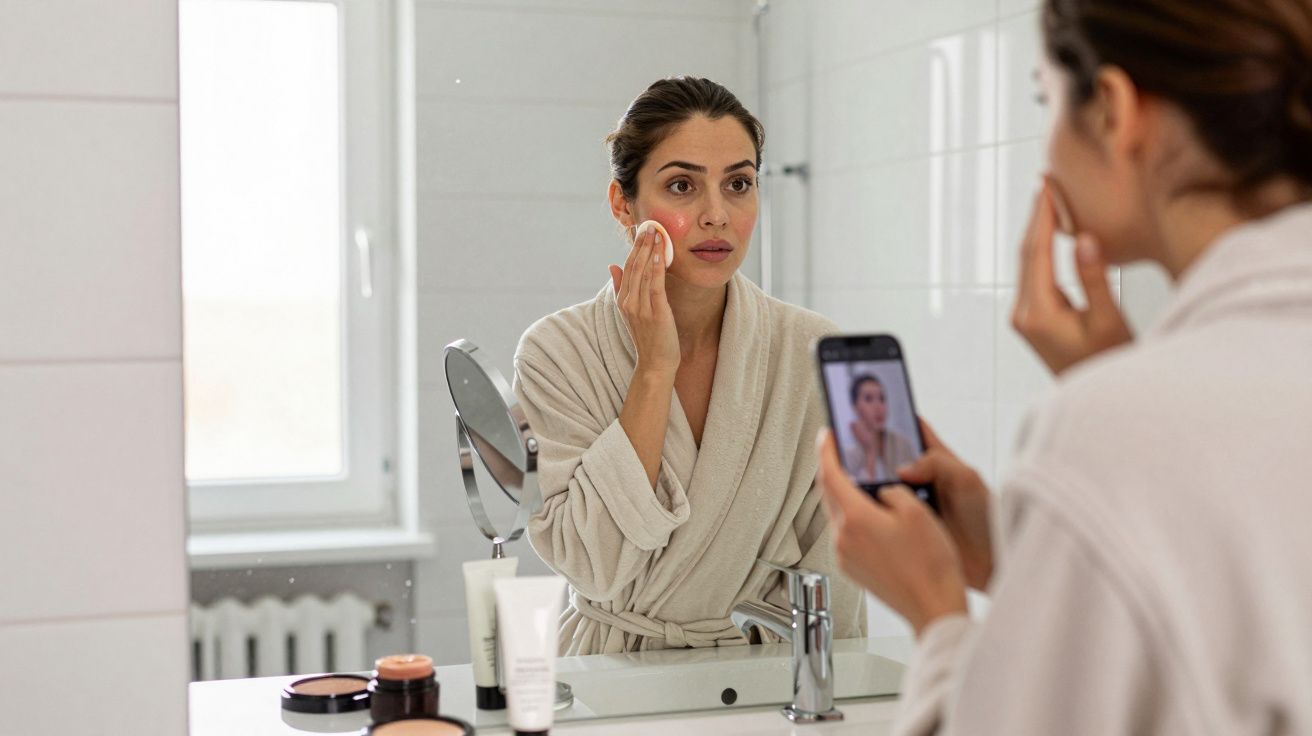
It usually arrives as a 12-second clip: a slick bun, a beige trench, “no-makeup” makeup that somehow still looks expensive. The clean girl aesthetic sells a promise of effortlessness built on a very specific kind of grooming, and it’s why phrases like natural finish keep showing up in product descriptions, GRWM captions, and shopping baskets. If you’ve ever tried to copy it and ended up looking either shiny, flat, or strangely unfinished, you’re not doing it wrong - you’re bumping into the real mechanics behind the look.
The confusion is partly the point. The clean-girl look is marketed as minimal, but it’s a carefully edited maximum: fewer visible steps, not fewer steps overall.
What the “clean girl” look actually is (and what it isn’t)
At its core, the clean girl aesthetic is a styling formula: tidy hair, even-toned skin, soft structure, and colours that don’t interrupt the face. It reads “fresh” because nothing competes for attention - not a smoky eye, not a bold lip, not a loud print, not a messy fringe. The vibe is calm. The finish is controlled.
It’s also not a synonym for “hygienic” or “naturally pretty”, even though the language around it sometimes slips that way. Clean here means visually uncluttered: the kind of polish you’d associate with a well-lit bathroom mirror, not the chaos of a handbag at the end of the day.
And it’s not the same as “no makeup”. The giveaway is uniformity: real bare skin has redness, shadows, texture, and slight unevenness that changes with light. The clean-girl face is about editing those fluctuations until you get the impression of skin that behaves.
The hidden structure: why it looks simple on camera
The look holds together because it’s built around three quiet controls: texture, shine, and line.
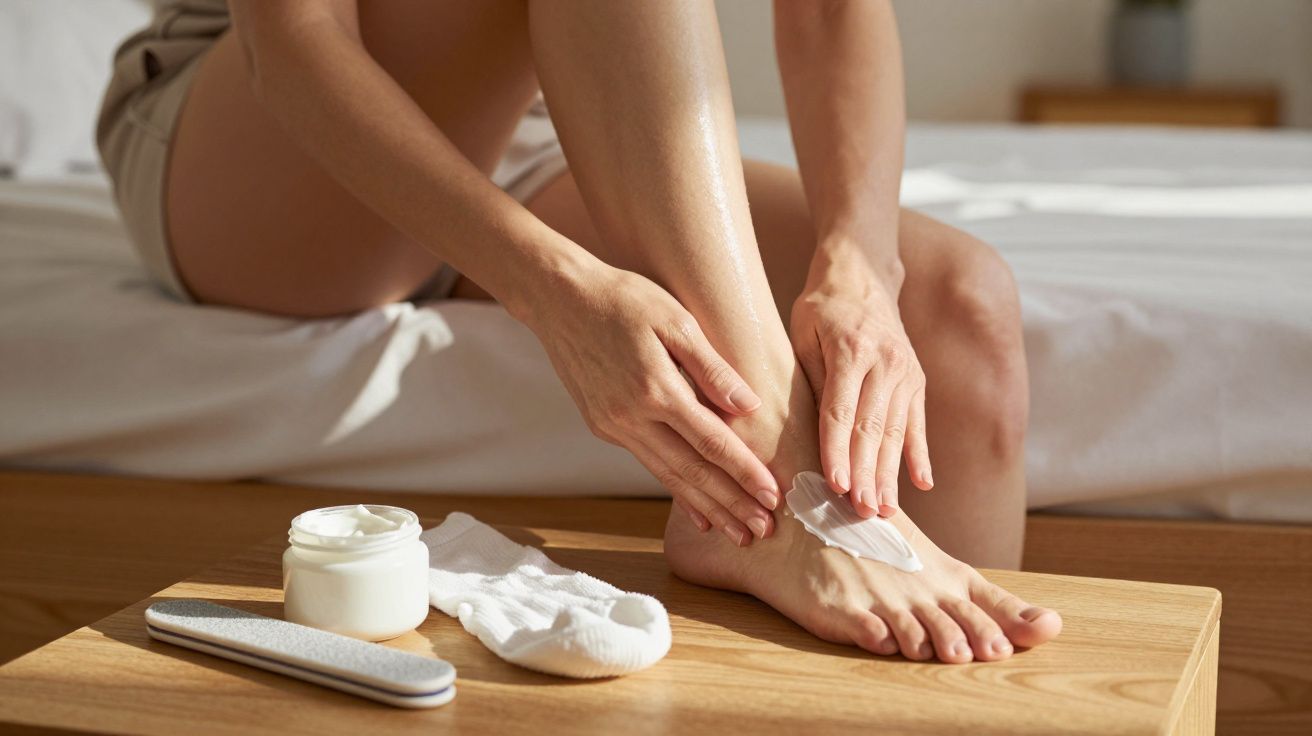
Texture is the foundation. Skin looks “clean” when it’s smooth enough that light skims across it without catching on flakes, bumps, or thick product. That’s why prep matters more than colour: gentle exfoliation if you tolerate it, hydration that actually sinks in, and enough time between layers so nothing pills.
Shine is where most people lose the plot. A natural finish isn’t “matte everywhere” and it isn’t “glow everywhere” either - it’s selective reflectivity. Cheeks can be luminous while the centre of the face stays calmer. Brows can be glossy while the eyelids remain satiny. It’s the difference between “healthy” and “I’ve just run for the bus”.
Line is the final edit. Hair is usually pulled back or tucked, the jawline is softly defined, and brows are brushed into place. The message is: nothing is fighting gravity, nothing is fraying at the edges.
Let’s be honest: the reason it photographs so well is that it removes visual noise. Cameras love that.
A practical “field guide” to getting it right in real life
Think of this less as a trend and more as a checklist you can dial up or down. Here’s what actually changes the outcome:
- Skin prep sets the whole mood. If your base is gripping to dryness or sliding off sunscreen, no amount of “skin tint” will save it.
- Choose coverage by behaviour, not by label. A product marketed as “skin-like” can still sit heavily if it dries fast or oxidises; test it over your usual SPF.
- Conceal strategically. Under-eyes, around the nose, and any sharp redness - then stop. Over-concealing is what flips “fresh” into “mask”.
- Powder is a placement tool. Use it where you crease or get reflective (often T-zone), not as a blanket. A light dusting can preserve a natural finish better than none at all.
- Creams over powders (usually). Cream blush and bronzer melt into the base and look less “applied” under daylight.
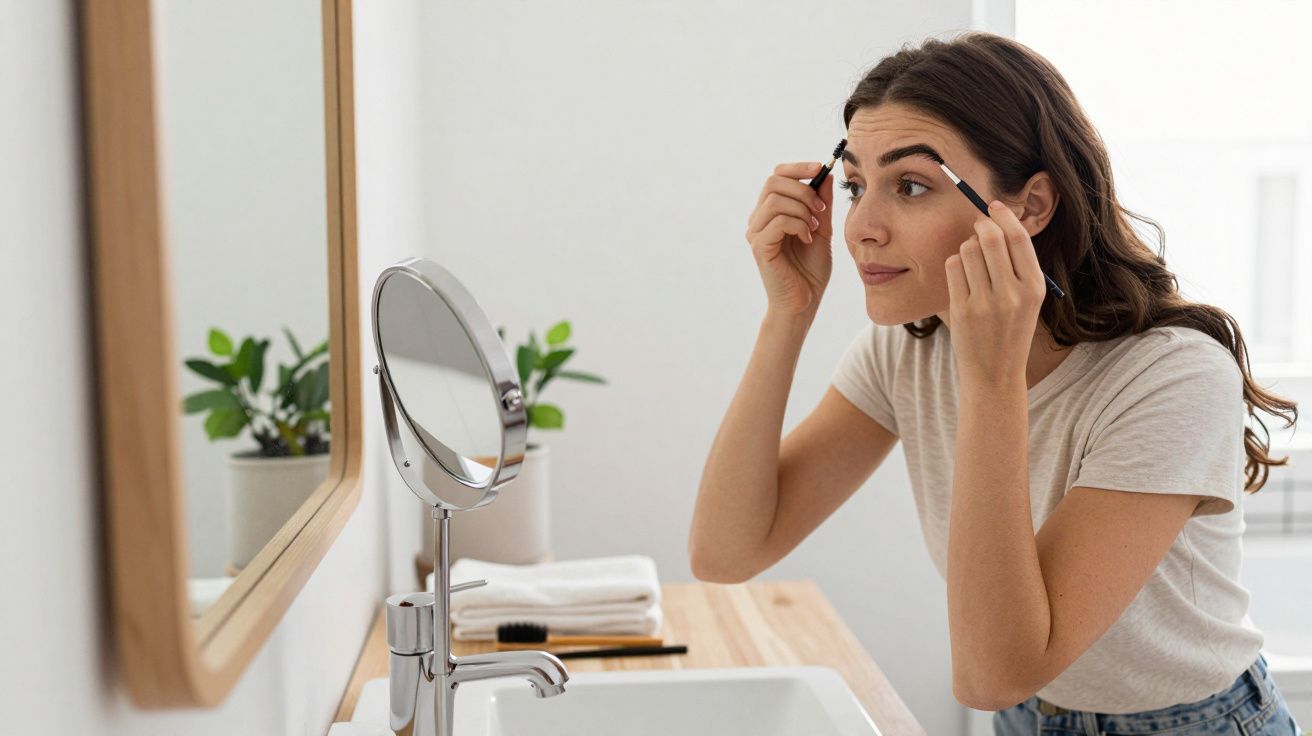
- Brows are the anchor. Brush up, set gently, fill only gaps. Over-dark brows are the fastest way to make the look feel harsh.
- Lips should look lived-in, not painted. Balm, stain, or a soft liner blurred at the edges tends to read cleanest.
The trick is stopping while it still looks like your face. Clean-girl makeup fails when you keep “fixing” it.
The style side: hair, clothes, and the quiet pressure of maintenance
Hair is doing half the work. The classic clean-girl options - slick bun, claw-clip twist, smooth blowout - all signal control. But they also require upkeep: oil management, edge-taming, heat styling, or simply the patience to redo it when it drops.
Clothing follows the same logic: simple silhouettes, neutral palettes, minimal jewellery that looks intentional (small hoops, a fine chain, a watch). Nothing is wrong with that. The friction comes from the implied standard: “This is effortless” when it’s actually a maintenance schedule.
If you want the aesthetic without the treadmill, borrow the principle rather than the full uniform:
- Keep one element polished (hair or skin or outfit), not all three.
- Build a palette you like, then add one “messy” detail on purpose: a textured knit, an untucked shirt, a lived-in leather bag.
- Treat it as a mood, not a moral category. You’re allowed to be glossy, tired, or loud.
The part people don’t say out loud: who the look is designed to flatter
The clean-girl aesthetic is sold as universal, but it’s built to play nicely with certain baselines: fairly even skin tone, low-contrast features, and hair that cooperates with sleek styles. That doesn’t mean others can’t wear it. It means you may need different tools, and you shouldn’t blame your face for a trend’s narrow default settings.
If your skin has texture, acne, hyperpigmentation, or visible pores, a “clean” look can still work - but it often looks cleaner with less base and better spot concealing. If you have tightly coiled hair or styles that are protective and voluminous, the clean feeling can come from neat parting, defined edges, or intentional shape rather than slickness.
The goal isn’t to disappear your reality. It’s to choose what you’re emphasising.
A simple reset: making “clean” look like you, not a template
If you only remember one thing, make it this: clean is an editing choice. Decide what you want to look like you’ve done, and what you want to look like you’ve not done.
A quick, reliable version looks like:
- Hydrating base + SPF that doesn’t pill
- Spot conceal + sheer tint only where needed
- Cream blush + subtle highlight (or none)
- Powder just for control
- Brushed brows + balm/stain
You’ll still look like you. You’ll just look like you had your life together for ten minutes - which, in 2025, is practically haute couture.
FAQ:
- Is the clean girl aesthetic just “no makeup” makeup? Not exactly. It’s less about being makeup-free and more about looking visually tidy: controlled shine, evenness, and soft definition.
- What does natural finish actually mean? A balanced skin look: not fully matte and not fully dewy, with shine placed where it looks like skin rather than oil or glitter.
- Why does it look good on TikTok but odd in daylight? Camera smoothing, lighting, and filters compress texture. In real life, heavy base and too much glow can read as greasy or mask-like.
- Can I do it with acne or textured skin? Yes. It often works best with minimal base, careful spot concealing, and a focus on hydration so product sits smoothly.
- How do I keep it from feeling high-maintenance? Pick one hero element (skin, hair, or outfit) and let the rest be simple. The aesthetic shouldn’t require constant fixing to be wearable.

Comments (0)
No comments yet. Be the first to comment!
Leave a Comment