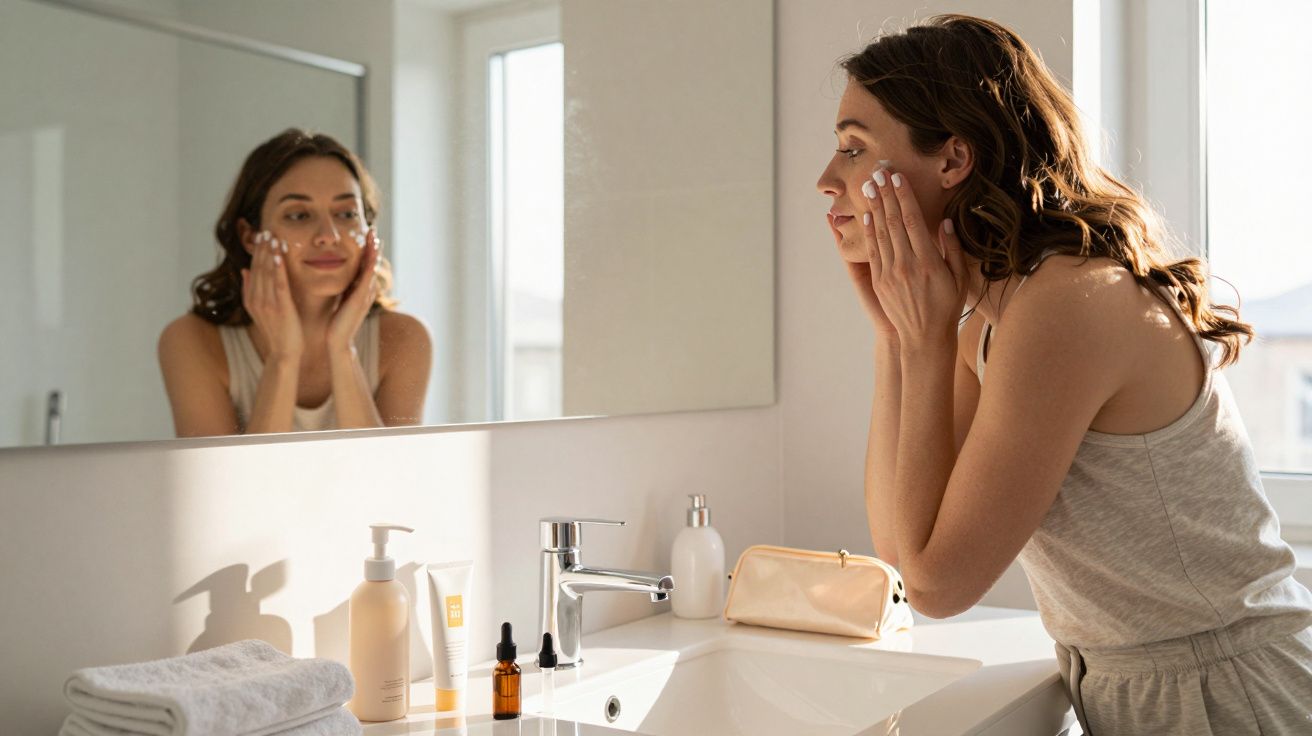
Most of us treat beauty maintenance like a daily tax: a few rushed minutes at the sink, a bit of make-up on the train, a late-night scrub that’s more guilt than ritual. The twist is that real efficiency in a beauty routine doesn’t come from doing less; it comes from doing the right small things consistently, in the places where they compound. Used well, beauty maintenance is less “extra effort” and more a quiet system that makes your face, hair, and nails easier to live with six months from now.
The problem is the short-term brain. It loves the splashy reset-new serum, new mask, new “I’m a new person” Monday-then it quietly abandons ship on Thursday when life gets loud. The time-saving routine is the one that survives Thursday.
The time you think you’re saving (and where it actually goes)
The biggest time leaks aren’t the obvious ones. It’s not the two minutes of cleanser; it’s the ten-minute “why is my skin angry?” spiral, the emergency spot cover-up, the frantic hair wash because dry shampoo stopped coping, the rummaging for a lost brow pencil while you’re already late.
A low-drama routine saves time by preventing the repeat problems: barrier damage, flaky patches that make base look worse, breakouts you then chase with five products, and brittle nails that catch on everything. It’s boring, and it works.
There’s also an uncomfortable truth: most “quick fixes” are slow. The aggressive exfoliation that feels productive tonight is often the reason you’re adding extra steps next week.
The compounding routine: what actually pays off
Think of this like a maintenance schedule, not a makeover. You’re aiming for fewer “interventions” later: fewer panic purchases, fewer salon emergencies, fewer mornings spent trying to disguise something your routine created.
Here’s the core that tends to earn its keep:
- A gentle cleanse you’ll do every night. Not a heroic scrub. A reliable, non-stripping cleanser that removes SPF and make-up without leaving your face tight.
- One barrier-support moisturiser. If your moisturiser makes your skin calm and predictable, everything else gets easier-make-up sits better, redness behaves, you stop “needing” ten soothing products.
- Daily SPF you actually like. This is the long game that saves you time later: fewer dark marks to treat, less texture to camouflage, less urgency around “fixing” your face.
- A single targeted active, used on a schedule. Vitamin C for brightness, a retinoid for texture and breakouts, azelaic acid for redness-pick one main lever and give it weeks, not days.
The routine that saves time long-term is the one that’s narrow enough to repeat. If you can’t face it when you’re tired, it’s too clever.
The “one active” rule that stops product drift
Product drift is how routines bloat. You start with cleanser and moisturiser, then add an acid, then add another acid “for pores”, then add a stronger retinoid because a video said so, and suddenly you’re doing skincare admin.
Run one active like a calm programme:
- Use it 2–3 nights a week for a month.
- If your skin stays settled, increase slowly.
- If you’re constantly soothing irritation, you’re not “purging”; you’re overloading.
In practice, a steady routine is faster than a powerful one you keep having to recover from.
Where people lose efficiency: the myth of the perfect morning
Mornings are where routines go to die. You’re not failing; the routine is mis-designed.
The fastest morning routine is usually:
- Rinse or a quick gentle cleanse (only if you need it)
- Moisturiser (optional if your SPF is moisturising enough)
- SPF
- A tiny amount of make-up in the places that matter to you
If you’re spending ages blending base, it’s often a sign your skin is dry, irritated, or textured in a way you’re trying to “cover” rather than calm. The long-term time saver is getting your skin to a place where you need less correction.
The “evening reset” that makes tomorrow quicker
Evenings are where you buy back tomorrow morning. The goal isn’t luxury; it’s removing the day properly so you don’t wake up dealing with it.
A simple, repeatable reset looks like this:
- Remove SPF/make-up thoroughly (oil/balm first if you wear make-up; otherwise a single cleanser can be enough)
- Moisturise immediately (don’t wander off and come back when your skin feels tight)
- Active on its scheduled nights
- Lip balm / hand cream by the bed so you do it without thinking
It’s not glamorous, but it’s the difference between “my skin is fine, I’ll just do mascara” and “why is everything pilling and flaky and uneven?”
The under-rated time savers: brows, hair, and the things you touch every day
Skincare gets the headlines, but the real daily efficiency wins are often elsewhere.
Brows: Tidy shape and a tinted gel you can apply in 20 seconds beats a complicated pencil routine you only attempt on “good” mornings. If you’re always chasing sparse areas, consider a professional shape once, then maintain it.
Hair: A haircut that grows out well is a genuine time-saving investment. If you need a blow-dry to make your style look intentional, the cut is asking too much of your weekdays.
Nails: Keeping them shorter and using a clear strengthening base coat once or twice a week can save you from constant chips and snags. It’s not about looking “done”; it’s about staying unbothered.
The point is to reduce the number of decisions you have to make while half-asleep.
A practical “set-and-forget” plan (that still feels like you)
You don’t need a 12-step routine. You need a routine that survives busy weeks and still nudges things in the right direction.
- Week 1–2: Cleanser + moisturiser + SPF. That’s it. Let your skin settle and get predictable.
- Week 3–6: Add one active, 2–3 nights a week. Track irritation like it matters (because it does).
- Month 2 onwards: Only add a second “extra” if there’s a clear reason and it doesn’t break the routine.
If you want to spend money, spend it on what prevents problems: a wearable SPF, a moisturiser that stops tightness, and a haircut that doesn’t demand daily styling. That’s where efficiency lives.
| Lever | What you do | Why it saves time later |
|---|---|---|
| Barrier-first basics | Gentle cleanse + moisturise daily | Fewer flare-ups, less make-up “fixing”, fewer product experiments |
| One targeted active | Use on a schedule, increase slowly | Steadier results without recovery weeks |
| Wearable SPF | Daily, no drama | Less pigmentation/texture to treat and cover |
FAQ:
- Do I need separate morning and evening routines? Only in a small way: mornings are about protection (SPF), evenings are about removal and repair (cleanse + moisturise, plus your active on schedule).
- What’s the quickest routine that still works? Cleanser at night, moisturiser, and SPF in the morning. Add one active only if you can keep the basics consistent.
- Is it more efficient to use stronger products less often? Sometimes, but “strong” often increases irritation risk, which creates extra steps. Consistency usually beats intensity for long-term efficiency.
- How long before I see the time-saving benefits? Often 2–4 weeks for easier mornings (less dryness/irritation), and 8–12 weeks for bigger changes like texture and marks.
- What if I love trying new products? Make it a controlled hobby: change one thing at a time, and keep your basics non-negotiable so experiments don’t turn into chaos.




Comments (0)
No comments yet. Be the first to comment!
Leave a Comment