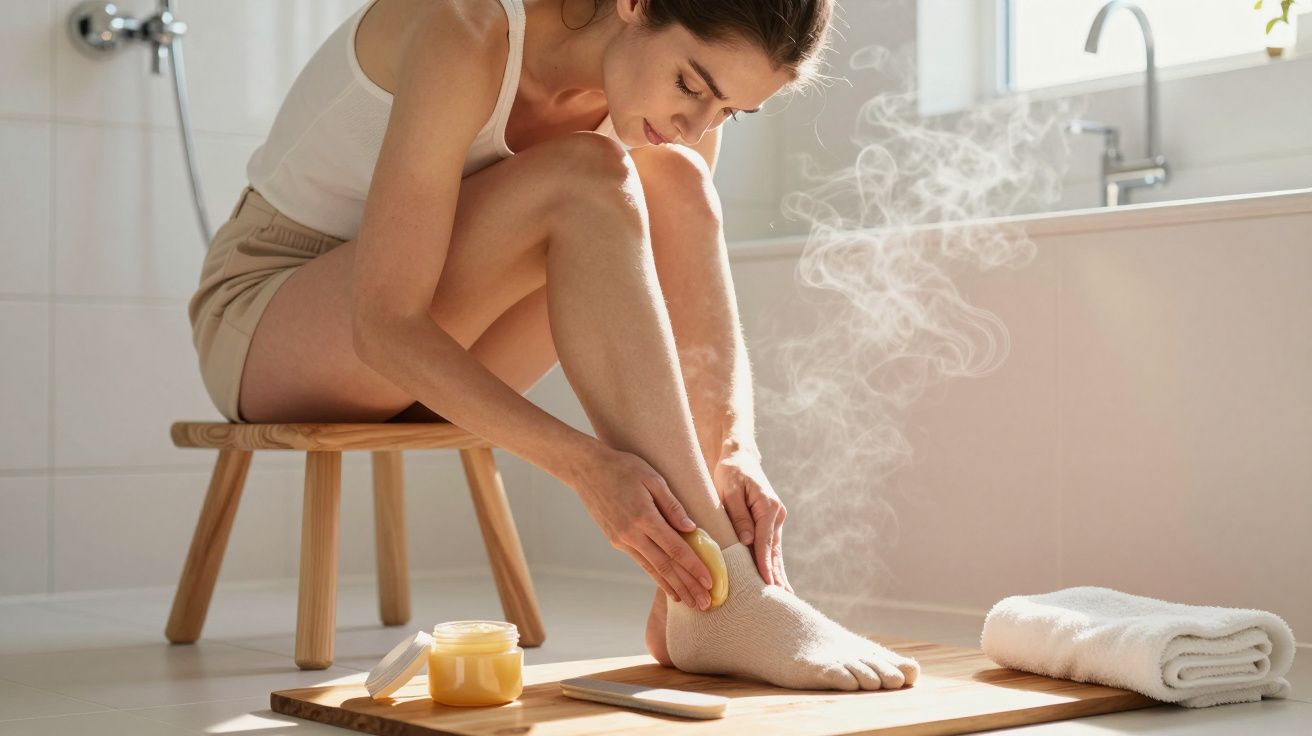
You walk out of the salon (or away from your bathroom chair) with that freshly-polished pedicure glow, and for a day or two your feet feel like they’ve been reset. Then the roughness creeps back in - and suddenly heel maintenance becomes the annoying bit you didn’t realise you’d signed up for. If your cracked heels returned faster than expected, it usually isn’t “bad luck”; it’s the gap between what a pedicure can do in one sitting and what skin needs every week.
The frustrating truth is that heels don’t behave like toenails. Nails keep growing in a predictable way; heel skin reacts to pressure, friction, humidity, and how you walk around your home.
Why a pedicure can look “fixed” even when the problem isn’t
A pedicure is brilliant at making the surface look smooth: a soak, some callus reduction, a quick exfoliation, then cream and oil. Under bright lights, it’s convincing. But thick heel skin is often a build-up that formed over weeks or months, and your body treats it as protection.
When you remove a lot of that protection quickly, the skin can respond by rebuilding it - especially if the trigger (dry air, open-back shoes, lots of standing, barefoot floors) hasn’t changed. It’s the same pattern people notice with other “instant results” fixes: the finish is immediate, the upkeep is not.
A heel can feel smooth on day one and still be on track to crack again by day seven if the cause is pressure + dryness.
The common reasons cracked heels bounce back so quickly
Most “why did this return already?” stories come down to a handful of repeat offenders. You don’t need all of them for heels to split - two is usually enough.
- Over-aggressive filing in one go. Taking off too much can leave skin vulnerable and prompt faster thickening.
- Moisturiser that hydrates but doesn’t soften hard skin. Lotions feel nice, but many don’t contain urea/lactic acid that actually helps rough heels.
- Occlusion missing. Cream on dry skin, then socks off and walking on carpet, often isn’t enough.
- Friction and pressure still high. Sliders, backless mules, hard floors at home, long shifts on your feet.
- Skin conditions in the background. Eczema, psoriasis, athlete’s foot, or just very dry skin can mimic “normal” cracking but behaves differently.
If you’re thinking, “But my pedicure included a lot of scraping, surely that’s the point,” it is - just not as a once-and-done solution.
A quiet culprit: what you do in the first 48 hours
Heels often re-dry immediately after a salon visit because people go back to normal habits: hot showers, no foot cream, barefoot on cold tiles, and shoes that rub. The skin has been thinned and smoothed, so it loses moisture faster and shows wear sooner.
It’s not that the pedicure “didn’t work”. It’s that it worked on the visible layer, and your week worked against it.
The “two-lane” approach that keeps heels from cracking again
Think of heel maintenance as two lanes running at the same time: softening the hard skin and preventing moisture loss. Do both, and cracks usually calm down. Do just one, and you’re back in the cycle.
Lane 1: soften the hard skin (gently, repeatedly)
Aim for small, regular changes rather than one dramatic session.
- Use a foot file on dry skin 1–2 times a week (light pressure, a few passes).
- Avoid razors or blades at home; the risk and rebound aren’t worth it.
- If you use an exfoliating product, choose one designed for feet (often urea or acids), not a harsh body scrub.
Lane 2: lock moisture in (this is where most routines fail)
Put moisturiser on when it can actually stay there.
- After a shower, pat feet so they’re not dripping, then apply a thicker heel balm.
- Add socks for at least 30–60 minutes, or overnight if you can tolerate it.
- If your heels split, prioritise the edges of the crack and surrounding callus, not just the centre.
A good rule: if you can walk around the house and your heel feels “dry-grippy” against the floor within an hour, you need either a richer product or socks.
A simple weekly plan (that doesn’t take over your life)
This is the boring, grown-up bit - but it’s what stops the “perfect pedicure, ruined in a week” loop.
- Twice weekly (2 minutes): quick file on dry heels before showering.
- Most nights (1 minute): heel balm + socks (even 3–4 nights helps).
- After long days on your feet: a re-application before bed.
If you want it even simpler: file less than you think, moisturise more than you think.
What to ask for at your next appointment (so results last)
A salon can help more when you treat it as a reset plus a plan, not a miracle.
- Ask the technician to reduce callus conservatively rather than chasing “glass-smooth”.
- Request a finish with a heel-specific balm, not just a light lotion.
- If you’re prone to cracks, ask them to point out where pressure builds up on your feet (it’s not always symmetrical).
And if you’re doing gel or polish: remember it can hide early dryness. You’ll feel the roughness before you clearly see it.
When cracked heels aren’t just cosmetic
If cracks are deep, bleeding, very painful, or accompanied by itching/flaking, treat it as more than a beauty issue. Fungal infections and inflammatory skin conditions can sit underneath what looks like “just dry heels”, and they don’t respond well to endless filing.
See a pharmacist or podiatrist if: - cracks are bleeding or weeping - you have diabetes or poor circulation - there’s redness, swelling, or heat - it keeps recurring despite consistent heel maintenance for a few weeks
FAQ:
- How long should a pedicure keep heels smooth? Typically 1–3 weeks for appearance, but comfort depends on what you do at home. Without heel maintenance, many people feel roughness returning within 7–10 days.
- Is it bad if the salon removes a lot of hard skin? Not always, but taking off too much can increase sensitivity and prompt quicker thickening. A gradual approach often lasts longer.
- What ingredient actually helps cracked heels? Urea (often 10–25%) is a common go-to for softening thick, dry heel skin. Rich balms plus socks help keep it working.


Comments (0)
No comments yet. Be the first to comment!
Leave a Comment