A week after a fresh manicure, nail breakage can feel personal - as if your hands are “failing” at basic upkeep. Often it’s not your strength that’s lacking, but a weak nail plate that’s been quietly softened by what you do between day one and day seven. That matters because once the plate is waterlogged and layered, it snaps exactly where you least want it: at the smile line, the corner, the “perfect length” you just grew.
I noticed it in a friend who could keep polish pristine, yet always lost a nail right as the week turned. Her cuticles were immaculate, her filing looked careful, and still: the same little crack, the same sudden peel. The pattern wasn’t random - it was timed.
The 7‑day pattern isn’t bad luck. It’s a hydration hangover.
Your nails aren’t thirsty little sponges that need more soaking; they’re keratin layers that don’t love being repeatedly flooded. The hidden reason many nails “mysteriously” break after about a week is cumulative water exposure, then drying, then water again - a swell–shrink cycle that pries those layers apart.
Think of it like a book left in the bath and then on a radiator. Pages warp, the edge frays, and it tears at the corner first. A weak nail plate behaves the same way, just in miniature.
Common week‑one triggers look harmless because they’re “clean” habits:
- Long showers and hot baths, especially with hair masks and cleansers sitting on hands
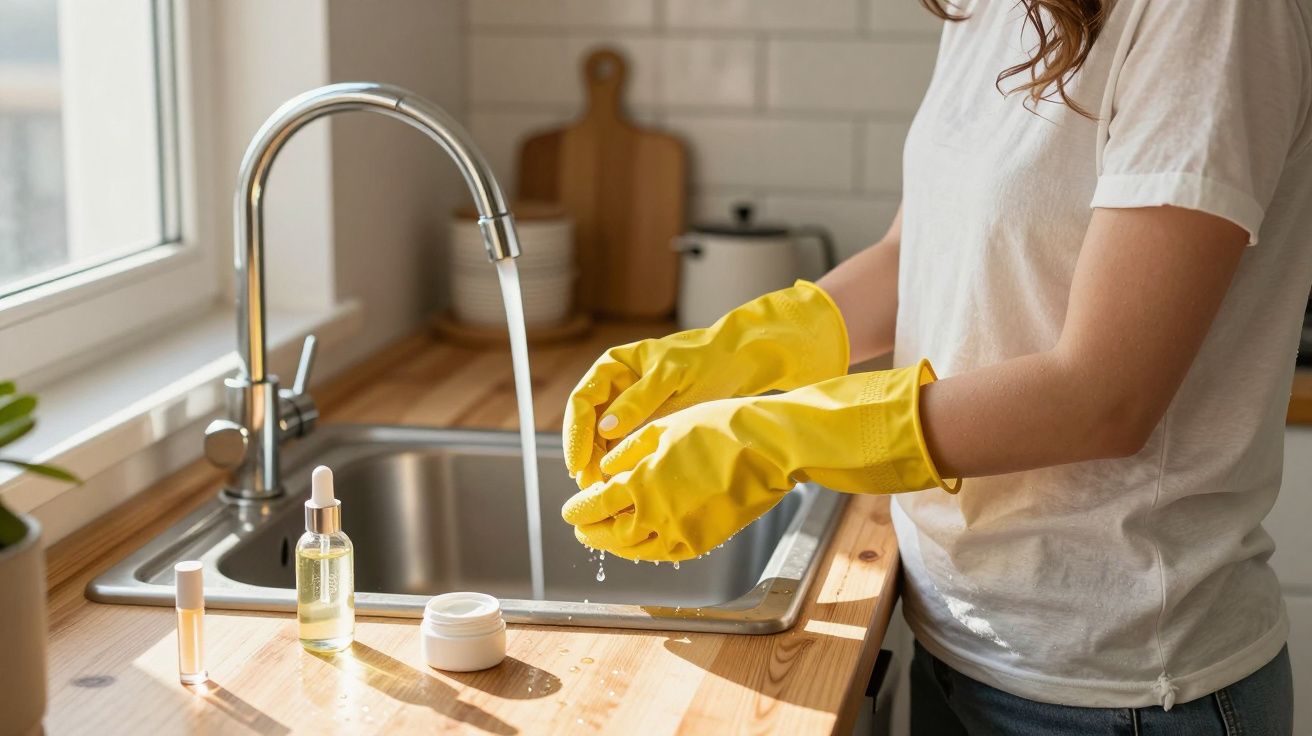
- Washing up without gloves (even quick rinses, many times a day)
- Hand sanitiser on repeat, then a rich hand cream that seals in dampness
- “Just a quick soak” before filing or pushing back cuticles
By day seven, the stress has added up, and the nail gives way where it’s thinnest.
What actually weakens the nail plate (even if you use a strengthening base)
A strengthening product can help, but it can’t outvote physics. Nails take on water fast, and once they swell, tiny separations form between layers. When they dry, those separations don’t always close neatly - they become peel points.
Then we do the second hidden thing: we add friction. Keyboards, denim pockets, gym grips, pram straps, tap edges. The free edge catches, flexes, and the softened layers split.
You’ll often see it as:
- peeling at the tip (like clear flakes)
- a crack that travels sideways
- a “mystery break” with no obvious impact
That’s not weak character. That’s structure.
“Most breakage I see is water and wear, not calcium deficiency,” says a London nail tech who spends more time asking about dish soap than supplements.
The small switch that stops most breaks: treat water like a chemical
If your nails break at day seven, try treating water exposure with the same seriousness you give remover. You don’t need a new routine - you need a barrier.
The week‑proof baseline (takes minutes)
- Gloves for washing up and cleaning, every time. Keep a pair by the sink so it’s not a decision.
- Oil before water: rub cuticle oil (or plain jojoba/almond) into nails before a shower if you remember. It’s a simple “raincoat” layer.
- Re‑seal the edge: every 2–3 days, swipe a thin coat of clear top coat over the tips, including the underside edge if you can.
- Dry properly: after washing, pat dry and get under the free edge. Dampness trapped there is where peeling begins.
Do that for one week and you’ll often notice the first change: less peeling. The breaks usually follow peeling, not the other way round.
The mistake people make on day six: filing the crack “until it feels smooth”
When you feel a rough spot, it’s tempting to file it down hard, quickly, from side to side. But aggressive filing thins the same area that’s already compromised, and sawing motions can lift layers.
A gentler fix:
- Use a fine file (240 grit or higher).
- File in one direction, short strokes, shaping rather than grinding.
- Finish with a light buff only if the surface is snagging - not to “shine it up”.
- Seal with base or top coat immediately.
If you’re already dealing with peeling, skip heavy buffing altogether. Buffing makes nails look smoother for a day and then thinner for a week.
Quick self-check: is it water, product, or health?
Most nail breakage is routine-based, but it helps to spot the difference.
| What you see | Likely cause | What to do first |
|---|---|---|
| Peeling layers at tips | Water + friction | Gloves, oil, re-seal tips |
| White, chalky patches | Over-buffing/acetone, surface damage | Stop buffing, use gentle remover, moisturise |
| Sudden widespread splitting | Product allergy/irritation or illness/stress | Pause products; consider GP/pharmacist advice |
If you have pain, redness, swelling, or nail changes that persist, it’s worth speaking to a pharmacist or GP - nails can reflect more than habits.
The “soft strength” routine that actually builds nails
If your goal is length without drama, the boring routine wins. Aim for consistency over intensity.
- Keep nails slightly shorter than your fingertip for a month while you rebuild.
- Use cuticle oil daily (twice if you wash hands often).
- Choose a base coat that suits you, but don’t stack endless “strengtheners” if your nails feel brittle - too rigid can snap.
- Limit acetone exposure; if you use it, wash hands and oil immediately after.
Nails don’t need more punishment. They need fewer swings between soaked and stripped.
FAQ:
- Why do my nails always break around the one-week mark? It’s often cumulative swelling and drying from repeated water exposure, plus everyday friction. By day six or seven, the layers have started to separate and the tip finally gives way.
- Do nail soaks help a weak nail plate? Soaking can make nails feel flexible short-term, but it can worsen peeling because nails absorb water and swell. If you need to soften cuticles, try a cuticle remover gel briefly, then rinse and oil.
- Is hand sanitiser the problem? It can be, especially if you sanitise often and don’t re-oil. Alcohol dries the surface, and the cycle of sanitiser-then-cream can trap fluctuating moisture. Add cuticle oil and re-seal with top coat.
- Should I take biotin or supplements? Supplements can help some people, but most week-to-week breakage is mechanical and water-related. If you’re considering supplements or have sudden changes, check with a pharmacist or GP first.
- Can I still wear gel or builder products? Some people find they protect the nail; others get thinning from removal or over-filing. If you do, prioritise gentle removal, minimal drilling, and regular oiling to reduce brittleness underneath.


Comments (0)
No comments yet. Be the first to comment!
Leave a Comment