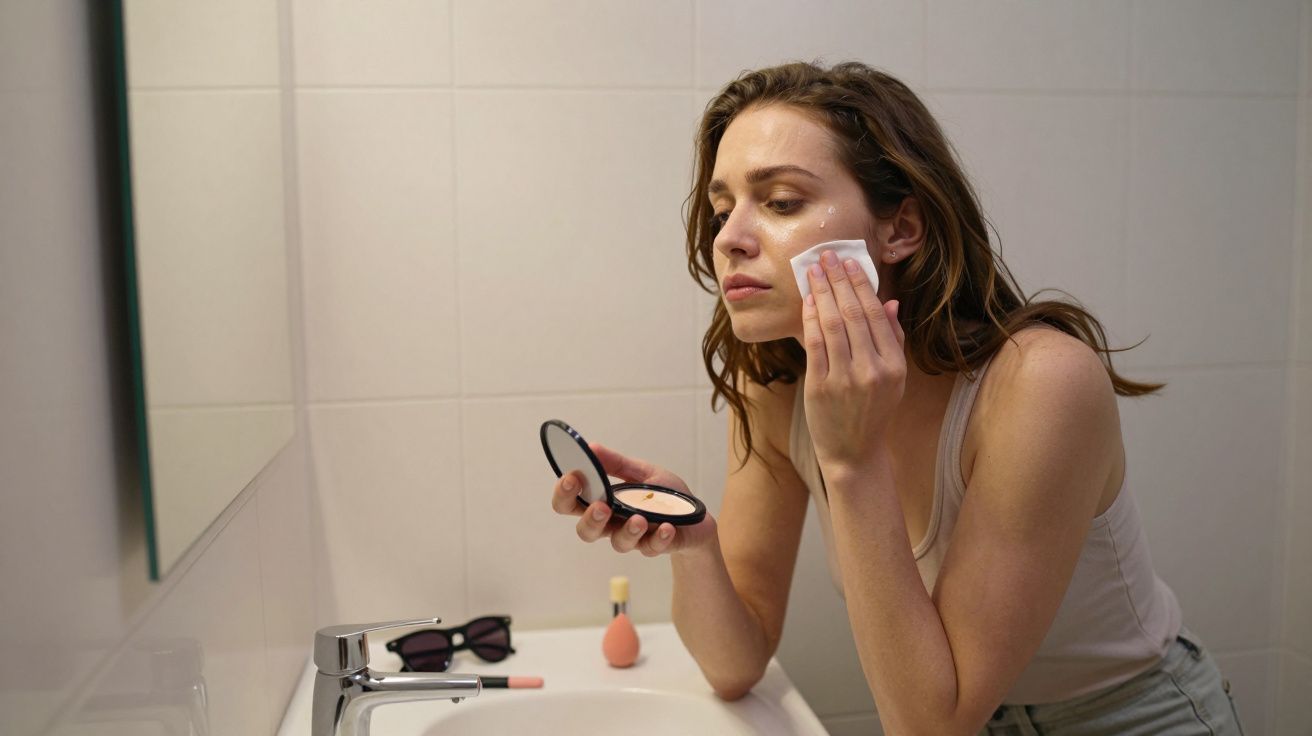
The disaster rarely starts in your make-up bag. It starts when occasion make-up meets real life: a packed Tube platform, a sunlit car, a dancefloor with no ventilation, and the slow realisation that “heat resistance” isn’t a nice-to-have - it’s the difference between looking polished at 6pm and patchy by 7.
I learned this the annoying way: doing everything “right” (primer, setting spray, careful powder) and still watching my base separate as soon as my skin warmed up. The mirror didn’t show a dramatic melt; it showed tiny failures stacking up - creasing, sliding, shine turning to slip - until the whole look felt tired.
Heat doesn’t ruin make-up at once - it unhooks it, layer by layer
Heat makes skin produce more sebum, and sebum is basically the enemy of adhesion. Add sweat, humidity, and the friction of hair, hands, sunglasses, or a phone, and even good products start to behave like they’re on a timer.
The trick is accepting that “long-wear” is not the same as “won’t move in heat”. Heat changes your canvas. It thins what you put on top.
The three failure points you can actually control
- Slip at the base: foundation sits on top of skincare that never fully set, then breaks where the face moves.
- Texture amplification: powder clings to moisture, then looks dry and heavy as sweat evaporates.
- Colour drift: bronzer and blush fade first, while brows and mascara stay, so your face loses balance.
If your look collapses, it’s usually not one product. It’s the order, the amount, and the time you gave each layer to “lock”.
The heat-resistant routine: product + time + restraint
This is the unsexy approach that works: fewer layers, thinner layers, and longer pauses. In warm weather, the goal isn’t maximum coverage; it’s maximum grip.
A simple step-by-step for occasion make-up that survives summer
- Prep like you mean it (but keep it light): cleanse, then a thin moisturiser. If you’re oily, skip heavy creams in the T-zone.
- Set your skincare: wait 5–10 minutes. If you’re in a rush, use a cool hairdryer on low for 20 seconds.
- Prime only where you need it: gripping primer on the centre of the face; smoothing primer on pores if that’s your issue. Don’t blanket-prime out of habit.
- Use a heat-friendly base: thin foundation or long-wear tint applied sparingly, then build only where redness shows.
- Lock with targeted powder: press powder into the T-zone and around the nose; leave cheeks more flexible so they don’t go cakey.
- Cream-to-powder colour: cream blush/bronzer very thinly, then a matching powder on top to anchor it.
- Set in two passes: a light mist, wait, then one final mist after you’re dressed and hair is done.
The point isn’t to “freeze” your face. It’s to stop layers from mixing when your skin heats up.
Product choices that help - without buying a whole new face
Some formulas simply behave better in warmth. You don’t need ten new items; you need two or three swaps that remove the usual weak points.
What to look for on labels (and what to avoid)
- Better in heat: long-wear, transfer-resistant, “self-setting”, waterproof mascaras, gel liners, cream-to-powder blushes.
- Trickier in heat: dewy primers under full-coverage foundations, rich SPF moisturisers under make-up, ultra-silky oils, heavy illuminators on the nose and chin.
One small, boring change makes a difference: apply less than you think, then press it in. A sponge or dense brush that presses beats a fluffy brush that sweeps, because sweeping lifts product back off warm skin.
Mid-event fixes: what to do in a bathroom with bad lighting
Heat-proofing is mostly done at home, but the save is done on the go. The goal is to remove moisture and oil without removing colour.
The “don’t make it worse” rescue kit
- Blotting papers (or a single ply of tissue)
- A compact powder with a puff
- A mini concealer
- A cream blush stick or small powder blush
- A lip balm + lipstick or liner
The 60-second reset
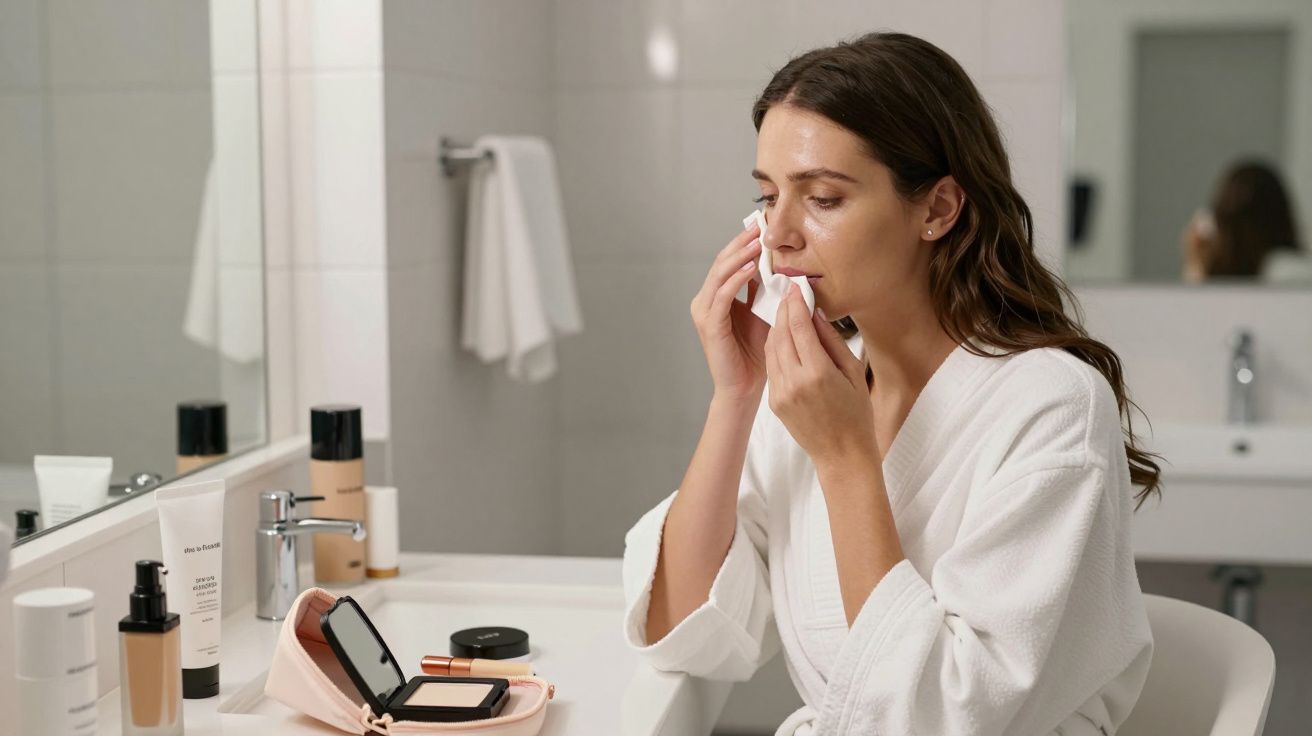
- Blot first: don’t rub. Press, lift, move on.
- Powder second: press powder only where you blotted.
- Conceal last: tiny dots around the nose or chin, pressed in.
- Rebalance colour: one quick tap of blush brings the face back faster than more foundation.
If mascara is smudging, it’s often not the mascara - it’s your under-eye skincare. Keep eye cream away from the lash line on hot days, and set that area lightly.
Quick guide: matching make-up to the kind of heat you’re in
| Situation | Biggest risk | Best adjustment |
|---|---|---|
| Humid outdoor ceremony | Sweat + slip | Thinner base, more pressing powder |
| Hot commute + indoor venue | Separation at T-zone | Grip primer centre-face, blot on arrival |
| Dancing, close contact | Transfer | Transfer-resistant base, set spray, less glow |
The sweet spot is a look that can fade gracefully. When it’s built to be heat resistant, it doesn’t crack dramatically; it simply becomes softer, which is exactly what you want in photos.
FAQ:
- Can I make any foundation heat resistant with powder? You can improve it, but you can’t fully override a formula that stays creamy. Use less product, press it in, then powder strategically rather than heavily.
- Is setting spray enough on its own? Not usually. It helps, but it works best as a finisher on top of a routine that already has grip (set skincare, thin layers, targeted powder).
- Why does my make-up look worse when I reapply powder? Because you’re powdering moisture. Blot first, then press powder. If the area is already textured, use less and focus on the centre of the face.
- What’s the quickest swap for summer occasion make-up? Switch to a longer-wear base (or use less of your current one) and use cream-to-powder blush/bronzer. Those two changes prevent the “face loses colour but keeps shine” effect.
- How do I stop lipstick bleeding in heat? Use a liner, blot once, then apply a second thin layer. A touch of powder tapped over a tissue can help set the edges without making the whole lip look dry.

Comments (0)
No comments yet. Be the first to comment!
Leave a Comment