You book a fresh set of eyelash extensions, love them for two days, then start finding little fans on your pillow. It’s tempting to blame the glue, but most early shedding is actually your natural lash cycle doing exactly what it’s meant to do. Knowing the difference matters, because it stops you over-correcting with harsher products and lets you fix the real cause fast.
A good set can look “patchy” even when the application was solid, simply because several of your own lashes were already near the end of their life when the extensions were fitted. Add a bit of oil, steam, rubbing or an over-enthusiastic cleanse, and those ready-to-go lashes take their extensions with them.
Why it’s usually not the glue
Adhesive failures do happen, but they have a particular look. When glue is the issue, you tend to see multiple extensions slipping off cleanly, quickly, and often without a natural lash attached. If the bond never really grabbed, you’ll notice whole sections letting go in the same spot.
What most people describe as “the glue didn’t hold” is actually normal lash turnover. Each extension is attached to one natural lash, so when that lash sheds, the extension sheds too. That can feel dramatic, because you can see it.
If the extension falls with a natural lash attached, that’s usually biology, not bad bonding.
The real culprit: your natural lash cycle (plus timing)
Natural lashes don’t all grow and shed together. They move through phases-growth, rest, and release-on their own schedule, and you lose a few lashes most days without noticing. When you’re wearing extensions, you suddenly notice every single shed because it’s longer, darker, and easier to spot on a cheek or towel.
The timing catches people out. If you get extensions right as a cluster of your lashes is already in the “rest/release” phase, you can have a mini shed within the first week. It isn’t that the set was doomed; it’s that those particular natural lashes were due to drop anyway.
Common signs you’re seeing lash-cycle shedding rather than adhesive failure:
- The fallen extension has a natural lash attached at the base.
- Loss is scattered across both eyes, not one odd gap.
- Shedding continues at a steady, low level rather than a sudden “all at once” slide.
- Your fill appointment fixes it easily because new lashes have come through.
What makes normal shedding look like “early fallout”
A few everyday habits make a natural shed look like a retention problem. They don’t always break the bond; they just speed up the moment a ready-to-shed lash finally lets go.
The usual accelerators
- Oil and balm products near the lash line. Cleansing balms, heavy eye creams and some sunscreens migrate upwards and soften the environment around the bond.
- Steam and heat. Hot showers, saunas and leaning over boiling pans can make lashes more flexible and encourage rubbing.
- Sleep friction. Side sleeping and a cotton pillowcase create drag. You wake up with a couple of “mystery” fans on the pillow.
- Picking or rubbing. Even gentle “checking” with your nails can tug a lash that was already at the end of its cycle.
- Over-cleansing or under-cleansing. Scrubbing can pull; not cleansing lets oils and debris build up and destabilise the base over time.
Most fallout is a lash that was leaving anyway, nudged out the door by friction, oil or heat.
A quick at-home check that tells you what’s happening
Before you message your lash tech in a panic, look closely at what has fallen.
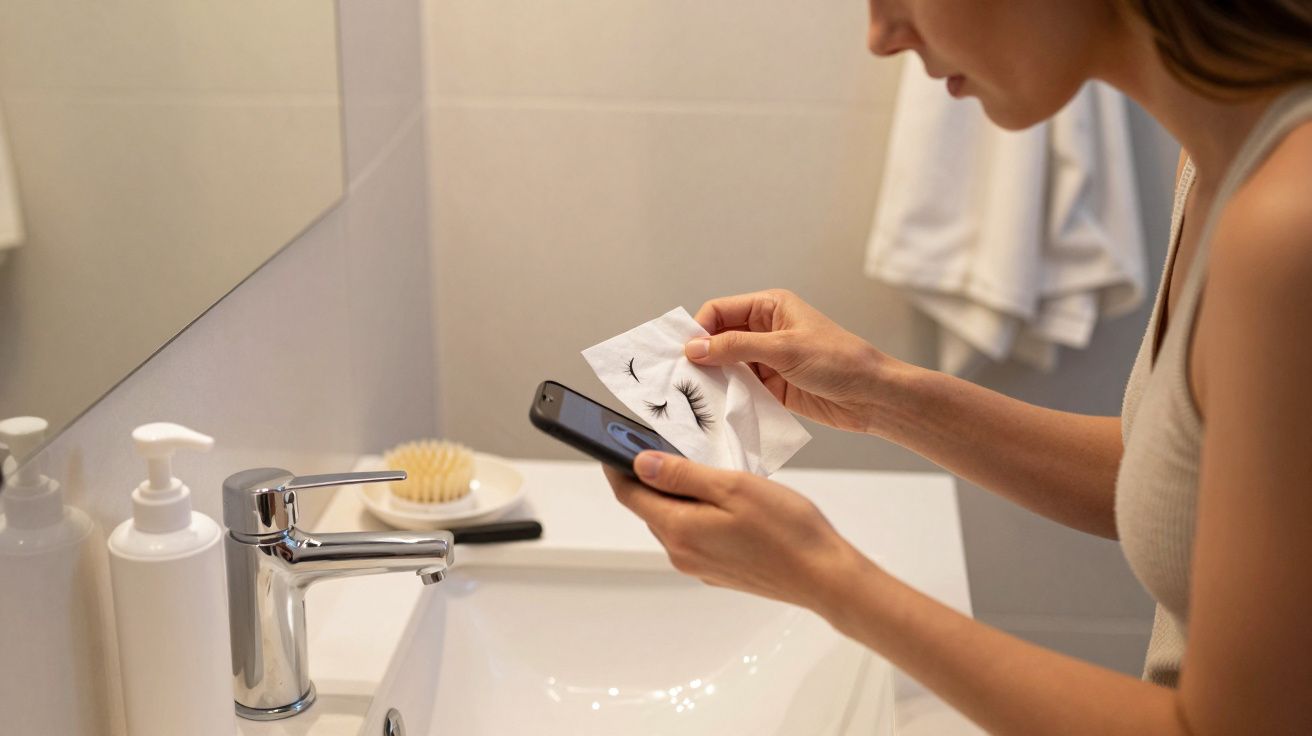
- Place the fallen piece on a clean tissue under a bright light.
- Look for a thin natural lash attached to the extension at the base.
- Note whether it’s one here and there, or lots in the same corner.
What it means:
- Natural lash attached: likely normal cycle shedding (or a lash that was already weak).
- No natural lash, just the extension: could be bonding, cleansing residues, or heavy oil exposure.
- Many from one area only: often sleep friction, eye-watering on that side, or rubbing that corner.
If you can, take a photo of a few fallen pieces. It’s the fastest way for a lash tech to troubleshoot without guessing.
The simple routine that improves retention without changing glue
You don’t need a complicated kit. You need consistency, and the right kind of gentle.
- Cleanse lashes daily with a lash-safe foaming cleanser (especially if you wear makeup or SPF).
- Rinse thoroughly and pat dry-don’t leave cleanser sitting at the base.
- Brush through with a clean spoolie once dry, not when wet.
- Keep oils off the lash line: swap balm cleansers for a gel or foam; keep heavy eye creams slightly lower.
- If you’re a side sleeper, try a contoured sleep mask or a smoother pillowcase to cut friction.
Timing matters more than people think
If your lashes are naturally fine or you’ve had a stressful month, book fills a little sooner. A two-week fill can look dramatically better than stretching to three, not because the original set was weak, but because you’re catching new growth before the shed becomes visible.
When it really is an application issue
It’s fair to raise a flag if you see these patterns:
- Most loss happens within 24–48 hours and no natural lashes are attached.
- Fans feel “stuck together” (possible stickies) and then come away as a cluster.
- You feel poking, twisting, or itching that doesn’t settle after the first day.
- One eye consistently drops faster than the other despite identical aftercare.
In that case, a good lash artist will want to check humidity, lash prep, isolation, styling weight and your home routine. Retention is a shared project: part application, part lifestyle, part lash biology.
The takeaway that saves you money (and your lashes)
Eyelash extensions don’t fall because your body is “rejecting” them. Most of the time, they fall because your natural lash cycle is quietly turning over in the background, and you’re finally able to see it. Once you treat shedding as normal-and manage the accelerators-you get the calm version of retention: fewer surprises, easier fills, and a set that looks even for longer.


Comments (0)
No comments yet. Be the first to comment!
Leave a Comment