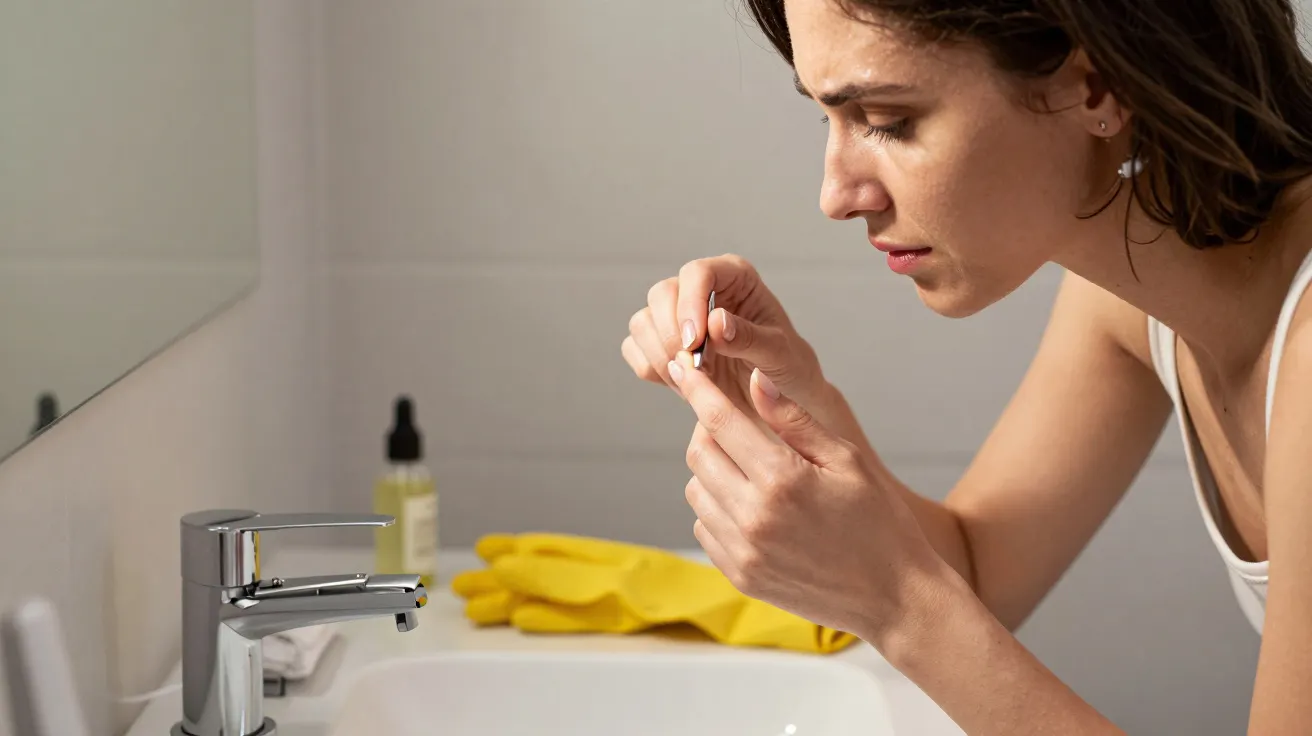
By day five, the tiny snag shows up: a corner catches on your hair, the free edge looks hazy, and you start picking without meaning to. Gel nails are meant to be a hard-wearing overlay cured under a lamp in salons and at-home kits, so when they lift this quickly it feels like a betrayal. Most retention problems aren’t “bad luck” - they’re a chain of small prep, product, and lifestyle factors that only reveal themselves once the first few days of wear have passed.
You can do everything “right” on day one and still lose the set by Friday, because adhesion is a chemistry-and-mechanics relationship. The gel isn’t just sitting there; it’s gripping a living nail plate that flexes, swells with water, and grows forward while you type, clean, and wash your hands.
Day one looked flawless. Day five is when the nail tells the truth.
Fresh gel is glossy and self-levelling, so it hides tiny mistakes the way good lighting hides tired skin. The first 48 hours are the honeymoon: minimal stress at the free edge, minimal lifting leverage, and you’re still being careful because you’re proud of them.
By day five, the forces stack up. Your nail has grown a millimetre or so, the tip has taken a week of taps, and water has had multiple chances to sneak between product and plate. That’s why lifting so often starts as a whisper near the sidewall or the cuticle line, then becomes a flap.
The most common reason: invisible prep issues (not “weak nails”)
If gel can’t bond to clean, dry keratin, it bonds to whatever is in the way. That “whatever” is usually subtle: a trace of cuticle, a bit of oil, or nail dust that wasn’t fully removed.
Here’s what tends to trigger early lifting:
- Cuticle left on the nail plate (the non-living tissue, not just the skin). Gel sticks to it poorly, and it moves as the nail grows.
- Over-buffing, then over-touching. You create a rough surface, then re-oil it with fingertips while wiping dust away.
- Dehydrator/primer used inconsistently. Too little and you keep moisture; too much and you can create a brittle, under-bonded layer depending on the system.
- Dust trapped at the sidewalls. It becomes a barrier, like sanding then painting without cleaning.
A tech once put it bluntly to me: “Most lifting is just gel doing what gel does - refusing to stick to something that isn’t nail.”
Product thickness, flooding, and the “sealed-in” mistake
A common misconception is that thicker gel equals stronger wear. Thickness can help structure, but it also gives lifting a better handle to grab. When the edge starts to separate, a bulky apex can act like a lever with every knock.
Three day-five culprits show up again and again:
1) Flooded cuticles
If gel creeps into the cuticle pocket or touches skin, it cures as a thin skirt. That skirt catches on hair and clothing, then peels back - and once it starts, it invites water underneath.
2) Under-cured layers
A lamp that’s too weak, the wrong wavelength for the gel, or a “quick flash” that wasn’t enough can leave soft product at the base. It may look cured, but it behaves like gum under stress and lifts early.
3) No real sealing at the free edge
Capping the edge isn’t about painting the tip once and hoping. It’s about making sure each relevant layer properly meets the edge without leaving a micro-step where water can enter.
Your hands aren’t living in a salon. They’re living in water.
The nail plate absorbs water and releases it. That swelling and shrinking is normal, but gel doesn’t swell in the same way. Over a week, that mismatch can create micro-separation - especially if you’re doing a lot of washing up, cleaning, swimming, long baths, or you work in gloves that trap moisture.
If lifting appears after a “normal week”, look for these patterns:
- Hot water + detergent (washing up, cleaning sprays): strips oils, then rehydrates aggressively.
- Long showers/baths: repeated soaking is rough on adhesion.
- Hand sanitiser cycles: dehydrate, rehydrate, dehydrate - the nail keeps changing.
- Using nails as tools: opening cans, scraping labels, prising things up. It’s the fastest way to start a lift at the free edge.
A quick self-check: where it lifts tells you why
Location is a clue. You don’t need a microscope - just honesty and good light.
| Where it lifts | What it usually means | What to change next time |
|---|---|---|
| Cuticle line | Flooding, leftover cuticle, under-cure near base | Cleaner prep, thinner base application, verify lamp cure |
| Sidewalls | Dust, product not tucked cleanly, picking | Better dust removal, smaller brush, stop “pinching” skin with gel |
| Free edge | No cap, nails used as tools, impact | Cap properly, shorten length, wear gloves for chores |
What to do today (without ripping them off)
If a corner has lifted, the goal is to prevent moisture getting underneath and to stop yourself turning a small fault into a full peel.
- Don’t glue it down with nail glue. It seals moisture and bacteria underneath and can worsen damage.
- Clip length back slightly if the lift is at the free edge and safe to do, reducing leverage.
- File the lifted edge gently to remove the snag (light pressure, fine file), without digging into the natural nail.
- Keep them dry for chores: gloves for washing up and cleaning until you can infill or remove properly.
- Book an infill or a proper removal rather than peeling. Peeling takes layers of nail plate with it - and then every future set lifts faster.
The “fast path” to better retention is boring - and that’s the point
Most fixes aren’t dramatic. They’re repeatable, slightly fussy habits that make adhesion predictable.
- Clean prep that removes cuticle from the nail plate, not just a quick push.
- Minimal product at the cuticle, applied with control rather than speed.
- A lamp that matches the gel system, cured for the full time, every layer.
- Shorter length if you’re hard on your hands, especially during the first week.
- Oil after washing (yes, oil): you’re not “making them lift”, you’re keeping the surrounding skin flexible so you pick less and tear less.
There’s a quiet relief in it. When gel nails last, it rarely feels like magic - it feels like a system that finally stopped leaving gaps.
FAQ:
- Why do my gel nails lift even when the salon is good? Retention problems often come from a mix of your nail condition (oiliness, hydration cycles), daily water exposure, and small prep variables. Even excellent techs can’t fully control what your hands do for the next week.
- Is lifting a sign the gel was applied badly? Not always, but early lifting (within a week) commonly points to prep, flooding, under-curing, or free-edge sealing issues rather than the gel “just not suiting you”.
- Can I fix lifting at home by curing again? Re-curing rarely helps if the bond has already broken; it can trap moisture and worsen separation. The safer move is to file the snag smooth and arrange an infill or removal.
- Does cuticle oil make gel lift? Used sensibly after application, no. Oil before prep is a problem; oil after helps skin flexibility and can reduce picking, which indirectly improves wear.
- How long should gel nails last before any lifting? Many people get 2–3 weeks with minimal issues. If lifting reliably starts around day five, it’s worth checking prep, lamp compatibility, and water/tool use first.



Comments (0)
No comments yet. Be the first to comment!
Leave a Comment