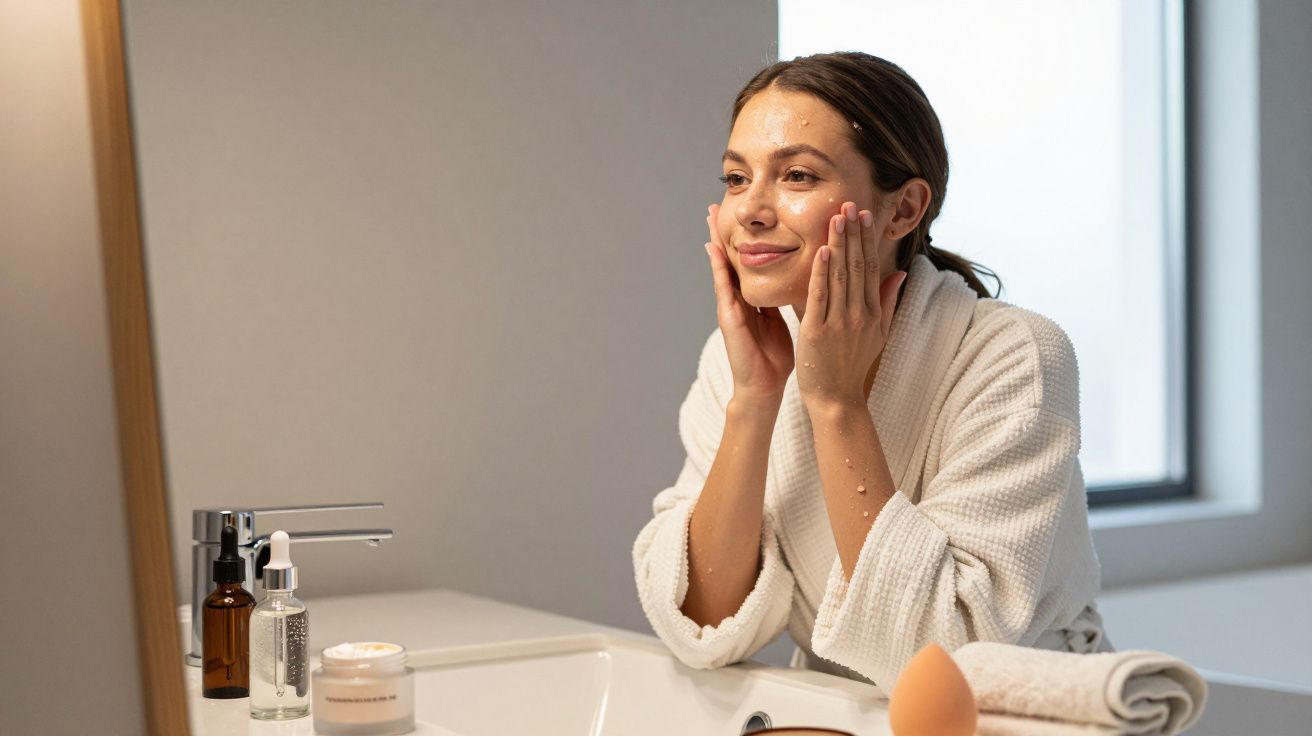
You know that moment an hour before you need to leave-hair done, outfit hanging, and your face looks a bit… flat? Hydration facials often beat anti-aging treatments in that window because they prioritise skin plumpness, the one detail that makes make-up sit better and light hit your face more kindly. It’s not about turning back time; it’s about looking rested now, in the mirror you’re actually using.
I’ve watched people do the opposite: panic-book a “firming” session, go a bit red, then spend the afternoon trying to calm everything down with concealer and hope. The overlooked reason hydration tends to win pre-event is simple: it’s a low-drama way to change the surface fast, without provoking your skin into a reaction.
The overlooked reason: hydration gives you a predictable finish
Most “anti-aging” options are trying to create change-stimulate, resurface, remodel. That can be brilliant over weeks. But right before an event, change is exactly what you don’t want. You want predictability.
Hydration facials focus on water-binding and barrier support, so the payoff is immediate and visible: smoother texture, softer fine lines, and that subtle bounce that reads as healthy on camera. Skin plumpness is the shortcut to looking fresh, because it reduces the look of creasing and dullness without needing to “fix” anything permanently.
Calm beats intensity when the clock is ticking
Think of it like stain removal: the best results come from gentle, early moves, not frantic scrubbing. A hydrating facial is the skincare version of “keep it simple, don’t overheat it”.
Strong actives, aggressive exfoliation, or heat-heavy treatments can leave you flushed, tight, or flaky-three things that foundation loves to broadcast. Hydration is less glamorous as a concept, but it’s reliable. And reliability is the whole point the day of a wedding, party, shoot, or big presentation.
What a good hydration facial actually does (and what it avoids)
A well-done hydration facial is usually built around cleansing, light exfoliation (if any), humectants, soothing masks, and occlusive steps to lock it in. The aim is to push your skin towards “comfortable” rather than “corrected”.
You’ll typically see:
- Gentle cleanse that doesn’t leave the skin squeaky or tight
- Mild enzymatic exfoliation or a very soft polish (optional, not mandatory)
- Hydrating layers (think glycerin, hyaluronic acid, panthenol)
- Barrier-friendly moisturisers (ceramides, squalane)
- Cooling massage or de-puffing techniques
- SPF if it’s daytime, because no glow is worth sun irritation
What it usually avoids-on purpose:
- Strong peels close to the date
- New, untested actives
- Over-extraction that leaves marks
- Heat or friction that triggers redness
Why it looks better under make-up and in photos
Event skin isn’t “perfect skin”. It’s skin that behaves.
When your skin is well hydrated, it’s less likely to drink your base product in patches, and less likely to crack where you move-around the mouth, between the brows, under the eyes. That’s why hydration reads as polish, even when nothing else has changed.
There’s also a light effect. Plumper skin reflects light more evenly, so you get that soft-focus look without needing to pile on highlighter. It’s subtle, but it’s the difference between “tired but fine” and “you look great-did you do something?”
Timing: when to book it so you don’t gamble
If you want the safest “I need to look good, not experiment” option, timing matters.
- Day before (or 2 days before): ideal for most people-any mild redness settles, hydration holds
- Same day: works if your skin is calm and you’re avoiding exfoliation and extractions
- Week before: great if you want two sessions (one to reset, one to top up)
If you’re prone to breakouts or facial redness, give yourself 48 hours. Not because hydration facials are risky, but because even a “gentle” massage or a new mask can surprise reactive skin.
The quick decision guide: hydration vs anti-aging right before an event
| If you need… | Choose | Why |
|---|---|---|
| Immediate glow and smoother make-up | Hydration facial | Fast plumpness, low irritation risk |
| Long-term texture or pigment improvement | Anti-aging plan | Results build over weeks, not hours |
| Minimal downtime and fewer surprises | Hydration facial | Predictable finish and comfort |
How to ask for it (so you don’t get talked into “more”)
At the desk, simple language helps. You’re not being boring-you’re being smart.
Say: “I have an event in a day or two. I want a hydration facial focused on calming, plumping, and barrier support-no strong exfoliation and no aggressive extractions.”
If you like specifics, ask for:
- a hydrating mask
- soothing massage (light pressure)
- fragrance-free options if you’re sensitive
- a finish that won’t leave you greasy under make-up
The small at-home version that still works
If you can’t book anything, you can still mimic the logic: hydrate, then seal.
- Cleanse gently (no harsh scrubs).
- Apply a humectant serum to damp skin.
- Use a moisturiser that feels comforting, not “active”.
- If you’re dry, add a thin occlusive layer at night (a balm or ointment on dry zones).
- In the morning, keep it simple and don’t introduce new products.
The goal isn’t to chase dramatic change. It’s to make your skin quietly easier to live in-so your face looks like you slept, even if you didn’t.
FAQ:
- Are hydration facials suitable for acne-prone skin? Often, yes-especially if they focus on barrier support and avoid heavy oils and intense massage. Tell the therapist you’re breakout-prone and ask to skip pore-clogging creams and aggressive extractions.
- How long does the “plump” look last? Typically 24–72 hours depending on your skin, the products used, and how dehydrated you were to begin with. Staying gentle afterwards (no harsh actives) helps it last.
- Should I get an anti-aging facial instead if I want to look younger? Not right before an event, unless you’ve done that exact treatment before and know your skin’s response. Hydration usually gives the most dependable, camera-friendly result on a short timeline.
- Can I wear make-up straight after? Usually yes, but wait until any finishing products sink in. If you’re having your make-up done professionally, ask the facialist to keep the last layer light so your base doesn’t slip.

Comments (0)
No comments yet. Be the first to comment!
Leave a Comment