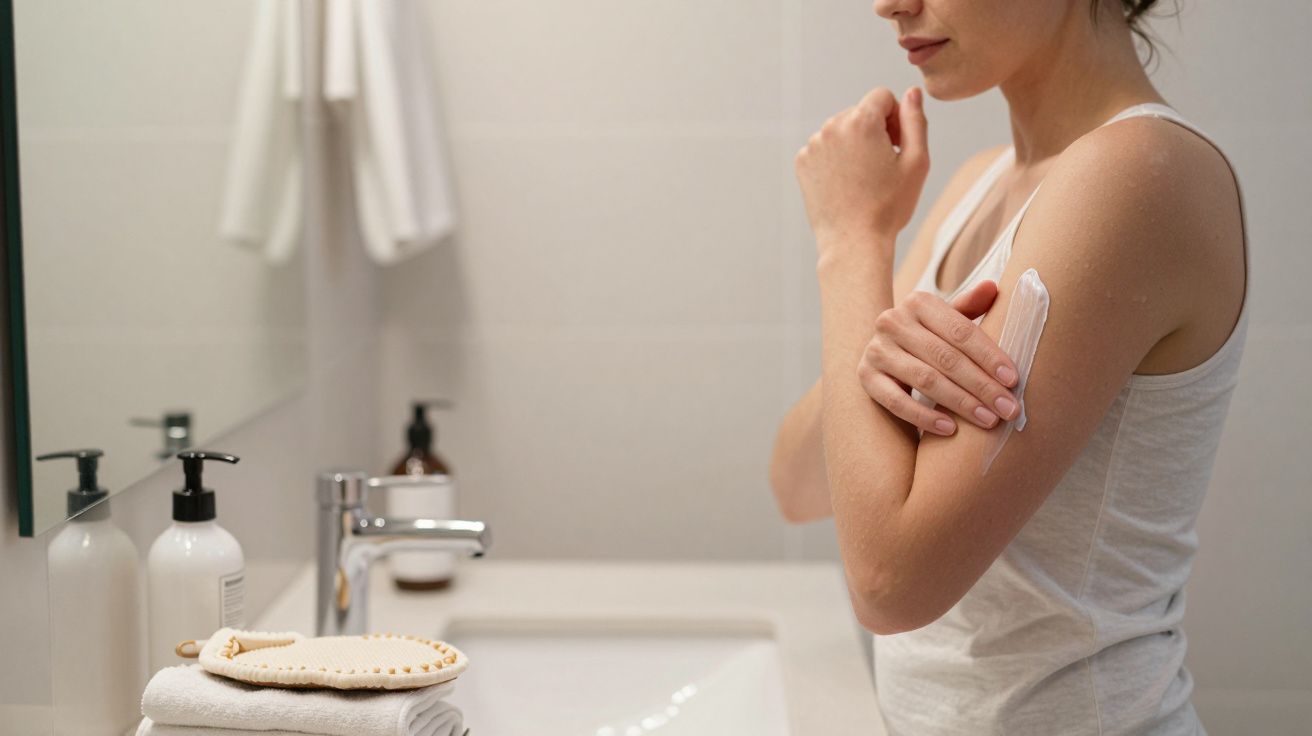
I used to treat a spray tan like a weekend accessory: apply on Friday, glow through Sunday, and wonder why I looked oddly patchy by Tuesday. Then I learned the boring truth hiding under the bronzer-your skin renewal cycle is always quietly moving the goalposts. Once you understand that, “how long it lasts” stops being a mystery and becomes a set of predictable trade-offs.
A spray tan doesn’t fade because it’s “weak” or because you showered once too often. It fades because the top layers of your skin are designed to leave you, on a schedule, whether you’re glowing or not.
The real boss isn’t the product - it’s your skin
Spray tan colour comes from DHA reacting with amino acids in the outermost skin layer (the stratum corneum). That layer is not permanent. It sheds a little every day, and the colour goes with it.
So the question isn’t really “Which tan lasts longest?” It’s “How quickly does my skin let go of the layer the tan is sitting on?” The answer changes with season, habits, and even which body part you’re looking at in the mirror.
The skin renewal cycle, in plain terms
Your skin is constantly making new cells deeper down and pushing older ones up to the surface, where they flake away. That whole process is often described as a “cycle”, but what matters for tanning is simple: the tan only lives on the part that’s destined to shed.
Many people notice a pattern that’s almost comically consistent:
- Day 1: colour develops and looks at its best
- Days 2–4: still even, slightly softer
- Days 5–7: fade begins to show on hands, feet, chest and anywhere that rubs
- Days 7–10: most people are either topping up or exfoliating it off
That’s not a failure. That’s biology doing what it does.
So how long does a spray tan really last?
On an average routine, expect about 5–7 days of “looks good in daylight” and 7–10 days before it’s mostly gone. Some people can stretch it to 10–14 days, but usually only if they’re gentle with their skin and willing to do small maintenance.
The sticking point is that “lasts” can mean three different things:
- Peak colour (the “wow” stage): usually 1–3 days
- Presentable fade (still even, just lighter): usually 4–7 days
- Visible remnants (patches in high-friction areas): often 7–10+ days
If you want peak colour for an event, time your appointment for the day before (or two days before, depending on how deep you go and how your skin holds colour).
Why it fades faster on some people (and some body parts)
Two people can use the same technician, the same solution, and the same aftercare. One still looks glossy a week later; the other is already leopard-printing at the elbows. The difference is usually friction plus how quickly the outer layer sheds.
Common fast-fade culprits:
- High-friction zones: hands, feet, ankles, inner thighs, under bra bands, waistband area
- Frequent water exposure: long hot showers, baths, swimming, sauna/steam rooms
- Active skin-shedding habits: scrubs, exfoliating gloves, acid toners, retinoids
- Dry skin: it doesn’t always fade faster, but it fades messier (tiny flakes take colour with them in patches)
- Sweat and tight clothing: especially in the first 24 hours, when colour is still settling
If you’ve ever wondered why your forearms stay bronze while your hands look like you’ve been washing up bare-handed for days, it’s because your hands live a harder life.
A quick “where it will go first” map
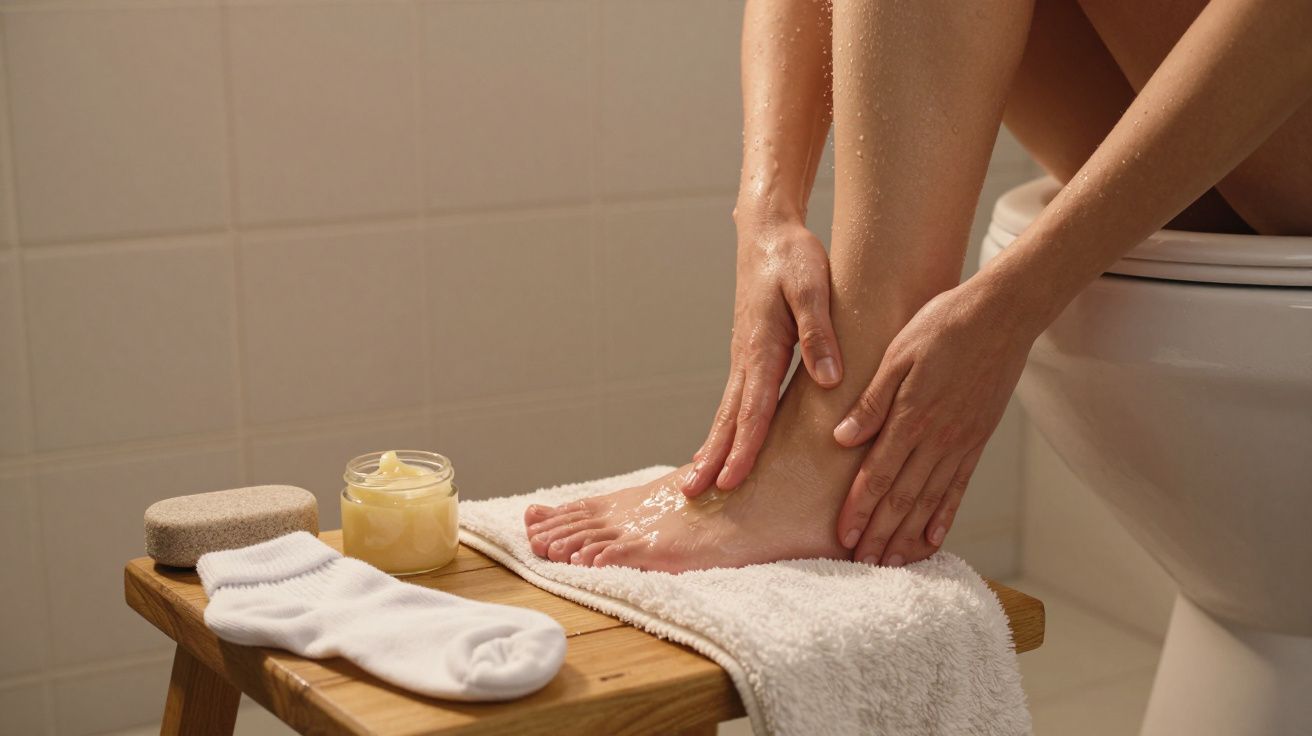
- First to go: palms (if you caught any), fingertips, tops of feet, ankles
- Next: chest, underarms, inner elbows, knees
- Last standing: upper arms, back, outer thighs, stomach (often)
Make it last longer by doing less, not more
Most people try to “care” their tan into staying by adding steps. The better approach is removing the steps that speed up shedding.
The first 24 hours: don’t pick a fight with it
This is the window where you can lose longevity without realising.
- Keep showers short and lukewarm if you must rinse
- Avoid heavy sweating and tight gym kit
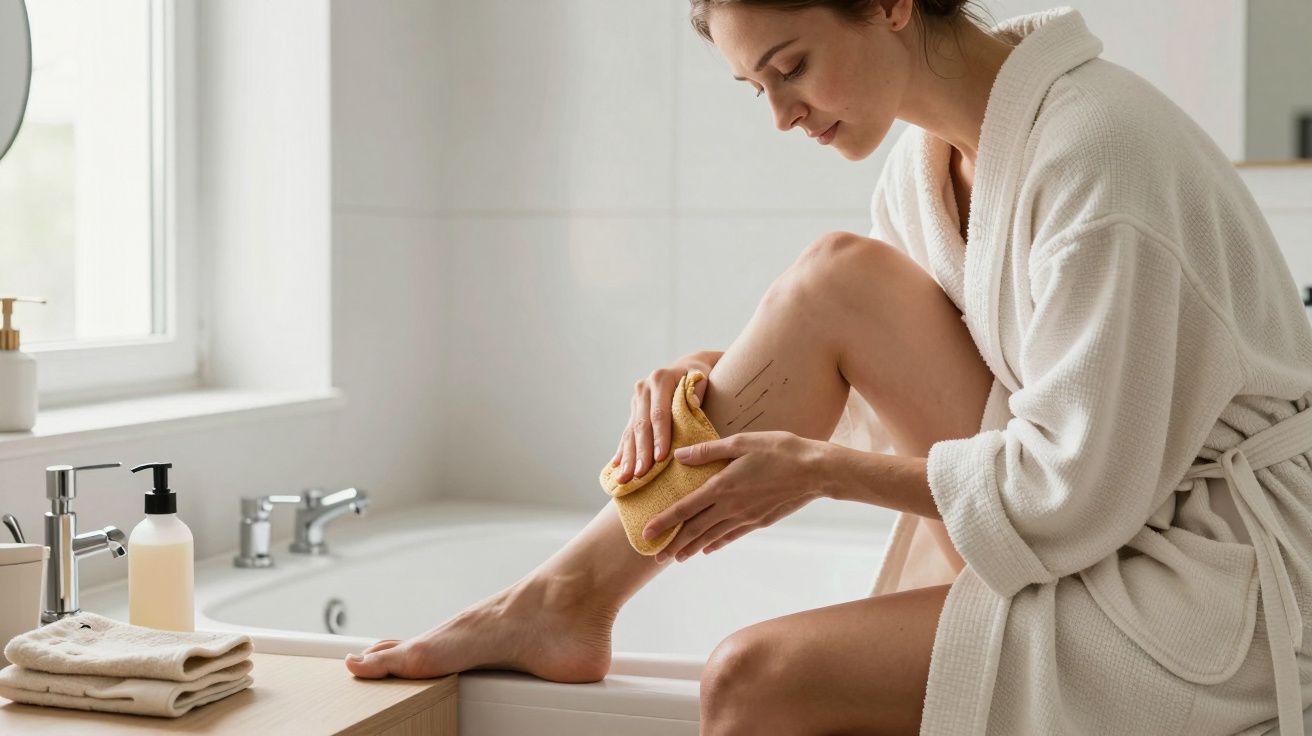
- Don’t scrub off “a bit of stickiness” with a loofah-use your hands and a gentle wash
- Pat dry rather than rubbing with a towel
Think of it as letting the colour settle into the layer it’s already chosen, rather than sanding that layer off early.
Days 2–7: moisturise like you mean it
Dry skin doesn’t just look dull; it sheds in little irregular plates. That’s when tans turn mottled.
A simple routine works:
- Moisturise once daily (twice if you’re dry), especially elbows, knees, ankles
- Use a gentle body wash; skip anything “polishing” or “clarifying”
- Choose loose clothing when you can, particularly for sleep
If you want one small habit that makes the biggest difference: moisturise right after showering, while the skin is still slightly damp.
The maintenance question: top up or take off?
By day 5–7, you’ll usually be deciding between extending the fade or resetting.
Top up if your tan is still even but lighter than you’d like. A gradual tanning lotion can bridge you for a few days and smooth out small losses on shins and forearms.
Take it off if you’ve got clear patching on hands/feet or heavy rubbing marks. Trying to layer a fresh spray over a patchy base can bake in the unevenness.
A good rule is emotional, not scientific: if you’re checking it under the bathroom downlight and negotiating with yourself, it’s probably reset time.
Timing it around real life (workouts, holidays, winter skin)
Your skin renewal cycle doesn’t happen in isolation; your routine speeds it up or calms it down.
- Gym-heavy week: expect quicker fade on waistband, sports bra lines, inner thighs
- Beach holiday: sunscreen reapplication + salt water + towels = faster loss, especially shoulders and feet
- UK winter: central heating dryness can make the fade patchy unless you moisturise consistently
- Summer heat: sweat can shorten the “peak” phase, but moisturising is easier when skin isn’t parched
If you’re planning for an event, build in a buffer: get the tan early enough that you can see how it settles (and fix anything) but not so early that your skin has already started shedding it in obvious places.
A realistic expectation that saves disappointment
A spray tan is brilliant because it gives you colour without UV damage, and it can make skin look smoother and more even overnight. But it’s not paint. It’s a reaction in a layer of skin designed to be temporary.
When you treat it like a short-term finish that fades with your skin renewal cycle-not a promise that fights against it-you’ll get longer wear, fewer patches, and a lot less Tuesday-morning confusion.
FAQ:
- How long should I wait to shower after a spray tan? Follow the technician’s guidance for the solution used, but many people wait 8–12 hours. The key is avoiding long hot showers and scrubbing in the first day, because that can remove the outer layer the colour sits on.
- Why does my spray tan disappear faster on my hands and feet? Those areas experience constant washing and friction, and the skin sheds differently there. Even a great tan will fade first where life rubs it off.
- Can I exfoliate to make it last longer? Exfoliating before the appointment helps create an even base. Exfoliating after (especially with scrubs or acids) usually shortens wear because it speeds up removal of the coloured surface cells.
- Does moisturiser really help longevity? Yes-mainly by keeping the surface layer from flaking in patches. Moisturised skin tends to shed more evenly, so the fade looks smoother and often appears to “last” longer.
- Is it normal for a tan to look best on day two? Very normal. Colour often finishes developing after application and can look more natural and even once you’ve rinsed off any guide colour and the skin has settled.



Comments (0)
No comments yet. Be the first to comment!
Leave a Comment