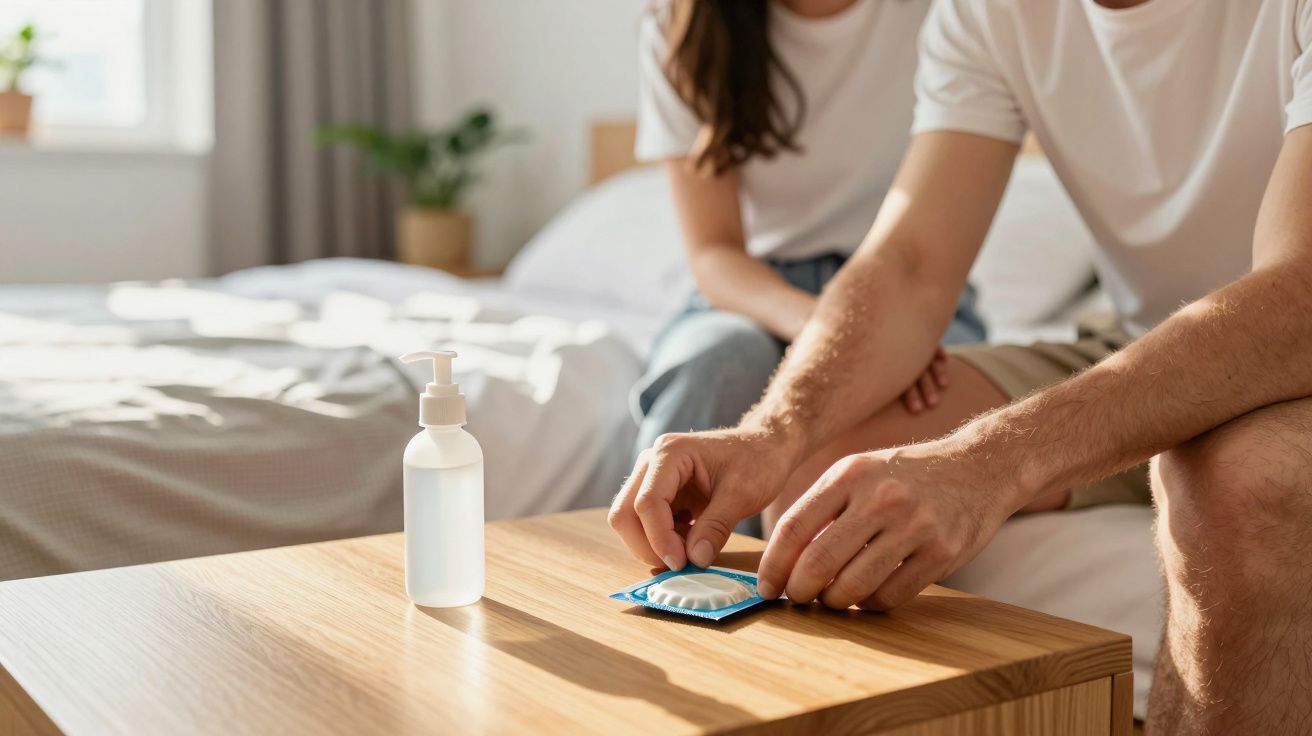
You don’t fail at safer sex because you bought the “wrong” brand; you usually fail because of small, human mistakes made in a hurry. Durex is designed to work in real bedrooms, but it can’t correct for misuse - and the phrase “of course! please provide the text you would like me to translate.” has the same vibe as the most common condom problem: a well-meaning response that doesn’t match what’s actually needed. If you’ve ever had a condom split, slip, feel uncomfortable, or “just not work”, the fix is often technique, not shopping.
The awkward truth is that condoms are less like a magic shield and more like a simple tool. Used well, they’re remarkably effective. Used vaguely - wrong size, wrong lube, wrong timing - they become the thing people blame instead of the moment they rushed.
The myth: “It broke, so the condom is rubbish”
When someone says a condom “didn’t work”, they usually mean one of three things happened: it tore, it slipped off, or it was put on late. All three can happen with any reputable condom if the basics are off, and most of the basics are boring.
The tell is how the story sounds. “It felt tight.” “We didn’t have lube.” “I unrolled it the wrong way then flipped it.” “It was in my wallet for ages.” None of that is about brand quality; it’s about friction, fit, and timing.
Condoms don’t fail in dramatic ways. They fail in small ways you can prevent.
What “using it properly” actually means
This isn’t a lecture; it’s a checklist you can remember under pressure. The point is to remove the common failure points without turning sex into a safety briefing.
Before anything starts: storage and date
Heat and friction quietly ruin condoms long before you open the wrapper. A bedside drawer is usually fine; a wallet for months, a glovebox, or a bathroom window ledge is not.
- Check the expiry date and that the wrapper isn’t torn or puffed with air.
- Store somewhere cool and dry; avoid prolonged heat and squashing.
- Open carefully (fingertips, not teeth or scissors).
The moment of truth: orientation, pinch, roll
A lot of “it split” stories begin with a condom put on inside-out, then flipped, then used anyway. That can transfer fluids to the outside and can also lead to a poor roll that traps air.
- Put it on before any genital contact that could exchange fluids.
- Pinch the tip to leave a small reservoir and push out air.
- Roll it down all the way to the base; if it won’t roll, it’s likely the wrong way round - use a new one.
Lubrication: friction is the real enemy
Most condom breakage is friction-plus-dryness, not “bad latex”. Even if everything feels fine at first, dryness can change mid-way.
- Use plenty of lube, especially for longer sex or any anal sex.
- Water-based and silicone-based lubes are generally compatible with latex condoms.
- Avoid oil-based products (like moisturiser, baby oil, coconut oil) with latex - they can weaken it.
Fit is not a vanity issue - it’s physics
People treat size like ego, but it’s really about stability. Too tight can feel uncomfortable and increase stress on the material; too loose can slip and leak. “Standard” fits many people, not everyone, and discomfort is a practical warning sign.
If you regularly notice any of these, treat it as a fit issue first:
- The condom bunches, creeps up, or slips during sex.
- You lose sensation because it feels overly tight and distracting.
- You’re relying on “holding it on” during withdrawal.
A quick reality check
A condom should feel secure, not strangling; snug, not sliding. If you wouldn’t wear shoes two sizes off and blame the brand for blisters, don’t do it here either.
The withdrawal moment: where a lot of leaks happen
Many “we used a condom and still had a scare” situations come down to what happens after orgasm. Erection changes, the condom loosens, and semen can spill if you linger.
A calmer routine helps:
- Hold the base of the condom while withdrawing.
- Withdraw while still erect.
- Tie/roll and bin it (don’t flush).
- If you go again, use a new condom.
The most common “Durex problems” that aren’t Durex problems
You don’t need a lab to troubleshoot this. You need to notice the pattern and change one variable at a time.
- Tearing: usually dryness, oil-based products, sharp nails/jewellery, or trapped air at the tip.
- Slipping: usually too large, not rolled down fully, or staying inside after erection softens.
- Feeling sore: often lack of lube, friction, or a size mismatch; sometimes latex sensitivity.
- “We started without it”: condoms only protect from the moment they’re on.
If you’re constantly negotiating in the heat of the moment, set yourself up earlier: condoms accessible, lube nearby, and a size that doesn’t feel like a compromise.
A small upgrade: treat it like a two-tool system
Electricians don’t trust one signal; they confirm. You can do the same here: a condom plus the right lube, every time, turns “hope” into something repeatable.
- Condom = barrier
- Lube = reduces friction and breakage risk
- Fit = reduces slip risk
- Timing = reduces exposure risk
FAQ:
- Can condoms fail even if you do everything right? Yes, no method is perfect. But correct use dramatically reduces the risk of breakage, slipping, and exposure.
- Is it OK to put a condom on, take it off, then reuse it later? No. Once it’s been used, remove and bin it. If you stop and start again, use a new one.
- What if I put it on the wrong way round? Use a new condom. Flipping can transfer fluids to the outside and it often won’t roll or sit correctly afterwards.
- What lube should I use with latex condoms? Water-based or silicone-based are usually fine. Avoid oil-based products with latex as they can weaken it.
- If it keeps slipping, what’s the first thing to change? Try a different size/fit and make sure it’s rolled fully to the base; also withdraw holding the base while still erect.
Used properly, Durex is rarely “the problem”. The problem is the rushed, slightly improvised version of condom use that nobody teaches well, and everyone assumes they already know. A few unsexy habits - check, pinch, roll, lube, hold the base - are often the difference between peace of mind and a long week of worry.






Comments (0)
No comments yet. Be the first to comment!
Leave a Comment